Please circulate widely!
CALL FOR PAPERS
Political Theology Agenda Symposium 2011
Organized by: Sussex Centre for the Individual and Society (SCIS)
Location: Ecumenical Institute of the World Council of Churches (WCC) and the University of Geneva, Château de Bossey, near Geneva, Switzerland
Date: 12-13 July 2011
The "Political Theology Agenda" (www.political-theology-agenda.blogspot.com) has been run by the Sussex Centre for the Individual and Society since January 2009. The blog is the premier resource on the net for the comparative study of political theology and political theologies across the boundaries of various traditions and academic disciplines.
The Political Theology Agenda Symposium 2011 will be the second event we organize in conjunction with the blog. It follows on from a highly successful first symposium held in Geneva in August 2010 and two equally well-received events on comparative political theology SCIS organized earlier, namely, in September 2007, a section and symposium at the General Conference of the European Consortium for Political Research in Pisa, Italy, and, in July 2008, a stand-alone symposium at Sciences Po/the Institute for Political Studies (IEP) in Paris, France. All three events drew participants from the world over.
The Political Theology Agenda Symposium 2011 is set to be equally international and interdisciplinary in scope. We invite affiliated academics, independent scholars, and doctoral students and candidates from a wide range of disciplines, such as Theology, Religious Studies, Philosophy, Political Theory, Political Science, International Relations, Law, Literature, History, Jewish Studies, Education, Cultural Studies, Geography, and so on. Papers may not only cover any and all aspects of political theology, but also related concepts, such as liberation theology, public theology, black theology, the Christian Right, Radical Orthodoxy, religious anarchism, Minjung theology, Dalit theology, radical Islam, religious Zionism, political religion, civil religion, etc. Have a look at the blog to see what might be of interest and falls within our remit. Papers may be theoretical and/or empirical in nature. Although not a condition, we particularly encourage a comparative perspective. Work in progress is welcome too.
We expect that 15-20 participants will be attending the workshop-style Political Theology Agenda Symposium 2011. Over the course of two full days, each presenter will have 45-60 minutes (depending on the number of participants) to present his or her paper and discuss it with all others. The symposium starts early on Tuesday and ends Wednesday late in the afternoon. Due to the small size of the symposium, all participants are expected to attend both days.
As with all SCIS events, no fees will be charged from participants, and no funding is available to cover participants' travel and accommodation expenses. We will be glad to issue letters of acceptance on request to assist participants in securing funding from their usual sources. The 18th-century Château de Bossey, set in an outstanding natural environment overlooking Lake Geneva and the French Alps, offers comfortable accommodation at reasonable prices. Further information will be provided to confirmed participants.
Please send your proposal to: e.kofmel@sussexcentre.org
Deadline: 31 January 2011
Later submissions may still be accepted, but early submission is strongly advised and proposals may be accepted as they come in.
Cordially,
Erich Kofmel
Managing Director / Research Professor of Political Theory
Sussex Centre for the Individual and Society (SCIS)
www.sussexcentre.org
E-mail: e.kofmel@sussexcentre.org
Postal address:
Sussex Centre for the Individual and Society
1200 Geneva
Switzerland
SCIS is an international association under Swiss law.
Founded 2006 at the University of Sussex.
13 September 2010

20 August 2010
Report on the Political Theology Agenda Symposium 2010: Political theology goes East and South
The first event held by the Geneva-based Sussex Centre for the Individual and Society (SCIS) in conjunction with its "Political Theology Agenda" blog, the Political Theology Agenda Symposium 2010, was a full success.
It took place on 18 and 19 August 2010 at the Ecumenical Institute of the World Council of Churches (WCC), Château de Bossey, near Geneva, Switzerland. Bossey doubles as an institute of the University of Geneva since all degrees awarded there (Masters and PhD degrees in Ecumenical Studies) are granted by the University of Geneva.
Keynote speakers were Professor Aliakbar Alikhani, Head of the Institute for Social and Cultural Studies at the Ministry of Science, Research and Technology in Tehran, Iran, and Professor Galip Veliu from the Department of Philosophy at the State University of Tetovo in the Former Yugoslav Republic of Macedonia.
The Political Theology Agenda Symposium 2010 attracted seventeen papers submitted by participants from institutions such as University College London, the University of Birmingham (both UK), the University of Helsinki (Finland), the University of Quebec at Montreal (Canada), the University of Tehran (Iran), the University of the Punjab (Pakistan), the University of South Africa, the University of Zimbabwe, the National University of Malaysia, Universitas Nasional at Jakarta (Indonesia), and San Beda College in Manila (the Philippines). Other countries represented include Macedonia, Romania, Lithuania, Switzerland, and Nigeria.
Speakers – from doctoral candidates to full professors – came from the disciplines of Political Science, Philosophy, Political Theory, Theology, Church History, and Islamic Studies, giving theoretical as well as empirical presentations on subjects including secularization and religious pluralism, political theology, black theology, liberation theology, and radical Islam.
After Pisa, Italy, in 2007 and Paris, France, in 2008, this was the third symposium on political theology organized by the Sussex Centre for the Individual and Society and, once more, it opened up new frontiers for political theology. It was by far the most international event we ever organized (and quite possibly the most international event on political theology to take place anywhere as yet) with five participants from Iran alone and scores of submissions (not all accepted) from the Middle East and East Asia as well as Africa. Taken together with a high number of submissions from (South-)Eastern Europe, there is a significant trend to be observed: after gaining momentum in the Anglophone countries over the past few years, the study of political theology now goes East and South, spreading to Asia and Africa.
The Political Theology Agenda blog and the Sussex Centre for the Individual and Society will continue to be at the forefront of these developments.
(On the downside, all prospective American and Israeli participants withdrew, one by one, from the symposium once they knew that there would be Iranians present. Way to encourage dialogue.)

It took place on 18 and 19 August 2010 at the Ecumenical Institute of the World Council of Churches (WCC), Château de Bossey, near Geneva, Switzerland. Bossey doubles as an institute of the University of Geneva since all degrees awarded there (Masters and PhD degrees in Ecumenical Studies) are granted by the University of Geneva.
Keynote speakers were Professor Aliakbar Alikhani, Head of the Institute for Social and Cultural Studies at the Ministry of Science, Research and Technology in Tehran, Iran, and Professor Galip Veliu from the Department of Philosophy at the State University of Tetovo in the Former Yugoslav Republic of Macedonia.
The Political Theology Agenda Symposium 2010 attracted seventeen papers submitted by participants from institutions such as University College London, the University of Birmingham (both UK), the University of Helsinki (Finland), the University of Quebec at Montreal (Canada), the University of Tehran (Iran), the University of the Punjab (Pakistan), the University of South Africa, the University of Zimbabwe, the National University of Malaysia, Universitas Nasional at Jakarta (Indonesia), and San Beda College in Manila (the Philippines). Other countries represented include Macedonia, Romania, Lithuania, Switzerland, and Nigeria.
Speakers – from doctoral candidates to full professors – came from the disciplines of Political Science, Philosophy, Political Theory, Theology, Church History, and Islamic Studies, giving theoretical as well as empirical presentations on subjects including secularization and religious pluralism, political theology, black theology, liberation theology, and radical Islam.
After Pisa, Italy, in 2007 and Paris, France, in 2008, this was the third symposium on political theology organized by the Sussex Centre for the Individual and Society and, once more, it opened up new frontiers for political theology. It was by far the most international event we ever organized (and quite possibly the most international event on political theology to take place anywhere as yet) with five participants from Iran alone and scores of submissions (not all accepted) from the Middle East and East Asia as well as Africa. Taken together with a high number of submissions from (South-)Eastern Europe, there is a significant trend to be observed: after gaining momentum in the Anglophone countries over the past few years, the study of political theology now goes East and South, spreading to Asia and Africa.
The Political Theology Agenda blog and the Sussex Centre for the Individual and Society will continue to be at the forefront of these developments.
(On the downside, all prospective American and Israeli participants withdrew, one by one, from the symposium once they knew that there would be Iranians present. Way to encourage dialogue.)
06 May 2010
CFP: Anti-Democracy Agenda Symposium 2010
Please circulate widely!
CALL FOR PAPERS
Anti-Democracy Agenda Symposium 2010
Organized by: Sussex Centre for the Individual and Society (SCIS)
Location: Gottfried-Semper Villa Garbald, part of the Collegium Helveticum of the Swiss Federal Institute of Technology (ETH) Zurich and the University of Zurich, at Castasegna, in the Swiss Alps
Date: 8-10 November 2010
The "Anti-Democracy Agenda" (www.anti-democracy-agenda.blogspot.com) has been run by the Sussex Centre for the Individual and Society since January 2010. The blog is the premier resource on the net for the study of anti-democratic thought and practice across the boundaries of various traditions and academic disciplines.
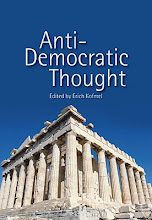
The Anti-Democracy Agenda Symposium 2010 will be the first event we organize in conjunction with the blog. It will build up though on a highly successful event on anti-democratic thought SCIS organized earlier, at the Annual Conference Workshops in Political Theory in Manchester, England, in September 2007, drawing participants from the world over. That workshop led to the publication of an edited volume, "Anti-Democratic Thought" (Imprint Academic), in December 2008.
The Anti-Democracy Agenda Symposium 2010 is set to be equally international and interdisciplinary in scope. We invite affiliated academics, independent scholars, and doctoral students and candidates from a wide range of disciplines, such as Philosophy, Political Theory, Political Science, International Relations, Development Studies, Security Studies, Law, Economics, Sociology, Anthropology, Psychology, Literature, History, Classics, Theology, Religious Studies, Education, and so on. Papers may not only cover any and all aspects of criticisms of democracy and anti-democratic thought and practice, from perspectives including anarchism, libertarianism, conservatism, communism, Islamism, the extreme right, and others, but also related concepts such as authoritarianism, dictatorship, military rule, monarchy, chieftaincy, mixed constitution, the backlash against democracy promotion, terrorism, post-democracy, voter apathy, voter ignorance, etc. Have a look at the blog to see what might be of interest and falls within our remit. Papers may be theoretical and/or empirical in nature. Work in progress is welcome too.
We expect that 10-15 participants will be attending the workshop-style Anti-Democracy Agenda Symposium 2010. Over the course of two and a half days, each presenter will have 60 minutes to present his or her paper and discuss it with all others.
As with all SCIS events, no fees will be charged from participants, and no funding is available to cover participants' travel and accommodation expenses. We will be glad to issue letters of invitation on request to assist participants in securing funding from their usual sources. The charges payable directly to the Villa Garbald (approx. $510 half-board/$570 full-board per person) cover accommodation for three nights and food and drink (except alcohol and minibar) throughout your stay. Participants will be arriving on Sunday, taking in the magnificent scenery of the Swiss Alps on a spectacular 5-hour train journey from Zurich airport (via St. Moritz) to a remote Italian-speaking Swiss valley (Val Bregaglia), home to Europe's largest chestnut forest, and leave on Wednesday after lunch, on the same way (cost of a return ticket approx. $115). Alternatively, you can get there in 3-4 hours by train from Milano airport, passing Lake Como. During the symposium there will be ample time to explore the surroundings. Please feel free to contact us with any questions. Detailed travel instructions will be provided to confirmed participants. Don't miss this unique opportunity.
The Italian-style Villa Garbald was built by German star architect Gottfried Semper (of Semper Opera in Dresden and Vienna Burgtheater fame) during his exile in Switzerland. A pro-democracy activist in aristocratic mid-19th century Germany, his experiences with direct-democratic government in Switzerland turned him in later life increasingly against democracy.
Please send your proposal to: e.kofmel@sussexcentre.org
Deadline: 31 July 2010
Later submissions may still be accepted, but early submission is strongly advised and proposals may be accepted as they come in.
Cordially,
Erich Kofmel
Managing Director / Research Professor of Political Theory
Sussex Centre for the Individual and Society (SCIS)
www.sussexcentre.org
E-mail: e.kofmel@sussexcentre.org
Postal address:
Sussex Centre for the Individual and Society
1200 Geneva
Switzerland
SCIS is an international association under Swiss law.
Founded 2006 at the University of Sussex.
CALL FOR PAPERS
Anti-Democracy Agenda Symposium 2010
Organized by: Sussex Centre for the Individual and Society (SCIS)
Location: Gottfried-Semper Villa Garbald, part of the Collegium Helveticum of the Swiss Federal Institute of Technology (ETH) Zurich and the University of Zurich, at Castasegna, in the Swiss Alps
Date: 8-10 November 2010
The "Anti-Democracy Agenda" (www.anti-democracy-agenda.blogspot.com) has been run by the Sussex Centre for the Individual and Society since January 2010. The blog is the premier resource on the net for the study of anti-democratic thought and practice across the boundaries of various traditions and academic disciplines.
The Anti-Democracy Agenda Symposium 2010 will be the first event we organize in conjunction with the blog. It will build up though on a highly successful event on anti-democratic thought SCIS organized earlier, at the Annual Conference Workshops in Political Theory in Manchester, England, in September 2007, drawing participants from the world over. That workshop led to the publication of an edited volume, "Anti-Democratic Thought" (Imprint Academic), in December 2008.
The Anti-Democracy Agenda Symposium 2010 is set to be equally international and interdisciplinary in scope. We invite affiliated academics, independent scholars, and doctoral students and candidates from a wide range of disciplines, such as Philosophy, Political Theory, Political Science, International Relations, Development Studies, Security Studies, Law, Economics, Sociology, Anthropology, Psychology, Literature, History, Classics, Theology, Religious Studies, Education, and so on. Papers may not only cover any and all aspects of criticisms of democracy and anti-democratic thought and practice, from perspectives including anarchism, libertarianism, conservatism, communism, Islamism, the extreme right, and others, but also related concepts such as authoritarianism, dictatorship, military rule, monarchy, chieftaincy, mixed constitution, the backlash against democracy promotion, terrorism, post-democracy, voter apathy, voter ignorance, etc. Have a look at the blog to see what might be of interest and falls within our remit. Papers may be theoretical and/or empirical in nature. Work in progress is welcome too.
We expect that 10-15 participants will be attending the workshop-style Anti-Democracy Agenda Symposium 2010. Over the course of two and a half days, each presenter will have 60 minutes to present his or her paper and discuss it with all others.
As with all SCIS events, no fees will be charged from participants, and no funding is available to cover participants' travel and accommodation expenses. We will be glad to issue letters of invitation on request to assist participants in securing funding from their usual sources. The charges payable directly to the Villa Garbald (approx. $510 half-board/$570 full-board per person) cover accommodation for three nights and food and drink (except alcohol and minibar) throughout your stay. Participants will be arriving on Sunday, taking in the magnificent scenery of the Swiss Alps on a spectacular 5-hour train journey from Zurich airport (via St. Moritz) to a remote Italian-speaking Swiss valley (Val Bregaglia), home to Europe's largest chestnut forest, and leave on Wednesday after lunch, on the same way (cost of a return ticket approx. $115). Alternatively, you can get there in 3-4 hours by train from Milano airport, passing Lake Como. During the symposium there will be ample time to explore the surroundings. Please feel free to contact us with any questions. Detailed travel instructions will be provided to confirmed participants. Don't miss this unique opportunity.
The Italian-style Villa Garbald was built by German star architect Gottfried Semper (of Semper Opera in Dresden and Vienna Burgtheater fame) during his exile in Switzerland. A pro-democracy activist in aristocratic mid-19th century Germany, his experiences with direct-democratic government in Switzerland turned him in later life increasingly against democracy.
Please send your proposal to: e.kofmel@sussexcentre.org
Deadline: 31 July 2010
Later submissions may still be accepted, but early submission is strongly advised and proposals may be accepted as they come in.
Cordially,
Erich Kofmel
Managing Director / Research Professor of Political Theory
Sussex Centre for the Individual and Society (SCIS)
www.sussexcentre.org
E-mail: e.kofmel@sussexcentre.org
Postal address:
Sussex Centre for the Individual and Society
1200 Geneva
Switzerland
SCIS is an international association under Swiss law.
Founded 2006 at the University of Sussex.
04 May 2010
CFP: Political Theology Agenda Symposium 2010
Please circulate widely!
CALL FOR PAPERS
Political Theology Agenda Symposium 2010
Organized by: Sussex Centre for the Individual and Society (SCIS)
Location: Ecumenical Institute of the World Council of Churches (WCC) and the University of Geneva, Château de Bossey, near Geneva, Switzerland
Date: 18-19 August 2010
The "Political Theology Agenda" (www.political-theology-agenda.blogspot.com) has been run by the Sussex Centre for the Individual and Society since January 2009. The blog is the premier resource on the net for the comparative study of political theology and political theologies across the boundaries of various traditions and academic disciplines.
The Political Theology Agenda Symposium 2010 will be the first event we organize in conjunction with the blog. It will build up though on two highly successful events on comparative political theology SCIS organized earlier. Namely, in September 2007, a section and symposium at the General Conference of the European Consortium for Political Research in Pisa, Italy, and, in July 2008, a stand-alone symposium at Sciences Po/the Institute for Political Studies (IEP) in Paris, France. Both events drew participants from the world over.
The Political Theology Agenda Symposium 2010 is set to be equally international and interdisciplinary in scope. We invite affiliated academics, independent scholars, and doctoral students and candidates from a wide range of disciplines, such as Theology, Religious Studies, Philosophy, Political Theory, Political Science, International Relations, Law, Literature, History, Jewish Studies, Education, Cultural Studies, Geography, and so on. Papers may not only cover any and all aspects of political theology, but also related concepts, such as liberation theology, public theology, black theology, the Christian Right, radical Orthodoxy, religious anarchism, minjung theology, Dalit theology, radical Islam, religious Zionism, political religion, civil religion, etc. Have a look at the blog to see what might be of interest and falls within our remit. Papers may be theoretical and/or empirical in nature. Although not a condition, we particularly encourage a comparative perspective. Work in progress is welcome too.
We expect that 15-20 participants will be attending the workshop-style Political Theology Agenda Symposium 2010. Over the course of two full days, each presenter will have 45-60 minutes (depending on the number of participants) to present his or her paper and discuss it with all others.
As with all SCIS events, no fees will be charged from participants, and no funding is available to cover participants' travel and accommodation expenses. We will be glad to issue letters of invitation on request to assist participants in securing funding from their usual sources. The 18th-century Château de Bossey, set in an outstanding natural environment overlooking Lake Geneva and the French Alps, offers comfortable accommodation at reasonable prices. Alternatively, participants may decide to stay in Geneva and commute to the symposium. Further information will be provided to confirmed participants. The symposium starts early on Wednesday and ends Thursday late in the afternoon.
Please send your proposal to: e.kofmel@sussexcentre.org
Extended deadline: 15 July 2010
Later submissions may still be accepted, but early submission is strongly advised and proposals may be accepted as they come in.
Cordially,
Erich Kofmel
Managing Director / Research Professor of Political Theory
Sussex Centre for the Individual and Society (SCIS)
www.sussexcentre.org
E-mail: e.kofmel@sussexcentre.org
Postal address:
Sussex Centre for the Individual and Society
1200 Geneva
Switzerland
SCIS is an international association under Swiss law.
Founded 2006 at the University of Sussex.
CALL FOR PAPERS
Political Theology Agenda Symposium 2010
Organized by: Sussex Centre for the Individual and Society (SCIS)
Location: Ecumenical Institute of the World Council of Churches (WCC) and the University of Geneva, Château de Bossey, near Geneva, Switzerland
Date: 18-19 August 2010
The "Political Theology Agenda" (www.political-theology-agenda.blogspot.com) has been run by the Sussex Centre for the Individual and Society since January 2009. The blog is the premier resource on the net for the comparative study of political theology and political theologies across the boundaries of various traditions and academic disciplines.
The Political Theology Agenda Symposium 2010 will be the first event we organize in conjunction with the blog. It will build up though on two highly successful events on comparative political theology SCIS organized earlier. Namely, in September 2007, a section and symposium at the General Conference of the European Consortium for Political Research in Pisa, Italy, and, in July 2008, a stand-alone symposium at Sciences Po/the Institute for Political Studies (IEP) in Paris, France. Both events drew participants from the world over.
The Political Theology Agenda Symposium 2010 is set to be equally international and interdisciplinary in scope. We invite affiliated academics, independent scholars, and doctoral students and candidates from a wide range of disciplines, such as Theology, Religious Studies, Philosophy, Political Theory, Political Science, International Relations, Law, Literature, History, Jewish Studies, Education, Cultural Studies, Geography, and so on. Papers may not only cover any and all aspects of political theology, but also related concepts, such as liberation theology, public theology, black theology, the Christian Right, radical Orthodoxy, religious anarchism, minjung theology, Dalit theology, radical Islam, religious Zionism, political religion, civil religion, etc. Have a look at the blog to see what might be of interest and falls within our remit. Papers may be theoretical and/or empirical in nature. Although not a condition, we particularly encourage a comparative perspective. Work in progress is welcome too.
We expect that 15-20 participants will be attending the workshop-style Political Theology Agenda Symposium 2010. Over the course of two full days, each presenter will have 45-60 minutes (depending on the number of participants) to present his or her paper and discuss it with all others.
As with all SCIS events, no fees will be charged from participants, and no funding is available to cover participants' travel and accommodation expenses. We will be glad to issue letters of invitation on request to assist participants in securing funding from their usual sources. The 18th-century Château de Bossey, set in an outstanding natural environment overlooking Lake Geneva and the French Alps, offers comfortable accommodation at reasonable prices. Alternatively, participants may decide to stay in Geneva and commute to the symposium. Further information will be provided to confirmed participants. The symposium starts early on Wednesday and ends Thursday late in the afternoon.
Please send your proposal to: e.kofmel@sussexcentre.org
Extended deadline: 15 July 2010
Later submissions may still be accepted, but early submission is strongly advised and proposals may be accepted as they come in.
Cordially,
Erich Kofmel
Managing Director / Research Professor of Political Theory
Sussex Centre for the Individual and Society (SCIS)
www.sussexcentre.org
E-mail: e.kofmel@sussexcentre.org
Postal address:
Sussex Centre for the Individual and Society
1200 Geneva
Switzerland
SCIS is an international association under Swiss law.
Founded 2006 at the University of Sussex.
09 April 2010
Book: Sovereignty at the Edge: Macau and the Question of Chineseness
Just published: Cathryn H. Clayton, "Sovereignty at the Edge: Macau and the Question of Chineseness" (Harvard University Press, March 2010):
www.hup.harvard.edu/catalog/CLASOV.html
Publisher's description: "How have conceptions and practices of sovereignty shaped how Chineseness is imagined? This ethnography addresses this question through the example of Macau, a southern Chinese city that was a Portuguese colony from the 1550s until 1999. As the Portuguese administration prepared to transfer Macau to Chinese control, it mounted a campaign to convince the city's residents, 95 percent of whom identified as Chinese, that they possessed a 'unique cultural identity' that made them different from other Chinese, and that resulted from the existence of a Portuguese state on Chinese soil. This attempt sparked reflections on the meaning of Portuguese governance that challenged not only conventional definitions of sovereignty but also conventional notions of Chineseness as a subjectivity common to all Chinese people around the world. Various stories about sovereignty and Chineseness and their interrelationship were told in Macau in the 1990s. This book is about those stories and how they informed the lives of Macau residents in ways that allowed different relationships among sovereignty, subjectivity, and culture to become thinkable, while also providing a sense of why, at times, it may not be desirable to think them."
Excerpt: "By most standards, Macau is tiny. As of 1998, it covered a land area of just under 24 square kilometers (about nine square miles), but most of its population lived on the 3.5-square-mile peninsula, whose length and breadth it was possible to cover in the space of an afternoon walk. With a total population of approximately 450,000, Macau had the highest population density in the world. [...] In the eyes of Beijing and the world, it seemed, Macau was little more than an afterthought to its larger, more prosperous, and betterknown neighbor Hong Kong, which had preceded Macau in 'returning' to Chinese rule on July 1, 1997."
Review: "Cathryn H. Clayton [...] presents Macau as an alternative to the modern state, which she blames for the 20th century's instability and violence. [...] She suggests Macau's overlapping sovereignty limited power, creating a system where 'no state, indeed no single institution, could assert authority over all aspects of public (or, for that matter, private) life.' She believes this allowed freedoms to flourish. Finally, Ms. Clayton asserts that Macau's confusion and contradiction really represent peaceful coexistence. In that, she sees 'sparks of utopian potential.'" (Jillian Melchior, "Wall Street Journal")
Cathryn H. Clayton is Assistant Professor of Asian Studies at the University of Hawaii.
www.hup.harvard.edu/catalog/CLASOV.html
Publisher's description: "How have conceptions and practices of sovereignty shaped how Chineseness is imagined? This ethnography addresses this question through the example of Macau, a southern Chinese city that was a Portuguese colony from the 1550s until 1999. As the Portuguese administration prepared to transfer Macau to Chinese control, it mounted a campaign to convince the city's residents, 95 percent of whom identified as Chinese, that they possessed a 'unique cultural identity' that made them different from other Chinese, and that resulted from the existence of a Portuguese state on Chinese soil. This attempt sparked reflections on the meaning of Portuguese governance that challenged not only conventional definitions of sovereignty but also conventional notions of Chineseness as a subjectivity common to all Chinese people around the world. Various stories about sovereignty and Chineseness and their interrelationship were told in Macau in the 1990s. This book is about those stories and how they informed the lives of Macau residents in ways that allowed different relationships among sovereignty, subjectivity, and culture to become thinkable, while also providing a sense of why, at times, it may not be desirable to think them."
Excerpt: "By most standards, Macau is tiny. As of 1998, it covered a land area of just under 24 square kilometers (about nine square miles), but most of its population lived on the 3.5-square-mile peninsula, whose length and breadth it was possible to cover in the space of an afternoon walk. With a total population of approximately 450,000, Macau had the highest population density in the world. [...] In the eyes of Beijing and the world, it seemed, Macau was little more than an afterthought to its larger, more prosperous, and betterknown neighbor Hong Kong, which had preceded Macau in 'returning' to Chinese rule on July 1, 1997."
Review: "Cathryn H. Clayton [...] presents Macau as an alternative to the modern state, which she blames for the 20th century's instability and violence. [...] She suggests Macau's overlapping sovereignty limited power, creating a system where 'no state, indeed no single institution, could assert authority over all aspects of public (or, for that matter, private) life.' She believes this allowed freedoms to flourish. Finally, Ms. Clayton asserts that Macau's confusion and contradiction really represent peaceful coexistence. In that, she sees 'sparks of utopian potential.'" (Jillian Melchior, "Wall Street Journal")
Cathryn H. Clayton is Assistant Professor of Asian Studies at the University of Hawaii.
26 March 2010
Fat liberation theology
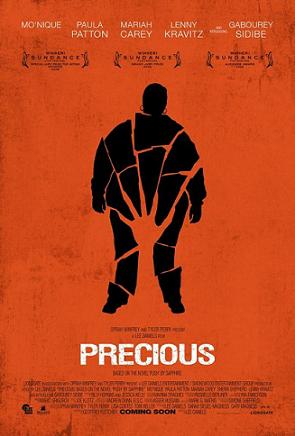 Liberation theology is branching out. The newest addition to this burgeoning field, after black liberation theology, feminist liberation theology, and gay liberation theology, appears to be fat liberation theology.
This is in line with a broader cultural movement, particularly in the United States, campaigning for the liberation and societal recognition of fat people. Similar to the homosexuals who adopted the pejorative "queer" others had labelled them with, the movement of overweight and obese men and women wears with pride the stigma "fat".
That this "fat acceptance" or "fat liberation" movement is increasingly becoming mainstream could be seen at the recent Academy Awards. Not only was the, as they say, "morbidly obese" Gabourey Sidibe nominated as Best Actress for her role in the small independent film "Precious: Based on the Novel 'Push' by Sapphire", but her only slightly less heavy co-star Mo'Nique actually won the Oscar for Best Supporting Actress in the same film.
In theology, this ties in with a book called "The Fat Jesus: Christianity and Body Image" by Lisa Isherwood (Seabury, 2008):
www.churchpublishing.org/products/index.cfm?fuseaction=productDetail&productID=3339
Publisher's description: "We are living in a food and body image obsessed culture. We are encouraged to over-consume by the marketing and media that surround us and then berated by those same forces for doing so. At the same time, we are bombarded with images of unnaturally thin celebrities who go to enormous lengths to retain an unrealistic body image, either by extremes of dieting or through plastic surgery or both. The spiritual realm is not immune from these pressures, as can be seen in the flourishing of biblically and faith based weight loss programs that encourage women to lose weight physically and gain spiritually.
"Isherwood examines this environment in light of Christian tradition, which has often had a difficult relationship with sexuality and embodiment and which has promoted ideals of restraint and asceticism. She argues that part of the reason for our current obsession and bizarre treatment of issues around weight, size and looks is that secular society has unknowingly absorbed many of its negative attitudes towards the body from its Christian heritage. Isherwood argues powerfully that there are resources within Christianity that can free us from this thinking, and lead us towards a more holistic, incarnational view of what it is to be human. The Fat Jesus provides a fascinating study of the complex ways that food, women and religion interconnect, and proposes a theology of embrace and expansion emphasizing the fullness of our incarnation."
Lisa Isherwood is Professor of Feminist Liberation Theologies at the University of Winchester and Vice President of the European Society of Women in Theological Research.
A blog by a Washington State pastoral psychotherapist explicitly promotes fat liberation theology:
http://kataphatic.wordpress.com/
Also interesting: "The Fat Studies Reader", edited by Esther Rothblum and Sondra Solovay, with a foreword by Marilyn Wann (New York University Press, 2009):
www.nyupress.org/books/The_Fat_Studies_Reader-products_id-11104.html
Reviews: "In the US, where two-thirds of the population are overweight or obese, [...] The Fat Studies Reader argues the problem is not obesity per se but the way it is presented in culture. Sociologists point to a 'societal fat phobia' which engenders prejudice against the obese – and argue that this prejudice is tolerated by those who would never dream of making racist or sexist remarks." ("The Independent")
"With a winning audacity, The Fat Studies Reader announces its intention to serve as the foundation of a new academic field. Its editors present convincing voices from law, medicine, social sciences and the humanities, making it difficult to dismiss their case that the time has come for fat studies." ("Ms. Magazine"; here and above italics originally bold)
"Fat studies is an arena where the personal, political and scientific converge, and with this book, readers can mount an informed challenge to the medical construction of obesity and size, the diet industry, insurance companies, public policy and popular culture .... It may be too soon for the movement to offer utopian alternatives, but these essays offer a rich supply of tools for the activist and scholar willing to start the revolution." ("Publishers Weekly")
Esther Rothblum is Professor of Women's Studies at San Diego State University.
Sondra Solovay is Adjunct Professor of Law at John F. Kennedy University and at San Francisco Law School.
Subscribe to:
Posts (Atom)

 Posts
Posts

