18 April 2014

19 May 2013
Been diagnosed with Asperger's
On 13 May 2013 I was diagnosed with Asperger syndrome, an autism spectrum disorder. The diagnosis was done at a university clinic and by a doctor specializing in autism in adults that weren't diagnosed as children (because Asperger's wasn't known as well back then).
I decided to make this information public, just as I've always been open about being gay.
Asperger's, in my case, means that I have little empathy and cannot make emotional connections with other people. It seems I am only able to make connections by way of intellectual stimuli, and few people are able to provide those (my IQ was measured at 145 during the Asperger's assessment).
In most situations I am brutally honest, but as someone living with Asperger's one also learns to lie in order to cover up one's shortcomings and appear "normal".
People who have found me strange or weird, arrogant or aloof in the past may find this illuminating. I know I did. I am sorry if because of Asperger's I hurt someone in ways that I still don't understand. I never set out to hurt anyone on purpose, but survival is hard if one has no social net to fall back on.
The fact that I have no friends, and no one to defend me, always attracted bullies. Asperger's meant that I couldn't protect myself either.
While throughout my life I went to extreme lengths, and way out of my autistic comfort zone, trying to live up to my own and other people's expectations, I admittedly could not but fall short. I could not be more sociable, I could not be more flexible, I needed time and space to myself to recharge, and so on.
There is plenty of information about Asperger's online, but if you're really interested, just ask.
I decided to make this information public, just as I've always been open about being gay.
Asperger's, in my case, means that I have little empathy and cannot make emotional connections with other people. It seems I am only able to make connections by way of intellectual stimuli, and few people are able to provide those (my IQ was measured at 145 during the Asperger's assessment).
In most situations I am brutally honest, but as someone living with Asperger's one also learns to lie in order to cover up one's shortcomings and appear "normal".
People who have found me strange or weird, arrogant or aloof in the past may find this illuminating. I know I did. I am sorry if because of Asperger's I hurt someone in ways that I still don't understand. I never set out to hurt anyone on purpose, but survival is hard if one has no social net to fall back on.
The fact that I have no friends, and no one to defend me, always attracted bullies. Asperger's meant that I couldn't protect myself either.
While throughout my life I went to extreme lengths, and way out of my autistic comfort zone, trying to live up to my own and other people's expectations, I admittedly could not but fall short. I could not be more sociable, I could not be more flexible, I needed time and space to myself to recharge, and so on.
There is plenty of information about Asperger's online, but if you're really interested, just ask.
19 November 2011
CFP: Occupy Philosophy: Dialogue and Reflection on Economic Inequality, Capitalism, and Democracy
Erich Kofmel - Google+
CFP: Occupy Philosophy: Dialogue and Reflection on Economic Inequality, Capitalism, and Democracy in America
A call for papers for the 13th Annual Graduate Philosophy Conference at Michigan State University:
"Occupy Philosophy:
Dialogue and Reflection on Economic Inequality, Capitalism, and Democracy in America
"February 10-11, 2012
"In light of recent events illuminating ongoing critiques of how wealth and resources are distributed in America, it is timely to interrogate the ethical, conceptual and methodological issues arising when capitalism and other political economic systems are evaluated. This conference is primarily concerned with the ways that philosophy can mediate discussions of economic power, human welfare, institutional justice, and the cost-benefit analyses that inform economic choices.
"Submission Guidelines:
We invite submissions of papers by graduate students. We welcome papers that broadly address issues in social and political philosophy; preference will be given to original contributions that incorporate discussions of the recent 'Occupation movement' and related events. Presentations should not exceed 30 minutes in length, and will be followed by a short commentary and moderated question and answer sessions. Submission deadline is January 6, 2012. Please submit abstract in addition to a paper suitable for blind review at philconf@msu.edu.
"Featured Speakers:
Featured Faculty:
John H. McClendon III, Professor of Philosophy at MSU
"Keynote:
Jason Read, Associate Professor of Philosophy at the University of Southern Maine
"Further Information:
For additional information about this conference, including registration information, accommodations and the conference itinerary, visit the conference web site: www.msu.edu/~philconf/."
The conference website has not yet been updated.
A call for papers for the 13th Annual Graduate Philosophy Conference at Michigan State University:
"Occupy Philosophy:
Dialogue and Reflection on Economic Inequality, Capitalism, and Democracy in America
"February 10-11, 2012
"In light of recent events illuminating ongoing critiques of how wealth and resources are distributed in America, it is timely to interrogate the ethical, conceptual and methodological issues arising when capitalism and other political economic systems are evaluated. This conference is primarily concerned with the ways that philosophy can mediate discussions of economic power, human welfare, institutional justice, and the cost-benefit analyses that inform economic choices.
"Submission Guidelines:
We invite submissions of papers by graduate students. We welcome papers that broadly address issues in social and political philosophy; preference will be given to original contributions that incorporate discussions of the recent 'Occupation movement' and related events. Presentations should not exceed 30 minutes in length, and will be followed by a short commentary and moderated question and answer sessions. Submission deadline is January 6, 2012. Please submit abstract in addition to a paper suitable for blind review at philconf@msu.edu.
"Featured Speakers:
Featured Faculty:
John H. McClendon III, Professor of Philosophy at MSU
"Keynote:
Jason Read, Associate Professor of Philosophy at the University of Southern Maine
"Further Information:
For additional information about this conference, including registration information, accommodations and the conference itinerary, visit the conference web site: www.msu.edu/~philconf/."
The conference website has not yet been updated.
05 October 2011
Books: Political Thought of Muslim Thinkers (in Persian)
Google:
Books: Political Thought of Muslim Thinkers (in Persian)
I've been asked to announce the publication, in Persian, of the 19 volumes of "Political Thought of Muslim Thinkers" (publisher's translation), edited by Aliakbar Alikhani (University of Tehran), by the press of the Institute for Social and Cultural Studies at the Ministry of Science, Research and Technology in Tehran.
The link below is to the Institute's website on which you may be able to find further information if you speak the language. Alternatively, please contact me and I will gladly put you in touch with the editor.
Here's a brief introduction in English: "A close study of various historical periods and theoretical, as well as scientific developments in the Islamic lands proves that Muslim thinkers have offered important thoughts and ideas in various areas of science. The emphasis put by Islam on the importance of knowledge caused Muslim scientists to produce science and develop its various fields, which gradually turned into a powerful current in social life and civilizational relations of the Muslim world. The high number of scholars, emergence of various theoretical and ideological schools, the production of numerous works in different spheres of politics, society and religion and other cultural and social developments in the Muslim world are clear signs of Muslim thinkers' concern with development in this field. Enthusiasm shown by Muslim thinkers to expound various political concepts and the impact of political events of early centuries after the advent of Islam led to the production of various political ideas, thoughts, and texts throughout the history of Islam.
"A research plan entitled 'Political Thought of Muslim Thinkers' is underway by the Institute for Social and Cultural Studies which examines and reviews this important current in history of the Islamic thought. It took more than four years before the Institute for Social and Cultural Studies could implement this research whose main goals were to provide information on political views of Muslim scientists, which can help us to better understand the role of science and thought in the Islamic civilization and culture and pave the way for more painstaking studies. Political scientists, scholars and researchers knew about less than 50 political thinkers before this research. The research started by studying the political ideas of more than 600 thinkers who had written books on politics, but finally, 280 thinkers were thoroughly studied and their biographies and political ideas were introduced in 19 volumes.
"Dr. Ali Akbar Alikhani provided the initial idea of the project and was later in charge of scientific management and editing of the content of the study. He was also responsible for all phases of the research. The foreword which has been written by him and comes at the beginning of all volumes contains important points in 13 paragraphs which are answers to possible questions. He has also written a detailed introduction entitled 'Introduction to Political Thought of Muslim Thinkers: A Few Notes' which has been added to the first volume. There, he provides in-depth insight into political thought of the Muslim world and sheds more light on important issues in this area of knowledge. Arrangement of thinkers in 19 volumes is based on their birthdates. The first thinker in the first volume is Abdolhamid Kateb who lived in 7th century AD. The last thinker to be mentioned is Tariq Ramezan who was born in 1962. Table of contents of the 19 volumes and names of their authors are as follows:
"Volume 1
Political Thought of Muslim Thinkers; Raising Some Questions/ Dr. Ali Akbar Alikhani
Abd al-Hamid ibn Yahya al-Katib/ Dr. Mohammad Salar Kasraee
Abu-Hanifa / Rostam Fallah and Dr. Ali-Akbar Alikhani
Imam Malik ibn Anas / Dr. Ahmad Pakatchi
Ibn-al-Muqaffa (Abu-Muhammad Abd-Allah Ruzbeh ibn Daduya)/ Dr. Ali Akbar Kamali Ardakani
Abu Yusuf Qadi / Dr. Ali Mohammad Salehi
Imam Shafi’i/ Dr. Ahmad Pakatchi
Abu 'Uthman 'Amr al-JAHIZ / Dr. Ali Akbar Alikhani and Dr. Mohammad Ali Abdollahzadeh
Ahmad ibn Hanbal/ Dr. Ahmad Pakatchi
Ikhwan al-Safa/Dr. Ali Fereidouni
Abu Ja'far Muhammad ibn Jarir al-Tabari / Dr. Reza Shirzadi
Muhammad ibn Zakariya al-Razi/ Dr. Morteza Bahrani
Abu Naṣr al-Farabi / Dr. Mohsen Mohajer-Nia
Abu al-Hasan al-Ash'ari / Dr. Ali Akbar Alikhani and Rostam Fallah
Abu al-Hasan al-Mas'udi / Dr. Morteza Yousefi-Rad
"Volume 2
Abu al-Hassan al-'Amiri / Dr. Ali Fereidouni
Ibn Babvayh/ Dr. Ahmad Pakatchi
Abu 'Ali Ahmad Ibn Miskawayh/ Dr. Mohsen Mohajer-Nia
Ferdowsi/ Dr. Taqi Rostamvandi
Al-Shaykh Al-Mufid/ Dr. Ali Khaleqi
Sayyid al-Murtadha / Dr. Mahmoud Shafiee
Abu Rayḥan al-Biruni/ Gholam-Hossein Moqimi
Abul ‘Ala Al-Ma’arri/ Dr. Morteza Bahrani
Alī ibn Muḥammad Mawardi/ Dr. Hatam Qaderi
Ibn Sina (Avecina)/ Dr. Hamid Nassaj
Abu al-Salah Halabi / Dr. Ali Khaleqi
Qadi Abu Ya'la/ Dr. Mohammad Hossein Jamshidi
Ibn Hazm/ Dr. Gholam-Hossein Zargari-Nejad
Shaykh Tusi/ Sayyed Mohammad Reza Mousavian
Abul-Fazl Bayhaqi/ Roya Mohammadi Porfekr
"Volume 3
Naser Khosrow/ Shervin Moqimi
Nizam al-Mulk/ Dr. Sayyed Javad Tabatabaie
Onsor al-Maali/ Dr. Asghar Eftekhari
Abu Hamid Mohammad al-Ghazzali / Dr. Hatam Qaderi
Allameh Tabarsi / Dr. Mohammad Akram Arefi
Sana'i Ghaznavi / Dr. Mohammad Hossein Jamshidi
Ibn Bajja (Avempace)/ Dr. Morteza Bahrani
Ibn Tofail (Abubacer)/ Dr. Ahmad Bani-Jamali
Ibn Rushd (Averroës)/ Mohammad Salman
Fakhr-I Muddabir/ Dr. Mansour Mir-Ahmadi
Allamah Muhammad Ibn IDr.is Hilli' / Dr. Ali Khaleqi
Fakhr al-Din al-Razi / Dr. Ali Akbar Alikhani
Shahab al-Din Suhrawardi / Dr. Taqi Rostamvandi
Afzaluddin Kashani/ Dr. Ahmad Bostani
Sadiduddin Muhammad Aufi / Dr. Reza Shirzadi
"Volume 4
Najm al-din Razi / Dr. Reza Shirzadi
Khajeh Nasir Toosi/ Dr. Morteza Yousefi-Rad
Mohaqiq Helli/ Rohollah Shariati
Mowlavi (Jalal ad-Din Muhammad Rumi)/ Dr. Mohammad Hossein Jamshidi
Saadi/ Dr. Sayyed Javad Tabatabaie
Ibn Haddad/ Dr. Mansour Mirahmadi
Ata Malik Juvaini/ Rostam Fallah and Dr. Ali Akbar Alikhani
Qutbuddin Shirazi/ Dr. Morteza Yousefi-Rad
Ibn Jama'a/ Sayyed Javad Mirkhalili
Rashid al-Din Fazlullah Hamadani/ Dr. Morteza Bahrani
Allama Helli/ Mohammad Kheradmand
Ibn al-Taqtaqi/ Dr. Hatam Qaderi
Ibn Taymiyyah/ Dr. Ali Akbar Alikhani
Naserudin Monshi Kermani/ Dr. Mohammad Ali Qassemi
Fakhr-ul Mohaqeqin/ Sayyed Mohammad Reza Mousavian
"Volume 5
Obeid Zakani/ Dr. Morteza Bahrani
Ibn Qayyim Al-Jawziyya/ Dr. Ali Akbar Alikhani and Rostam Fallah
Qutbuddin Razi/ Dr. Morteza Yousefi-Rad
Mir Sayyed Ali Hamadani/ Dr. Mohammad Salar Kasraee
Seyyed Heydar Amuli/ Rostam Fallah and Dr. Ali Akbar Alikhani
Al-Shatibi/ Dr. Mansour Mir-Ahmadi
Hafiz/ Dr. Mohammad Hossein Jamshidi
Ibn Khaldoun/ Dr. Ahmad Bani-Jamali
Mohammad Ibn Jamal al-din Makki 'Ameli (Shahid-e Avval) / Sayyed Mohammad Reza Mousavian
Fazel Meqdad/ Sayyed Mohammad Reza Mousavian
Ahmad al-Qalqashandi/ Dr. Gholam-Hossein Zargari-Nejad
Ali Davani/ Dr. Morteza Yousefi-Rad
Abu Abd-Allah Ibn al-Azraq / Dr. Sayyed Javad Tabatabaie
Vaez Kashefi/ Dr. Reza Shirzadi
Jalaluddin Al-Suyuti/ Dr. Ali Akbar Alikhani
"Volume 6
Roozbehan-e Khonji/ Dr. Sayyed Javad Tabatabaie
Ghiyas al-Din Mansour Dashtaki/ Dr. Ahmad Bostani
Mohaqiq Karaki / Dr. Sayyed Mohammad Ali Hosseinizadeh
Zayn al-Din al-Juba'i al'Amili (Shahid Thani) / Sayyed Mohammad Reza Mousavian
Mohaqiq Ardabili / Dr. Ali Khaleqi
Mustafa Ali Coulibaly / Dr. Mohammad Ali Qassemi
Sheikh Bahai/ Abulfazl Soltan-Mohammadi
Mirdamad/ Dr. Najaf Lakzaee
Mir Fendereski/ Dr. Najaf Lakzaee
Mulla SaDr.a/ Dr. Najaf Lakzaee
Alinaghi Komrehee/ Dr. Ali Khaleqi
Feiz Kashani/ Dr. Ali Khaleqi
Mohaqiq Khansari/ Hossein Abulfazli
Mohaqiq Sabzevari/ Dr. Najaf Lakzaee
Sheikh Horre Ameli / Dr. Ali Mohammad Salehi
"Volume 7
Molla Mohammad Baqir Majlesi/Abulfazl Soltanmohammadi
Nematollah Jazayeri/Dr. Mohammad Akram Arefi
Fazel Hendi/Dr. Ali Khaleqi
Qotb al-Din Neyrizi Shirazi/Dr. Mansoor Mirahmadi
Allama Yusuf al-Bahrani/Ruhollah Shariati
Jamal al-Din Muhammad Khansari/Abulfazl Soltanmohammadi
Shah Wali Allah Dehlavi/Rostam Fallah & Dr. Aliakbar Alikhani
Sheikh Muhammad Ibn Abd-al-Wahhab/Dr. Aliakbar Alikhani
Mohammad Baghir Vahid Behbahani/Abulfazl Soltanmohammadi
Mohammad Bayram al-Tunsi al-Aval/Dr. Mansoor Mirahmadi
Mohammad Ali kermanshahi/Dr. Gholamhossein Zargarinejad
Molla Mehdi Naraqi/Dr. Mohammad Akram Arefi
Mirzaye Qomi/Dr. Gholamhossein Zargarinejad
Aqa Mohammad Bidabadi/Mahmoud Haqiqi
Sayyed Mohammad Baqir Shafti/Dr. Gholamhossein Zargarinejad
"Volume 8
Mohammad Sadiq Marvzi/Dr. Mohammad Salar Kasraee
Mulla Ahmad Naraqi/Dr. Sayyed Sajjad Izdehi
Sayyed Jafar Kashfi /Abdolvahab Forati
Ghaem Magham Farahani/Dr. Sayyed Javad Tabatabai
Sheikh Mohammad Hassan Najafi (Saheb Javaher)/Dr. Sayyed Sajjad Izdehi
Abotaleb Behbahani/Dr. Gholamhossein Zargarinejad
Hajj Molla Hadi Sabzevari/Dr. Sayyed Javad Tabatabai
Sheikh Mortaza Ansari/Dr. Mohsen Mohajernia
Rifa'a al-Tahtawi/Dr. Aliakbar Alikhani
Ibn Abi Dhayyaf/Dr. Sattar Owdi & Asghar Sadeghi Yekta
Ahmad Faris Shidyaq/Asghar Sadeghi Yekta
Mulla Ali Kani/Dr. Aliakbar Alikhani & Sayyed Ali Fatemi
Amir Kabir/Dr. Aliakbar Alikhani
Majd al-Mulk Sinaki/Dr. Masoud Ariaeenia
Mirza Fath Ali Akhundzadeh/Dr. Masoud Ariaeenia
"Volume 9
Mirzaye Shirazi Awal/Hossein Hatami
Sir Sayyed Ahmed Khan Hindi/Dr. Mohammad Salar Kasraee
Khair al-Din Pasha al-Tunisi/Asghar Sadeghi Yekta
Ali Pasha Mubarak/Asghar Sadeghi Yekta
Mostashar al-Dawla/Dr. Sayyed Javad Tabatabai
Sayyed Mohammad Kazem Yazdi/Ruhollah Shariati
Mirza Malkum Khan/Dr. Masoud Ariaeenia
Sheikh Hadi Najmabadi/Dr. Aliakbar Alikhani & Sayyed Ali Fatemi
Abd al-Rahim Talebof Tabrizi/Dr. Naser Jamalzadeh
Nizam al Ulama Tabrizi/Dr. Gholamhossein Zargarinejad
Mirza Mohammad Ali Hajj Sayyah/Dr. Reza Shirzadi
Asadollah Shahrkhasti/Dr. Gholamhossein Zargarinejad
Jamal-ad-Din Asadabadi (al-Afghani)/Dr. Maghsood Ranjbar
Zayn al-Din Maraghehee/Dr. Masoud Ariaeenia
Mohammad Kazem Akhund Khorasani/Hossein Hatami
"Volume 10
Sheikh Abdollah Mazandarani/Towhid Moharrami
Sayyed Abdollah Behbahani/Dr. Bahram Nasrollahizadeh
Sayyed Mohammad Tabatabaei/Dr. Bahram Nasrollahizadeh
Sheikh Fazlollah Noori/Dr. Musa Najafi
Mirza Ali Khan Amin al-Dowleh/Dr. Sayyed Javad Tabatabai
Abdullah al-Nadim/Mohammad Maleki
Mohammad Hossein Tabrizi/Dr. Mohammad Salar Kasraee
Abolhassan Najafi Marandi/Dr. Mohammad Salar Kasraee
Sayyed Abdolhossein Lari/Dr. Sayyed Javad Tabatabai
Sayed Amir Ali Hindi/Dr. Ali Asghar Halabi
Mohammad Abduh/Dr. Morteza Bahrani
Sheik Mohammad Esmaeil Mahallati/Dr. Mohammad Pezeshki
Mirza Aqa Khan Kermani/Dr. Aliakbar Alikhani
Abd al-Rahman al-Kawakibi/Dr. Sayyd Ali Mahmoudi
Saad Zaghloul/Asghar Sadeghi Yekta
"Volume 11
Emad al-Ulama Khalkhali/Dr. Sayyed Khodayar Mortazavi
Saqat-ol-Islam Tabrizi/Asghar Sadeghi Yekta
Mirza Mohammad Hossein Naini/Dr. Mohammad Mansoornejad
Nourollah Esfahani/Dr. Taghi Soufi Niaraki
Qasim Amin/Dr. Morteza Bahrani
Nazem al-Islam Kermani/Dr. Reza Shirzadi
Molla Abd al-Rasul Madani Kashani/Mahmoud Haghighi
Sayyed Rasheed Radha/Ali Golmohammadi
Sayyed Abolhassan Esfahani/Dr. Bahram Nasrollahizadeh & Ebrahim Jamshidi
Shakib Arslan/Mohammad Maleki & Menar Ebrahimi
Sayyed Ashraf al-Din Gilani/Sayyed Reza Hosseini & Sayyed Ali Fatemi
Sayyed Hassan Modarres/Reza Isania
Ahmed Lutfi al-Sayyed/Dr. Morteza Bahrani
Mustafa Kamel/Mohammad Maleki
Abdul Aziz al-Saalabi/Asghar Sadeghi Yekta
"Volume 12
Sayyed Hossein Boroujerdi/Dr. Sayyed Mohammadreza Ahmadi Tabatabai
Mohammad Ali Shah-Abadi/Dr. Aliakbar Alikhani
Badi' al-Zaman Noursi/Dr. Aliakbar Alikhani
Allama Mohammad Iqbal/Dr. Aliakbar Alikhani
Mohammad Farid Wajdi/Dr. Sattar Owdi & Mohammad Maleki
Hassan Taghizadeh/Dr. Reza Shirzadi
Mojtahed Tabrizi/Dr. Ahmad Rahdar
Hoda Shaarawi/Asghar Sadeghi Yekta
Sati al-Husari/Abdolghader Savari & Asghar Sadeghi Yekta
Sheikh Reza Dehkharghani/Dr. Mohammad Salar Kasraee
Abd al-Rahman Shahbandar/Mohammad Maleki & Menar Ebrahimi
Sheikh Mohammad Khiyabani/Mohammad Reza Sayyad & Sayyed Ali Fatemi
Allameh Ali Akbar Dehkhoda/Dr. Mahdi Rezaee, Dr. Mohammad Hossein Jamshidi & Sayyed Ali Fatemi
Tajalli Sabzevari/Ebrahim Jamshidi
Mohammad Amin Rasoulzadeh/Dr. Reza Shirzadi
"Volume 13
Abd al-Karim Zanjani/Yousuf Khan Mohammadi
Mirza Mohammad Farrokhi Yazdi/Dr. Mohammad Hossein Jamshidi
Mustafa Abdel Raziq/Dr. Maryam H. Mahfouz & Asghar Sadeghi Yekta
Ahmad Amin/Dr. Maryam H.Mahfouz & Mohammad Maleki
Malek al-shoara Bahar/Dr. Mohammad Hossein Jamshidi
Ali Abdel Raziq/Dr. Aliakbar Alikhani
Mohamed Hassanein Heikal/Mohammad Maleki & Menar Ebrahimi
Abul Kalam Azad/Dr. Sayyed Qandil Abbas
Sayyed Mohsen Hakim/Sayyed Mohammad Reza Mousavian
Al-Sheikh Mohammad al-Bashir al-Ibrahimi/Mohammad Maleki & Menar Ebrahimi
Abbas Mahmoud al-Aqqad/Asghar Sadeghi Yekta
Abd al-Hamid bin BadisMohammad Maleki & Menar Ebrahimi
Hassan al-Hudaybi/Dr. Morteza Baharni
Sheikh Mahmoud Shaltut/Dr. Mohammad Hossein Jamshidi
Haj Mohammed Effendi Amin al-Hosseini/Mohammad Maleki & Dr. Maryam H. Mahfouz
"Volume 14
Mohammad-Ali Jamalzadeh/Dr. Mohammad Hossein Jamshidi
Mohammed Abu Zahre/Dr. Sattar Owdi
Tahir Al-Haddad/Asghar Sadeghi Yekta & Dr. Sattar Owdi
Ayatollah Al-Khoei/Dr. Mohammad Akram Arefi
Imam Khomeini/Dr. Mohammad Hossein Jamshidi
Al-Mawdudui/Gholamreza Khosravi
Allameh Tabatabai/Dr. Aliakbar Alikhani
Zaki Naguib Mahmoud/Mohammadreza Fartoosi
Malik Ben Nabi/Dr. Aliakbar Alikhani
Mohammed Al-Bahi/Asghar Sadeghi Yekta & Dr. Sattar Owdi
Sayyed Qotb/The late Siroos Soozangar
Hassan Al-Banna/Gholamreza Khosravi
Mohammad Taghi Shariati/Dr. Mohammad Hossein Jamshidi
Sayyed Fakhroddin Shadman/Dr. Aliakbar Alikhani
Mahdi Bazargan/Dr. Gholamreza Khajehsarvi
"Volume 15
Mohammad Hamidullah/Dr. Mohammad Javad Javid
Ahmed Al-Shaqiri /Mohammad Maleki & Dr. Sattar Owdi
Ahmad Fardid/The late Mohammad Madadpour
Allal Al-Fassi/Dr. Aliakbar Alikhani
Ayatollah Mahmoud Taleghani/Dr. Ali Shirkhani
Abul Hassan Nadvi/Dr. Mohammad Hossein Jamshidi
Mohammad Mahmoud Savvaf/Dr. Morteza Bahrani
Mustafa Al-sabaee /Dr. Morteza Bahrani
Mohammad Ahmad Khalafallah/Dr. Sattar Owdi & Houshang Rezaee
Abdul-Rahman Badawi/Asghar Sadeghi Yekta & Dr. Sattar Owdi
Mohammad Ghazzali/Dr. Morteza Bahrani
Tawfiq Al-Shawi/Dr. Mansour Mirahmadi
Sheikh Fazl Al-Rahman/Dr. Maryam H. Mahfouz & Houshang Rezaee
Khalid Mohammad Khalid/Dr. Morteza Bahrani
Morteza Motahhari/Khosrow Qobadi
"Volume 16
Fereidoon Adamiyat /Dr. Mohammad Pezeshki
Mohammad Talebi/Dr. Sattar Owdi & Houshang Rezaee
Mahdi Haeri Yazdi/Dr. Aliakbar Kamali Ardakani
Jalal Al-e-Ahmad/Dr. Sayyed Ali Mahmoudi
Mohammad Nakhshab/Morteza Kazemiyan
Anwar Abdul Malik/Mohammadreza Shakiba & Mohammad Maleki
Mohammad Taghi Jafari/Morteza Yousefirad
Qardawi/Dr. Morteza Bahrani
Hisham Sharabi/Dr. Morteza Bahrani
Fouad Zakaria/Dr. Aliakbar Alikhani
Mohammed Arkoun/Dr. Mohammad Javad Javid
Imam Musa Sadr/Dr. Mahmood Sariolghalam
Sayyed Mohammad Hosseini Beheshti/Dr. Alireza Hosseini Beheshti
Mohammad Sa'id Ramadan Al-Bouti/Dr. Asghar Eftekhari
Mostafa Khomeini/Dr. Mohammadhossein Jamshidi
"Volume 17
Samir Amin/Dr. Reza Shirzadi
Mohammad Al-Emare/Mohammad Maleki & Dr. Sattar Owdi
Mohammad Sa'id Al-Ashmawi/Dr. Hamid Ahmadi
Hamid Enayat/Dr. Mohammad Pezeshki
Reza Davari Ardakani/Dr. Maghsood Ranjbar
Sayyed Hossein Nasr/Dr. Qadir Nasri
Abdullah Al-Aroui/Yousef Azizi Banitorof
Ali Shariati/Dr. Mohammad Hossein Jamshidi
Monir Shafiq/Dr. Sattar Owdi & Mohammad Maleki
Abdollah Javadi-Amoli/Dr. Mohammad Javad Javid
Mohammad Taghi Mesbah Yazdi/Dr. Mohammad Javad Norouzi
Sadik Jalal El Adm/Asghar Sadeghi Yekta & Dr. Sattar Owdi
Tayeb Tizini /Dr. Aliakbar Alikhani
Dariush Shayegan/Dr. Masoud Pedram
Hassan Hanafi/Dr. Aliakbar Alikhani
"Volume 18
Mohammad Bagher Sadr /Dr. Mohammad Hossein Jamshidi
Taha Jabir Al-Alwani/Dr. Mansour Mirahmadi
Mohammad Mahdi Shamseddin/Dr. Aliakbar Kamali Ardakani
Sayyed Mohammad Hussein Fadlollah/Dr. Morteza Bahrani
Hichem Djaït/Mohammadreza Shakiba
Mohammad Mojtahed Shabestari/Dr. Sayyed Khodayar Mortazavi
Adil Zaher/Dr. Fariborz Moharramkhani
Ahmad Sedqi Al-Dajani/Mohammad Maleki & Dr. Sattar Owdi
Mohammad Sharafi/Dr. Maryam H. Mahfouz & Houshang Rezaee
Mohammad Abed Al-Jabri/Mohammad Taqi Karami
Mohammad Shahrour/Dr. Behrouz Yadollahpoor & Houshang Rezaee
Fethullah Gülen/Dr. Asadollah Athari
Mohammad Jabir Al-Ansari /Mohammad Maleki & Dr. Sattar Owdi
Fahmi Jada'an/Asghar Sadeghi Yekta & Dr. Maryam H. Mahfouz
Rashid Al-Ghannushi /Dr. Aliakbar Alikhani & Mohammad Sabir Seddiqi
"Volume 19
Ali Omlil /Dr. Maryam H. Mahfouz & Asghar Sadeghi Yekta
Nasr Hamid Abu Zaid/Dr. Aliakbar Alikhani
Iyad bin Ashur/Dr. Sattar Owdi & Houshang Rezaee
Farag Foda/Dr. Morteza Bahrani
Abdolkarim Soroush/Dr. Sayyed Khodayar Mortazavi
Burhan Ghalyoun/Hossein Abbasi
Aziz Al-Azmeh/Hossein Abbasi
Akbar Ahmed/Dr. Morteza Bahrani
Kamal Abdul-Latif/Dr. Sabri Anoushe & Asghar Sadeghi Yekta
Tariq Ramadan/Dr. Mohammad Javad Javid" (bold removed)
I've been asked to announce the publication, in Persian, of the 19 volumes of "Political Thought of Muslim Thinkers" (publisher's translation), edited by Aliakbar Alikhani (University of Tehran), by the press of the Institute for Social and Cultural Studies at the Ministry of Science, Research and Technology in Tehran.
The link below is to the Institute's website on which you may be able to find further information if you speak the language. Alternatively, please contact me and I will gladly put you in touch with the editor.
Here's a brief introduction in English: "A close study of various historical periods and theoretical, as well as scientific developments in the Islamic lands proves that Muslim thinkers have offered important thoughts and ideas in various areas of science. The emphasis put by Islam on the importance of knowledge caused Muslim scientists to produce science and develop its various fields, which gradually turned into a powerful current in social life and civilizational relations of the Muslim world. The high number of scholars, emergence of various theoretical and ideological schools, the production of numerous works in different spheres of politics, society and religion and other cultural and social developments in the Muslim world are clear signs of Muslim thinkers' concern with development in this field. Enthusiasm shown by Muslim thinkers to expound various political concepts and the impact of political events of early centuries after the advent of Islam led to the production of various political ideas, thoughts, and texts throughout the history of Islam.
"A research plan entitled 'Political Thought of Muslim Thinkers' is underway by the Institute for Social and Cultural Studies which examines and reviews this important current in history of the Islamic thought. It took more than four years before the Institute for Social and Cultural Studies could implement this research whose main goals were to provide information on political views of Muslim scientists, which can help us to better understand the role of science and thought in the Islamic civilization and culture and pave the way for more painstaking studies. Political scientists, scholars and researchers knew about less than 50 political thinkers before this research. The research started by studying the political ideas of more than 600 thinkers who had written books on politics, but finally, 280 thinkers were thoroughly studied and their biographies and political ideas were introduced in 19 volumes.
"Dr. Ali Akbar Alikhani provided the initial idea of the project and was later in charge of scientific management and editing of the content of the study. He was also responsible for all phases of the research. The foreword which has been written by him and comes at the beginning of all volumes contains important points in 13 paragraphs which are answers to possible questions. He has also written a detailed introduction entitled 'Introduction to Political Thought of Muslim Thinkers: A Few Notes' which has been added to the first volume. There, he provides in-depth insight into political thought of the Muslim world and sheds more light on important issues in this area of knowledge. Arrangement of thinkers in 19 volumes is based on their birthdates. The first thinker in the first volume is Abdolhamid Kateb who lived in 7th century AD. The last thinker to be mentioned is Tariq Ramezan who was born in 1962. Table of contents of the 19 volumes and names of their authors are as follows:
"Volume 1
Political Thought of Muslim Thinkers; Raising Some Questions/ Dr. Ali Akbar Alikhani
Abd al-Hamid ibn Yahya al-Katib/ Dr. Mohammad Salar Kasraee
Abu-Hanifa / Rostam Fallah and Dr. Ali-Akbar Alikhani
Imam Malik ibn Anas / Dr. Ahmad Pakatchi
Ibn-al-Muqaffa (Abu-Muhammad Abd-Allah Ruzbeh ibn Daduya)/ Dr. Ali Akbar Kamali Ardakani
Abu Yusuf Qadi / Dr. Ali Mohammad Salehi
Imam Shafi’i/ Dr. Ahmad Pakatchi
Abu 'Uthman 'Amr al-JAHIZ / Dr. Ali Akbar Alikhani and Dr. Mohammad Ali Abdollahzadeh
Ahmad ibn Hanbal/ Dr. Ahmad Pakatchi
Ikhwan al-Safa/Dr. Ali Fereidouni
Abu Ja'far Muhammad ibn Jarir al-Tabari / Dr. Reza Shirzadi
Muhammad ibn Zakariya al-Razi/ Dr. Morteza Bahrani
Abu Naṣr al-Farabi / Dr. Mohsen Mohajer-Nia
Abu al-Hasan al-Ash'ari / Dr. Ali Akbar Alikhani and Rostam Fallah
Abu al-Hasan al-Mas'udi / Dr. Morteza Yousefi-Rad
"Volume 2
Abu al-Hassan al-'Amiri / Dr. Ali Fereidouni
Ibn Babvayh/ Dr. Ahmad Pakatchi
Abu 'Ali Ahmad Ibn Miskawayh/ Dr. Mohsen Mohajer-Nia
Ferdowsi/ Dr. Taqi Rostamvandi
Al-Shaykh Al-Mufid/ Dr. Ali Khaleqi
Sayyid al-Murtadha / Dr. Mahmoud Shafiee
Abu Rayḥan al-Biruni/ Gholam-Hossein Moqimi
Abul ‘Ala Al-Ma’arri/ Dr. Morteza Bahrani
Alī ibn Muḥammad Mawardi/ Dr. Hatam Qaderi
Ibn Sina (Avecina)/ Dr. Hamid Nassaj
Abu al-Salah Halabi / Dr. Ali Khaleqi
Qadi Abu Ya'la/ Dr. Mohammad Hossein Jamshidi
Ibn Hazm/ Dr. Gholam-Hossein Zargari-Nejad
Shaykh Tusi/ Sayyed Mohammad Reza Mousavian
Abul-Fazl Bayhaqi/ Roya Mohammadi Porfekr
"Volume 3
Naser Khosrow/ Shervin Moqimi
Nizam al-Mulk/ Dr. Sayyed Javad Tabatabaie
Onsor al-Maali/ Dr. Asghar Eftekhari
Abu Hamid Mohammad al-Ghazzali / Dr. Hatam Qaderi
Allameh Tabarsi / Dr. Mohammad Akram Arefi
Sana'i Ghaznavi / Dr. Mohammad Hossein Jamshidi
Ibn Bajja (Avempace)/ Dr. Morteza Bahrani
Ibn Tofail (Abubacer)/ Dr. Ahmad Bani-Jamali
Ibn Rushd (Averroës)/ Mohammad Salman
Fakhr-I Muddabir/ Dr. Mansour Mir-Ahmadi
Allamah Muhammad Ibn IDr.is Hilli' / Dr. Ali Khaleqi
Fakhr al-Din al-Razi / Dr. Ali Akbar Alikhani
Shahab al-Din Suhrawardi / Dr. Taqi Rostamvandi
Afzaluddin Kashani/ Dr. Ahmad Bostani
Sadiduddin Muhammad Aufi / Dr. Reza Shirzadi
"Volume 4
Najm al-din Razi / Dr. Reza Shirzadi
Khajeh Nasir Toosi/ Dr. Morteza Yousefi-Rad
Mohaqiq Helli/ Rohollah Shariati
Mowlavi (Jalal ad-Din Muhammad Rumi)/ Dr. Mohammad Hossein Jamshidi
Saadi/ Dr. Sayyed Javad Tabatabaie
Ibn Haddad/ Dr. Mansour Mirahmadi
Ata Malik Juvaini/ Rostam Fallah and Dr. Ali Akbar Alikhani
Qutbuddin Shirazi/ Dr. Morteza Yousefi-Rad
Ibn Jama'a/ Sayyed Javad Mirkhalili
Rashid al-Din Fazlullah Hamadani/ Dr. Morteza Bahrani
Allama Helli/ Mohammad Kheradmand
Ibn al-Taqtaqi/ Dr. Hatam Qaderi
Ibn Taymiyyah/ Dr. Ali Akbar Alikhani
Naserudin Monshi Kermani/ Dr. Mohammad Ali Qassemi
Fakhr-ul Mohaqeqin/ Sayyed Mohammad Reza Mousavian
"Volume 5
Obeid Zakani/ Dr. Morteza Bahrani
Ibn Qayyim Al-Jawziyya/ Dr. Ali Akbar Alikhani and Rostam Fallah
Qutbuddin Razi/ Dr. Morteza Yousefi-Rad
Mir Sayyed Ali Hamadani/ Dr. Mohammad Salar Kasraee
Seyyed Heydar Amuli/ Rostam Fallah and Dr. Ali Akbar Alikhani
Al-Shatibi/ Dr. Mansour Mir-Ahmadi
Hafiz/ Dr. Mohammad Hossein Jamshidi
Ibn Khaldoun/ Dr. Ahmad Bani-Jamali
Mohammad Ibn Jamal al-din Makki 'Ameli (Shahid-e Avval) / Sayyed Mohammad Reza Mousavian
Fazel Meqdad/ Sayyed Mohammad Reza Mousavian
Ahmad al-Qalqashandi/ Dr. Gholam-Hossein Zargari-Nejad
Ali Davani/ Dr. Morteza Yousefi-Rad
Abu Abd-Allah Ibn al-Azraq / Dr. Sayyed Javad Tabatabaie
Vaez Kashefi/ Dr. Reza Shirzadi
Jalaluddin Al-Suyuti/ Dr. Ali Akbar Alikhani
"Volume 6
Roozbehan-e Khonji/ Dr. Sayyed Javad Tabatabaie
Ghiyas al-Din Mansour Dashtaki/ Dr. Ahmad Bostani
Mohaqiq Karaki / Dr. Sayyed Mohammad Ali Hosseinizadeh
Zayn al-Din al-Juba'i al'Amili (Shahid Thani) / Sayyed Mohammad Reza Mousavian
Mohaqiq Ardabili / Dr. Ali Khaleqi
Mustafa Ali Coulibaly / Dr. Mohammad Ali Qassemi
Sheikh Bahai/ Abulfazl Soltan-Mohammadi
Mirdamad/ Dr. Najaf Lakzaee
Mir Fendereski/ Dr. Najaf Lakzaee
Mulla SaDr.a/ Dr. Najaf Lakzaee
Alinaghi Komrehee/ Dr. Ali Khaleqi
Feiz Kashani/ Dr. Ali Khaleqi
Mohaqiq Khansari/ Hossein Abulfazli
Mohaqiq Sabzevari/ Dr. Najaf Lakzaee
Sheikh Horre Ameli / Dr. Ali Mohammad Salehi
"Volume 7
Molla Mohammad Baqir Majlesi/Abulfazl Soltanmohammadi
Nematollah Jazayeri/Dr. Mohammad Akram Arefi
Fazel Hendi/Dr. Ali Khaleqi
Qotb al-Din Neyrizi Shirazi/Dr. Mansoor Mirahmadi
Allama Yusuf al-Bahrani/Ruhollah Shariati
Jamal al-Din Muhammad Khansari/Abulfazl Soltanmohammadi
Shah Wali Allah Dehlavi/Rostam Fallah & Dr. Aliakbar Alikhani
Sheikh Muhammad Ibn Abd-al-Wahhab/Dr. Aliakbar Alikhani
Mohammad Baghir Vahid Behbahani/Abulfazl Soltanmohammadi
Mohammad Bayram al-Tunsi al-Aval/Dr. Mansoor Mirahmadi
Mohammad Ali kermanshahi/Dr. Gholamhossein Zargarinejad
Molla Mehdi Naraqi/Dr. Mohammad Akram Arefi
Mirzaye Qomi/Dr. Gholamhossein Zargarinejad
Aqa Mohammad Bidabadi/Mahmoud Haqiqi
Sayyed Mohammad Baqir Shafti/Dr. Gholamhossein Zargarinejad
"Volume 8
Mohammad Sadiq Marvzi/Dr. Mohammad Salar Kasraee
Mulla Ahmad Naraqi/Dr. Sayyed Sajjad Izdehi
Sayyed Jafar Kashfi /Abdolvahab Forati
Ghaem Magham Farahani/Dr. Sayyed Javad Tabatabai
Sheikh Mohammad Hassan Najafi (Saheb Javaher)/Dr. Sayyed Sajjad Izdehi
Abotaleb Behbahani/Dr. Gholamhossein Zargarinejad
Hajj Molla Hadi Sabzevari/Dr. Sayyed Javad Tabatabai
Sheikh Mortaza Ansari/Dr. Mohsen Mohajernia
Rifa'a al-Tahtawi/Dr. Aliakbar Alikhani
Ibn Abi Dhayyaf/Dr. Sattar Owdi & Asghar Sadeghi Yekta
Ahmad Faris Shidyaq/Asghar Sadeghi Yekta
Mulla Ali Kani/Dr. Aliakbar Alikhani & Sayyed Ali Fatemi
Amir Kabir/Dr. Aliakbar Alikhani
Majd al-Mulk Sinaki/Dr. Masoud Ariaeenia
Mirza Fath Ali Akhundzadeh/Dr. Masoud Ariaeenia
"Volume 9
Mirzaye Shirazi Awal/Hossein Hatami
Sir Sayyed Ahmed Khan Hindi/Dr. Mohammad Salar Kasraee
Khair al-Din Pasha al-Tunisi/Asghar Sadeghi Yekta
Ali Pasha Mubarak/Asghar Sadeghi Yekta
Mostashar al-Dawla/Dr. Sayyed Javad Tabatabai
Sayyed Mohammad Kazem Yazdi/Ruhollah Shariati
Mirza Malkum Khan/Dr. Masoud Ariaeenia
Sheikh Hadi Najmabadi/Dr. Aliakbar Alikhani & Sayyed Ali Fatemi
Abd al-Rahim Talebof Tabrizi/Dr. Naser Jamalzadeh
Nizam al Ulama Tabrizi/Dr. Gholamhossein Zargarinejad
Mirza Mohammad Ali Hajj Sayyah/Dr. Reza Shirzadi
Asadollah Shahrkhasti/Dr. Gholamhossein Zargarinejad
Jamal-ad-Din Asadabadi (al-Afghani)/Dr. Maghsood Ranjbar
Zayn al-Din Maraghehee/Dr. Masoud Ariaeenia
Mohammad Kazem Akhund Khorasani/Hossein Hatami
"Volume 10
Sheikh Abdollah Mazandarani/Towhid Moharrami
Sayyed Abdollah Behbahani/Dr. Bahram Nasrollahizadeh
Sayyed Mohammad Tabatabaei/Dr. Bahram Nasrollahizadeh
Sheikh Fazlollah Noori/Dr. Musa Najafi
Mirza Ali Khan Amin al-Dowleh/Dr. Sayyed Javad Tabatabai
Abdullah al-Nadim/Mohammad Maleki
Mohammad Hossein Tabrizi/Dr. Mohammad Salar Kasraee
Abolhassan Najafi Marandi/Dr. Mohammad Salar Kasraee
Sayyed Abdolhossein Lari/Dr. Sayyed Javad Tabatabai
Sayed Amir Ali Hindi/Dr. Ali Asghar Halabi
Mohammad Abduh/Dr. Morteza Bahrani
Sheik Mohammad Esmaeil Mahallati/Dr. Mohammad Pezeshki
Mirza Aqa Khan Kermani/Dr. Aliakbar Alikhani
Abd al-Rahman al-Kawakibi/Dr. Sayyd Ali Mahmoudi
Saad Zaghloul/Asghar Sadeghi Yekta
"Volume 11
Emad al-Ulama Khalkhali/Dr. Sayyed Khodayar Mortazavi
Saqat-ol-Islam Tabrizi/Asghar Sadeghi Yekta
Mirza Mohammad Hossein Naini/Dr. Mohammad Mansoornejad
Nourollah Esfahani/Dr. Taghi Soufi Niaraki
Qasim Amin/Dr. Morteza Bahrani
Nazem al-Islam Kermani/Dr. Reza Shirzadi
Molla Abd al-Rasul Madani Kashani/Mahmoud Haghighi
Sayyed Rasheed Radha/Ali Golmohammadi
Sayyed Abolhassan Esfahani/Dr. Bahram Nasrollahizadeh & Ebrahim Jamshidi
Shakib Arslan/Mohammad Maleki & Menar Ebrahimi
Sayyed Ashraf al-Din Gilani/Sayyed Reza Hosseini & Sayyed Ali Fatemi
Sayyed Hassan Modarres/Reza Isania
Ahmed Lutfi al-Sayyed/Dr. Morteza Bahrani
Mustafa Kamel/Mohammad Maleki
Abdul Aziz al-Saalabi/Asghar Sadeghi Yekta
"Volume 12
Sayyed Hossein Boroujerdi/Dr. Sayyed Mohammadreza Ahmadi Tabatabai
Mohammad Ali Shah-Abadi/Dr. Aliakbar Alikhani
Badi' al-Zaman Noursi/Dr. Aliakbar Alikhani
Allama Mohammad Iqbal/Dr. Aliakbar Alikhani
Mohammad Farid Wajdi/Dr. Sattar Owdi & Mohammad Maleki
Hassan Taghizadeh/Dr. Reza Shirzadi
Mojtahed Tabrizi/Dr. Ahmad Rahdar
Hoda Shaarawi/Asghar Sadeghi Yekta
Sati al-Husari/Abdolghader Savari & Asghar Sadeghi Yekta
Sheikh Reza Dehkharghani/Dr. Mohammad Salar Kasraee
Abd al-Rahman Shahbandar/Mohammad Maleki & Menar Ebrahimi
Sheikh Mohammad Khiyabani/Mohammad Reza Sayyad & Sayyed Ali Fatemi
Allameh Ali Akbar Dehkhoda/Dr. Mahdi Rezaee, Dr. Mohammad Hossein Jamshidi & Sayyed Ali Fatemi
Tajalli Sabzevari/Ebrahim Jamshidi
Mohammad Amin Rasoulzadeh/Dr. Reza Shirzadi
"Volume 13
Abd al-Karim Zanjani/Yousuf Khan Mohammadi
Mirza Mohammad Farrokhi Yazdi/Dr. Mohammad Hossein Jamshidi
Mustafa Abdel Raziq/Dr. Maryam H. Mahfouz & Asghar Sadeghi Yekta
Ahmad Amin/Dr. Maryam H.Mahfouz & Mohammad Maleki
Malek al-shoara Bahar/Dr. Mohammad Hossein Jamshidi
Ali Abdel Raziq/Dr. Aliakbar Alikhani
Mohamed Hassanein Heikal/Mohammad Maleki & Menar Ebrahimi
Abul Kalam Azad/Dr. Sayyed Qandil Abbas
Sayyed Mohsen Hakim/Sayyed Mohammad Reza Mousavian
Al-Sheikh Mohammad al-Bashir al-Ibrahimi/Mohammad Maleki & Menar Ebrahimi
Abbas Mahmoud al-Aqqad/Asghar Sadeghi Yekta
Abd al-Hamid bin BadisMohammad Maleki & Menar Ebrahimi
Hassan al-Hudaybi/Dr. Morteza Baharni
Sheikh Mahmoud Shaltut/Dr. Mohammad Hossein Jamshidi
Haj Mohammed Effendi Amin al-Hosseini/Mohammad Maleki & Dr. Maryam H. Mahfouz
"Volume 14
Mohammad-Ali Jamalzadeh/Dr. Mohammad Hossein Jamshidi
Mohammed Abu Zahre/Dr. Sattar Owdi
Tahir Al-Haddad/Asghar Sadeghi Yekta & Dr. Sattar Owdi
Ayatollah Al-Khoei/Dr. Mohammad Akram Arefi
Imam Khomeini/Dr. Mohammad Hossein Jamshidi
Al-Mawdudui/Gholamreza Khosravi
Allameh Tabatabai/Dr. Aliakbar Alikhani
Zaki Naguib Mahmoud/Mohammadreza Fartoosi
Malik Ben Nabi/Dr. Aliakbar Alikhani
Mohammed Al-Bahi/Asghar Sadeghi Yekta & Dr. Sattar Owdi
Sayyed Qotb/The late Siroos Soozangar
Hassan Al-Banna/Gholamreza Khosravi
Mohammad Taghi Shariati/Dr. Mohammad Hossein Jamshidi
Sayyed Fakhroddin Shadman/Dr. Aliakbar Alikhani
Mahdi Bazargan/Dr. Gholamreza Khajehsarvi
"Volume 15
Mohammad Hamidullah/Dr. Mohammad Javad Javid
Ahmed Al-Shaqiri /Mohammad Maleki & Dr. Sattar Owdi
Ahmad Fardid/The late Mohammad Madadpour
Allal Al-Fassi/Dr. Aliakbar Alikhani
Ayatollah Mahmoud Taleghani/Dr. Ali Shirkhani
Abul Hassan Nadvi/Dr. Mohammad Hossein Jamshidi
Mohammad Mahmoud Savvaf/Dr. Morteza Bahrani
Mustafa Al-sabaee /Dr. Morteza Bahrani
Mohammad Ahmad Khalafallah/Dr. Sattar Owdi & Houshang Rezaee
Abdul-Rahman Badawi/Asghar Sadeghi Yekta & Dr. Sattar Owdi
Mohammad Ghazzali/Dr. Morteza Bahrani
Tawfiq Al-Shawi/Dr. Mansour Mirahmadi
Sheikh Fazl Al-Rahman/Dr. Maryam H. Mahfouz & Houshang Rezaee
Khalid Mohammad Khalid/Dr. Morteza Bahrani
Morteza Motahhari/Khosrow Qobadi
"Volume 16
Fereidoon Adamiyat /Dr. Mohammad Pezeshki
Mohammad Talebi/Dr. Sattar Owdi & Houshang Rezaee
Mahdi Haeri Yazdi/Dr. Aliakbar Kamali Ardakani
Jalal Al-e-Ahmad/Dr. Sayyed Ali Mahmoudi
Mohammad Nakhshab/Morteza Kazemiyan
Anwar Abdul Malik/Mohammadreza Shakiba & Mohammad Maleki
Mohammad Taghi Jafari/Morteza Yousefirad
Qardawi/Dr. Morteza Bahrani
Hisham Sharabi/Dr. Morteza Bahrani
Fouad Zakaria/Dr. Aliakbar Alikhani
Mohammed Arkoun/Dr. Mohammad Javad Javid
Imam Musa Sadr/Dr. Mahmood Sariolghalam
Sayyed Mohammad Hosseini Beheshti/Dr. Alireza Hosseini Beheshti
Mohammad Sa'id Ramadan Al-Bouti/Dr. Asghar Eftekhari
Mostafa Khomeini/Dr. Mohammadhossein Jamshidi
"Volume 17
Samir Amin/Dr. Reza Shirzadi
Mohammad Al-Emare/Mohammad Maleki & Dr. Sattar Owdi
Mohammad Sa'id Al-Ashmawi/Dr. Hamid Ahmadi
Hamid Enayat/Dr. Mohammad Pezeshki
Reza Davari Ardakani/Dr. Maghsood Ranjbar
Sayyed Hossein Nasr/Dr. Qadir Nasri
Abdullah Al-Aroui/Yousef Azizi Banitorof
Ali Shariati/Dr. Mohammad Hossein Jamshidi
Monir Shafiq/Dr. Sattar Owdi & Mohammad Maleki
Abdollah Javadi-Amoli/Dr. Mohammad Javad Javid
Mohammad Taghi Mesbah Yazdi/Dr. Mohammad Javad Norouzi
Sadik Jalal El Adm/Asghar Sadeghi Yekta & Dr. Sattar Owdi
Tayeb Tizini /Dr. Aliakbar Alikhani
Dariush Shayegan/Dr. Masoud Pedram
Hassan Hanafi/Dr. Aliakbar Alikhani
"Volume 18
Mohammad Bagher Sadr /Dr. Mohammad Hossein Jamshidi
Taha Jabir Al-Alwani/Dr. Mansour Mirahmadi
Mohammad Mahdi Shamseddin/Dr. Aliakbar Kamali Ardakani
Sayyed Mohammad Hussein Fadlollah/Dr. Morteza Bahrani
Hichem Djaït/Mohammadreza Shakiba
Mohammad Mojtahed Shabestari/Dr. Sayyed Khodayar Mortazavi
Adil Zaher/Dr. Fariborz Moharramkhani
Ahmad Sedqi Al-Dajani/Mohammad Maleki & Dr. Sattar Owdi
Mohammad Sharafi/Dr. Maryam H. Mahfouz & Houshang Rezaee
Mohammad Abed Al-Jabri/Mohammad Taqi Karami
Mohammad Shahrour/Dr. Behrouz Yadollahpoor & Houshang Rezaee
Fethullah Gülen/Dr. Asadollah Athari
Mohammad Jabir Al-Ansari /Mohammad Maleki & Dr. Sattar Owdi
Fahmi Jada'an/Asghar Sadeghi Yekta & Dr. Maryam H. Mahfouz
Rashid Al-Ghannushi /Dr. Aliakbar Alikhani & Mohammad Sabir Seddiqi
"Volume 19
Ali Omlil /Dr. Maryam H. Mahfouz & Asghar Sadeghi Yekta
Nasr Hamid Abu Zaid/Dr. Aliakbar Alikhani
Iyad bin Ashur/Dr. Sattar Owdi & Houshang Rezaee
Farag Foda/Dr. Morteza Bahrani
Abdolkarim Soroush/Dr. Sayyed Khodayar Mortazavi
Burhan Ghalyoun/Hossein Abbasi
Aziz Al-Azmeh/Hossein Abbasi
Akbar Ahmed/Dr. Morteza Bahrani
Kamal Abdul-Latif/Dr. Sabri Anoushe & Asghar Sadeghi Yekta
Tariq Ramadan/Dr. Mohammad Javad Javid" (bold removed)

04 September 2011
31 August 2011
Article: Homo aspergerus: Evolution stumbles forward
Google:
Article: Homo aspergerus: Evolution stumbles forward
A further resource on the solitary being: Gary Westfahl (University of California, Riverside), " Homo aspergerus: Evolution stumbles forward", published on the website of "Locus: The Magazine of the Science Fiction & Fantasy Field" on 6 March 2006.
Excerpt: "I am now prepared to argue that Asperger's Syndrome should not be regarded as a handicap or as a debilitating condition; rather, it is a tremendous asset, a set of beneficial traits that may someday be recognized as the characteristics of a new, and superior, form of humanity. ... In this new era, then, those with a natural inclination to avoid others and the world around them will have an advantage."
A further resource on the solitary being: Gary Westfahl (University of California, Riverside), " Homo aspergerus: Evolution stumbles forward", published on the website of "Locus: The Magazine of the Science Fiction & Fantasy Field" on 6 March 2006.
Excerpt: "I am now prepared to argue that Asperger's Syndrome should not be regarded as a handicap or as a debilitating condition; rather, it is a tremendous asset, a set of beneficial traits that may someday be recognized as the characteristics of a new, and superior, form of humanity. ... In this new era, then, those with a natural inclination to avoid others and the world around them will have an advantage."

Article: A New Form of Social Withdrawal in Japan: a Review of Hikikomori
Google:
Article: A New Form of Social Withdrawal in Japan: a Review of Hikikomori
A medical, rather than sociological take on the phenomenon of hikikomori: Alan R. Teo (University of California, San Francisco), "A New Form of Social Withdrawal in Japan: a Review of Hikikomori " ("International Journal of Social Psychiatry", 56 [2], March 2010: pp. 178-85).
Quote: "Patients are mostly adolescent and young adult men who become recluses in their parents' homes for months or years. They withdraw from contact with family, rarely have friends, and do not attend school or hold a job. Never described before the late 1970s, hikikomori has become a silent epidemic with tens, perhaps hundreds, of thousands of cases now estimated in Japan."
A two-page response by a group of doctors reporting on a similar case in Spain was published in a subsequent issue of the same journal (56 [5], September 2010: pp. 558-9): http://isp.sagepub.com/content/56/5/558.extract
A medical, rather than sociological take on the phenomenon of hikikomori: Alan R. Teo (University of California, San Francisco), "A New Form of Social Withdrawal in Japan: a Review of Hikikomori " ("International Journal of Social Psychiatry", 56 [2], March 2010: pp. 178-85).
Quote: "Patients are mostly adolescent and young adult men who become recluses in their parents' homes for months or years. They withdraw from contact with family, rarely have friends, and do not attend school or hold a job. Never described before the late 1970s, hikikomori has become a silent epidemic with tens, perhaps hundreds, of thousands of cases now estimated in Japan."
A two-page response by a group of doctors reporting on a similar case in Spain was published in a subsequent issue of the same journal (56 [5], September 2010: pp. 558-9): http://isp.sagepub.com/content/56/5/558.extract

Book: Shutting out the Sun: How Japan Created Its Own Lost Generation
Google:
Book: Shutting out the Sun: How Japan Created Its Own Lost Generation
A resource for the fledgling research agenda (and Google+ circle) on "the solitary being": Michael Zielenziger (Berkeley), "Shutting out the Sun: How Japan Created Its Own Lost Generation" (Nan A. Talese/Doubleday, 2006).
Quote: "Japan ... confronts an array of disturbing social trends, notably a population of more than one million hikikomori: the young men who shut themselves in their rooms, withdrawing from society. There is also a growing numbers of 'parasite singles': single women who refuse to leave home, marry, or bear children."
A resource for the fledgling research agenda (and Google+ circle) on "the solitary being": Michael Zielenziger (Berkeley), "Shutting out the Sun: How Japan Created Its Own Lost Generation" (Nan A. Talese/Doubleday, 2006).
Quote: "Japan ... confronts an array of disturbing social trends, notably a population of more than one million hikikomori: the young men who shut themselves in their rooms, withdrawing from society. There is also a growing numbers of 'parasite singles': single women who refuse to leave home, marry, or bear children."

16 August 2011
CFP: Anti-Democracy Agenda Symposium 2011
Please circulate widely!
CALL FOR PAPERS
Anti-Democracy Agenda Symposium 2011
Organized by: Sussex Centre for the Individual and Society (SCIS)
Mode: Online by Google+ video conference
Date: 15-16 November 2011
The "Anti-Democracy Agenda" is the premier resource on the net for the study of anti-democratic thought and practice across the boundaries of various traditions and academic disciplines. First introduced by the Sussex Centre for the Individual and Society (SCIS) as a blog in January 2010, it has since been reconstituted as a circle (with associated public posts, much like a blog) on the new social network Google+. An archive of the blog is to be found here: http://anti-democracy-agenda.blogspot.com
For the new circle, see here:
https://plus.google.com/109507108125539761871/posts
The Anti-Democracy Agenda Symposium 2011 will be the third event we organize to advance the research agenda on anti-democratic thought and practice as well as old and new criticisms of democracy. It will build up on a highly successful workshop on anti-democratic thought SCIS organized at the Annual Conference Workshops in Political Theory in Manchester, England, in September 2007, as well as the Anti-Democracy Agenda Symposium 2010, taking place at the Swiss Federal Institute of Technology (ETH) Zurich in November last year. Both events drew participants from the world over. The Manchester workshop led to the publication of an edited volume on "Anti-Democratic Thought" (Imprint Academic, 2008).
The Anti-Democracy Agenda Symposium 2011 is set to be equally international and interdisciplinary in scope. We invite affiliated academics, independent scholars, and doctoral students and candidates from a wide range of disciplines, such as Philosophy, Political Theory, Political Science, International Relations, Development Studies, Security Studies, Law, Economics, Sociology, Anthropology, Psychology, Literature, History, Classics, Theology, Religious Studies, Education, and so on. Papers may not only cover any and all aspects of criticisms of democracy and anti-democratic thought and practice, from perspectives including anarchism, libertarianism, conservatism, communism, Islamism, the extreme right, and others, but also related concepts such as authoritarianism, dictatorship, military rule, monarchy, chieftaincy, mixed constitution, the backlash against democracy promotion, terrorism, post-democracy, voter apathy, voter ignorance, etc. Have a look at the blog to see what might be of interest and falls within our remit. Papers may be theoretical and/or empirical in nature. Work in progress is welcome too.
This symposium may be the first academic conference to make use of the “Hangouts” video conference facility that is an integral part of Google+. Due to technical restrictions, the number of participants in the Anti-Democracy Agenda Symposium 2011 is limited to 10. All accepted participants will be required to create a profile on Google+ in order to be able to participate in the event. While we encourage the participation of scholars from developing countries, please only apply if you have access to a stable Internet connection. As in our previous physical events, over the course of two days, each presenter will have 60 minutes to present his or her paper and discuss it with all others. Due to the small size of the symposium, all participants are expected to attend both days fully.
As with all SCIS events, no fees will be charged from participants, and no funding is available to cover participants' expenses (if any). We will be glad to issue letters of acceptance on request to assist participants in securing leave from work. Detailed instructions on how to set up a Google+ profile and join the video conference will be provided to confirmed participants.
Please send your proposal to: erichkofmel@gmail.com
Deadline: 15 October 2011
Later submissions may still be accepted, but early submission is strongly advised and proposals may be accepted as they come in.
Cordially,
Erich Kofmel
Managing Director / Research Professor of Political Theory
Sussex Centre for the Individual and Society (SCIS)
https://plus.google.com/109507108125539761871
E-mail: erichkofmel@gmail.com
Postal address:
Sussex Centre for the Individual and Society
1200 Geneva
Switzerland
SCIS is an international association under Swiss law.
Founded 2006 at the University of Sussex.
CALL FOR PAPERS
Anti-Democracy Agenda Symposium 2011
Organized by: Sussex Centre for the Individual and Society (SCIS)
Mode: Online by Google+ video conference
Date: 15-16 November 2011
The "Anti-Democracy Agenda" is the premier resource on the net for the study of anti-democratic thought and practice across the boundaries of various traditions and academic disciplines. First introduced by the Sussex Centre for the Individual and Society (SCIS) as a blog in January 2010, it has since been reconstituted as a circle (with associated public posts, much like a blog) on the new social network Google+. An archive of the blog is to be found here: http://anti-democracy-agenda.blogspot.com
For the new circle, see here:
https://plus.google.com/109507108125539761871/posts
The Anti-Democracy Agenda Symposium 2011 will be the third event we organize to advance the research agenda on anti-democratic thought and practice as well as old and new criticisms of democracy. It will build up on a highly successful workshop on anti-democratic thought SCIS organized at the Annual Conference Workshops in Political Theory in Manchester, England, in September 2007, as well as the Anti-Democracy Agenda Symposium 2010, taking place at the Swiss Federal Institute of Technology (ETH) Zurich in November last year. Both events drew participants from the world over. The Manchester workshop led to the publication of an edited volume on "Anti-Democratic Thought" (Imprint Academic, 2008).
The Anti-Democracy Agenda Symposium 2011 is set to be equally international and interdisciplinary in scope. We invite affiliated academics, independent scholars, and doctoral students and candidates from a wide range of disciplines, such as Philosophy, Political Theory, Political Science, International Relations, Development Studies, Security Studies, Law, Economics, Sociology, Anthropology, Psychology, Literature, History, Classics, Theology, Religious Studies, Education, and so on. Papers may not only cover any and all aspects of criticisms of democracy and anti-democratic thought and practice, from perspectives including anarchism, libertarianism, conservatism, communism, Islamism, the extreme right, and others, but also related concepts such as authoritarianism, dictatorship, military rule, monarchy, chieftaincy, mixed constitution, the backlash against democracy promotion, terrorism, post-democracy, voter apathy, voter ignorance, etc. Have a look at the blog to see what might be of interest and falls within our remit. Papers may be theoretical and/or empirical in nature. Work in progress is welcome too.
This symposium may be the first academic conference to make use of the “Hangouts” video conference facility that is an integral part of Google+. Due to technical restrictions, the number of participants in the Anti-Democracy Agenda Symposium 2011 is limited to 10. All accepted participants will be required to create a profile on Google+ in order to be able to participate in the event. While we encourage the participation of scholars from developing countries, please only apply if you have access to a stable Internet connection. As in our previous physical events, over the course of two days, each presenter will have 60 minutes to present his or her paper and discuss it with all others. Due to the small size of the symposium, all participants are expected to attend both days fully.
As with all SCIS events, no fees will be charged from participants, and no funding is available to cover participants' expenses (if any). We will be glad to issue letters of acceptance on request to assist participants in securing leave from work. Detailed instructions on how to set up a Google+ profile and join the video conference will be provided to confirmed participants.
Please send your proposal to: erichkofmel@gmail.com
Deadline: 15 October 2011
Later submissions may still be accepted, but early submission is strongly advised and proposals may be accepted as they come in.
Cordially,
Erich Kofmel
Managing Director / Research Professor of Political Theory
Sussex Centre for the Individual and Society (SCIS)
https://plus.google.com/109507108125539761871
E-mail: erichkofmel@gmail.com
Postal address:
Sussex Centre for the Individual and Society
1200 Geneva
Switzerland
SCIS is an international association under Swiss law.
Founded 2006 at the University of Sussex.
14 November 2010
CFP: "The Solitary Being" – Symposium in the Botanical Garden
Please circulate widely!
CALL FOR PAPERS
Fifth Anniversary International Symposium "The Solitary Being"
Organized by: Sussex Centre for the Individual and Society (SCIS)
Location: Orangery of the Botanical Garden of the University of Bern, Switzerland
Date: 26-27 May 2011
The "solitary man" is a staple of popular culture as much as philosophy. From medieval religious hermits to people medically diagnosed with autism or antisocial personality disorder, from the lone wolf of American frontier romanticism to the loner running amok in a university, from Ibn Bajjah/Avempace's "The Governance of the Solitary" to Nietzsche's "Übermensch", from the reclusive artist to Japan's tens of thousands of "hikikomori" voluntarily choosing to withdraw from society, examples are not limited to the arguably individualistic modern West, but rather seem to range across all societies, cultures, and times. There always have been those who do not fit the stereotype of man as a social being. Nevertheless, people who keep to themselves and do not engage in collaborative social action tend to be overlooked by social and political researchers and are therefore understudied.
The solitary human being (male or female) has been one of the interests of the Sussex Centre for the Individual and Society (SCIS) since its foundation in 2006. To celebrate our fifth anniversary in 2011, we will be organizing a rare symposium on "The Solitary Being" in the unique settings of a Botanical Garden. Previous SCIS symposia drew participants from the world over. Our anniversary symposium is set to be equally international and interdisciplinary in scope. We invite affiliated academics, independent scholars, and doctoral students and candidates from a wide range of disciplines, such as Anthropology, Sociology, Philosophy, Political Theory, Political Science, Cultural Studies, Literature, Theology, Religious Studies, Psychology, Cognitive Science, Law, History, Education, and so on. Papers may cover any and all aspects of "the solitary being" and/or his or her interaction with the (social) world. Papers may be theoretical and/or empirical in nature. Work in progress is welcome too.
We expect that 15-20 participants will be attending this workshop-style symposium. Over the course of two full days, each presenter will have 45-60 minutes (depending on the number of participants) to present his or her paper and discuss it with all others. The symposium starts early on Thursday and ends Friday late in the afternoon. Due to the small size of the symposium, all participants are expected to attend both days (unless an exception has been agreed in advance, i.e. for religious observance on Friday).
As with all SCIS events, no fees will be charged from participants, and no funding is available to cover participants' travel and accommodation expenses. We will be glad to issue letters of acceptance on request to assist participants in securing funding from their usual sources. The city of Bern – Switzerland's capital –, is connected to both the Zurich and Geneva international airports by direct train (approx. one hour from Zurich, two hours from Geneva) and offers a choice of accommodation. The historic town centre is a UNESCO World Heritage Site. The Botanical Garden of the University of Bern is arranged in descending terraces on the slopes of the river Aar, a tributary of the Rhine. On more than two hectares, it showcases vegetation from various ecological zones, in greenhouses and outdoors, such as alpine plants from Europe, Asia, and North America, tropical and subtropical plants (including orchids, palms, ferns, and cacti), Mediterranean, cold steppe, and semi-desert plants, woodland, water, medical, and fibre plants. Around six thousand plant species will make our anniversary symposium a feast of the senses, forms, fragrances, and colours. Further information will be provided to confirmed participants.
Please send your proposal to: e.kofmel@sussexcentre.org
Extended deadline: 30 April 2011
Later submissions may still be accepted, but early submission is strongly advised and proposals may be accepted as they come in.
Cordially,
Erich Kofmel
Managing Director / Research Professor of Political Theory
Sussex Centre for the Individual and Society (SCIS)
www.sussexcentre.org
E-mail: e.kofmel@sussexcentre.org
Postal address:
Sussex Centre for the Individual and Society
1200 Geneva
Switzerland
SCIS is an international association under Swiss law.
Founded 2006 at the University of Sussex.
CALL FOR PAPERS
Fifth Anniversary International Symposium "The Solitary Being"
Organized by: Sussex Centre for the Individual and Society (SCIS)
Location: Orangery of the Botanical Garden of the University of Bern, Switzerland
Date: 26-27 May 2011
The "solitary man" is a staple of popular culture as much as philosophy. From medieval religious hermits to people medically diagnosed with autism or antisocial personality disorder, from the lone wolf of American frontier romanticism to the loner running amok in a university, from Ibn Bajjah/Avempace's "The Governance of the Solitary" to Nietzsche's "Übermensch", from the reclusive artist to Japan's tens of thousands of "hikikomori" voluntarily choosing to withdraw from society, examples are not limited to the arguably individualistic modern West, but rather seem to range across all societies, cultures, and times. There always have been those who do not fit the stereotype of man as a social being. Nevertheless, people who keep to themselves and do not engage in collaborative social action tend to be overlooked by social and political researchers and are therefore understudied.
The solitary human being (male or female) has been one of the interests of the Sussex Centre for the Individual and Society (SCIS) since its foundation in 2006. To celebrate our fifth anniversary in 2011, we will be organizing a rare symposium on "The Solitary Being" in the unique settings of a Botanical Garden. Previous SCIS symposia drew participants from the world over. Our anniversary symposium is set to be equally international and interdisciplinary in scope. We invite affiliated academics, independent scholars, and doctoral students and candidates from a wide range of disciplines, such as Anthropology, Sociology, Philosophy, Political Theory, Political Science, Cultural Studies, Literature, Theology, Religious Studies, Psychology, Cognitive Science, Law, History, Education, and so on. Papers may cover any and all aspects of "the solitary being" and/or his or her interaction with the (social) world. Papers may be theoretical and/or empirical in nature. Work in progress is welcome too.
We expect that 15-20 participants will be attending this workshop-style symposium. Over the course of two full days, each presenter will have 45-60 minutes (depending on the number of participants) to present his or her paper and discuss it with all others. The symposium starts early on Thursday and ends Friday late in the afternoon. Due to the small size of the symposium, all participants are expected to attend both days (unless an exception has been agreed in advance, i.e. for religious observance on Friday).
As with all SCIS events, no fees will be charged from participants, and no funding is available to cover participants' travel and accommodation expenses. We will be glad to issue letters of acceptance on request to assist participants in securing funding from their usual sources. The city of Bern – Switzerland's capital –, is connected to both the Zurich and Geneva international airports by direct train (approx. one hour from Zurich, two hours from Geneva) and offers a choice of accommodation. The historic town centre is a UNESCO World Heritage Site. The Botanical Garden of the University of Bern is arranged in descending terraces on the slopes of the river Aar, a tributary of the Rhine. On more than two hectares, it showcases vegetation from various ecological zones, in greenhouses and outdoors, such as alpine plants from Europe, Asia, and North America, tropical and subtropical plants (including orchids, palms, ferns, and cacti), Mediterranean, cold steppe, and semi-desert plants, woodland, water, medical, and fibre plants. Around six thousand plant species will make our anniversary symposium a feast of the senses, forms, fragrances, and colours. Further information will be provided to confirmed participants.
Please send your proposal to: e.kofmel@sussexcentre.org
Extended deadline: 30 April 2011
Later submissions may still be accepted, but early submission is strongly advised and proposals may be accepted as they come in.
Cordially,
Erich Kofmel
Managing Director / Research Professor of Political Theory
Sussex Centre for the Individual and Society (SCIS)
www.sussexcentre.org
E-mail: e.kofmel@sussexcentre.org
Postal address:
Sussex Centre for the Individual and Society
1200 Geneva
Switzerland
SCIS is an international association under Swiss law.
Founded 2006 at the University of Sussex.
13 November 2010
Report on the Anti-Democracy Agenda Symposium 2010: Setting the example for the debate of the future
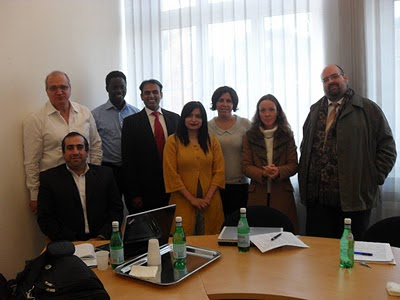
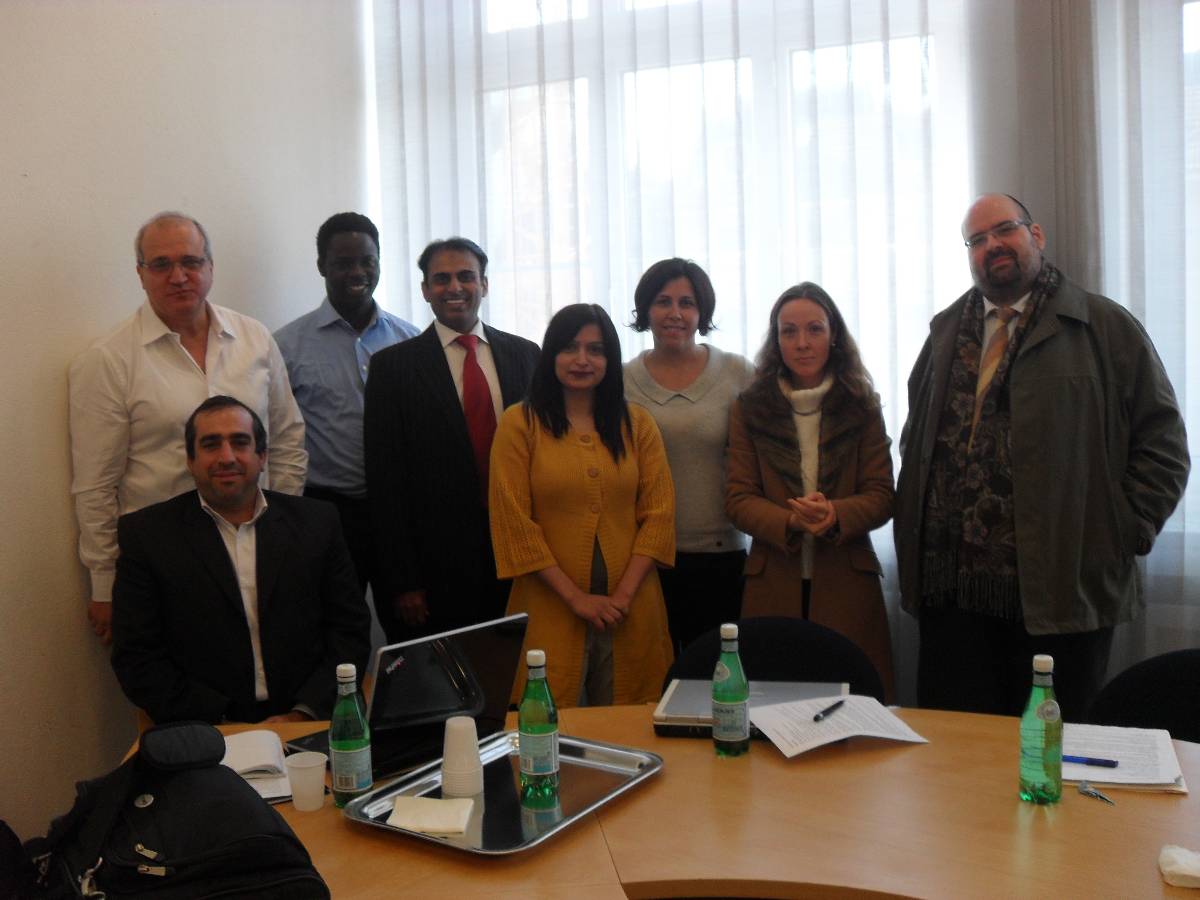
The first event held by the Geneva-based Sussex Centre for the Individual and Society (SCIS) in conjunction with its "Anti-Democracy Agenda" blog, the Anti-Democracy Agenda Symposium 2010, took place to great acclaim on 8 and 9 November 2010 at the Swiss Federal Institute of Technology (ETH) Zurich.
Keynotes to the symposium were contributed by Professor Doh Chull Shin, a native of Korea, director of the Korea Democracy Barometer, and core partner in the Asian Barometer Survey (an ongoing research project monitoring democratization in Asian countries), who is based in the Department of Political Science at the University of Missouri, a leading public research university in the United States, and Professor Kuldip Singh, Head of the Department of Political Science at Guru Nanak Dev University in Amritsar, India.
The Anti-Democracy Agenda Symposium 2010 attracted twelve papers submitted by participants from institutions such as the National University of Singapore, the University of the Philippines, the Technical University of Lisbon (Portugal), Ankara University (Turkey), the University of the Punjab, Quaid-i-Azam University (both Pakistan), the University of Central Oklahoma (USA), and the Islamic Azad University (Iran). Other countries and territories of origin or residence represented include Palestine, Hong Kong, New Zealand, the UK, Switzerland, Nigeria, Korea, and India.
Participants – from doctoral candidates to full professors – came from the disciplines of Political Science, Philosophy, Political Theory, Islamic Studies, Defence and Strategic Studies, Law, and Media Studies, giving theoretical as well as empirical presentations under the titles "Is Confucianism Anti-democratic?", "Islamic Philosophy and Criticizing Democracy", "Against Liberal Democracy", "Anti-Democracy Is Created By Means of Media", "Twenty-First Century Anti-Democracy: Theory and Practice in the World", "A Critique of Western Discourses of Sovereignty and Democracy from Chinese Lenses", "Reflecting on Anti-Democracy Forces in Arab Politics", "'Democracy' in Kazakhstan: Political System Managed from Above", "Pakistan’s Road to Democracy: Islam, Military and Silent Majority", "Democracy: A Form of Government or an Instinct?", "The Role of Ethics in Shaping Democracy: An Examination of Unethical Actions among House of Assembly Members in Nigeria", and "Pekan Anti Otoritarian: Some Observations on Anarchist Gathering at Indonesia".
After a workshop on "Anti-Democratic Thought" in Manchester in 2007, this was the second symposium on anti-democracy organized by the Sussex Centre for the Individual and Society and, once more, it opened up new frontiers for the study of anti-democratic thought and practice. Bringing together scholars from both sides of the debate, advocates of democracy as well as critics and opponents, it set the example for the proper academic conduct of a discussion that does not take place anywhere else, yet. Focusing on twenty-first century anti-democracy, rather than historical expressions and criticisms, it shone the way toward the most important debate of the near future. Asia will play as central a role in that debate as participants from Asia did in our symposium.
The Anti-Democracy Agenda blog and the Sussex Centre for the Individual and Society will continue to be at the forefront of these developments.
Keynotes to the symposium were contributed by Professor Doh Chull Shin, a native of Korea, director of the Korea Democracy Barometer, and core partner in the Asian Barometer Survey (an ongoing research project monitoring democratization in Asian countries), who is based in the Department of Political Science at the University of Missouri, a leading public research university in the United States, and Professor Kuldip Singh, Head of the Department of Political Science at Guru Nanak Dev University in Amritsar, India.
The Anti-Democracy Agenda Symposium 2010 attracted twelve papers submitted by participants from institutions such as the National University of Singapore, the University of the Philippines, the Technical University of Lisbon (Portugal), Ankara University (Turkey), the University of the Punjab, Quaid-i-Azam University (both Pakistan), the University of Central Oklahoma (USA), and the Islamic Azad University (Iran). Other countries and territories of origin or residence represented include Palestine, Hong Kong, New Zealand, the UK, Switzerland, Nigeria, Korea, and India.
Participants – from doctoral candidates to full professors – came from the disciplines of Political Science, Philosophy, Political Theory, Islamic Studies, Defence and Strategic Studies, Law, and Media Studies, giving theoretical as well as empirical presentations under the titles "Is Confucianism Anti-democratic?", "Islamic Philosophy and Criticizing Democracy", "Against Liberal Democracy", "Anti-Democracy Is Created By Means of Media", "Twenty-First Century Anti-Democracy: Theory and Practice in the World", "A Critique of Western Discourses of Sovereignty and Democracy from Chinese Lenses", "Reflecting on Anti-Democracy Forces in Arab Politics", "'Democracy' in Kazakhstan: Political System Managed from Above", "Pakistan’s Road to Democracy: Islam, Military and Silent Majority", "Democracy: A Form of Government or an Instinct?", "The Role of Ethics in Shaping Democracy: An Examination of Unethical Actions among House of Assembly Members in Nigeria", and "Pekan Anti Otoritarian: Some Observations on Anarchist Gathering at Indonesia".
After a workshop on "Anti-Democratic Thought" in Manchester in 2007, this was the second symposium on anti-democracy organized by the Sussex Centre for the Individual and Society and, once more, it opened up new frontiers for the study of anti-democratic thought and practice. Bringing together scholars from both sides of the debate, advocates of democracy as well as critics and opponents, it set the example for the proper academic conduct of a discussion that does not take place anywhere else, yet. Focusing on twenty-first century anti-democracy, rather than historical expressions and criticisms, it shone the way toward the most important debate of the near future. Asia will play as central a role in that debate as participants from Asia did in our symposium.
The Anti-Democracy Agenda blog and the Sussex Centre for the Individual and Society will continue to be at the forefront of these developments.
13 September 2010
CFP: Political Theology Agenda Symposium 2011
Please circulate widely!
CALL FOR PAPERS
Political Theology Agenda Symposium 2011
Organized by: Sussex Centre for the Individual and Society (SCIS)
Location: Ecumenical Institute of the World Council of Churches (WCC) and the University of Geneva, Château de Bossey, near Geneva, Switzerland
Date: 12-13 July 2011
The "Political Theology Agenda" (www.political-theology-agenda.blogspot.com) has been run by the Sussex Centre for the Individual and Society since January 2009. The blog is the premier resource on the net for the comparative study of political theology and political theologies across the boundaries of various traditions and academic disciplines.
The Political Theology Agenda Symposium 2011 will be the second event we organize in conjunction with the blog. It follows on from a highly successful first symposium held in Geneva in August 2010 and two equally well-received events on comparative political theology SCIS organized earlier, namely, in September 2007, a section and symposium at the General Conference of the European Consortium for Political Research in Pisa, Italy, and, in July 2008, a stand-alone symposium at Sciences Po/the Institute for Political Studies (IEP) in Paris, France. All three events drew participants from the world over.
The Political Theology Agenda Symposium 2011 is set to be equally international and interdisciplinary in scope. We invite affiliated academics, independent scholars, and doctoral students and candidates from a wide range of disciplines, such as Theology, Religious Studies, Philosophy, Political Theory, Political Science, International Relations, Law, Literature, History, Jewish Studies, Education, Cultural Studies, Geography, and so on. Papers may not only cover any and all aspects of political theology, but also related concepts, such as liberation theology, public theology, black theology, the Christian Right, Radical Orthodoxy, religious anarchism, Minjung theology, Dalit theology, radical Islam, religious Zionism, political religion, civil religion, etc. Have a look at the blog to see what might be of interest and falls within our remit. Papers may be theoretical and/or empirical in nature. Although not a condition, we particularly encourage a comparative perspective. Work in progress is welcome too.
We expect that 15-20 participants will be attending the workshop-style Political Theology Agenda Symposium 2011. Over the course of two full days, each presenter will have 45-60 minutes (depending on the number of participants) to present his or her paper and discuss it with all others. The symposium starts early on Tuesday and ends Wednesday late in the afternoon. Due to the small size of the symposium, all participants are expected to attend both days.
As with all SCIS events, no fees will be charged from participants, and no funding is available to cover participants' travel and accommodation expenses. We will be glad to issue letters of acceptance on request to assist participants in securing funding from their usual sources. The 18th-century Château de Bossey, set in an outstanding natural environment overlooking Lake Geneva and the French Alps, offers comfortable accommodation at reasonable prices. Further information will be provided to confirmed participants.
Please send your proposal to: e.kofmel@sussexcentre.org
Deadline: 31 January 2011
Later submissions may still be accepted, but early submission is strongly advised and proposals may be accepted as they come in.
Cordially,
Erich Kofmel
Managing Director / Research Professor of Political Theory
Sussex Centre for the Individual and Society (SCIS)
www.sussexcentre.org
E-mail: e.kofmel@sussexcentre.org
Postal address:
Sussex Centre for the Individual and Society
1200 Geneva
Switzerland
SCIS is an international association under Swiss law.
Founded 2006 at the University of Sussex.
CALL FOR PAPERS
Political Theology Agenda Symposium 2011
Organized by: Sussex Centre for the Individual and Society (SCIS)
Location: Ecumenical Institute of the World Council of Churches (WCC) and the University of Geneva, Château de Bossey, near Geneva, Switzerland
Date: 12-13 July 2011
The "Political Theology Agenda" (www.political-theology-agenda.blogspot.com) has been run by the Sussex Centre for the Individual and Society since January 2009. The blog is the premier resource on the net for the comparative study of political theology and political theologies across the boundaries of various traditions and academic disciplines.
The Political Theology Agenda Symposium 2011 will be the second event we organize in conjunction with the blog. It follows on from a highly successful first symposium held in Geneva in August 2010 and two equally well-received events on comparative political theology SCIS organized earlier, namely, in September 2007, a section and symposium at the General Conference of the European Consortium for Political Research in Pisa, Italy, and, in July 2008, a stand-alone symposium at Sciences Po/the Institute for Political Studies (IEP) in Paris, France. All three events drew participants from the world over.
The Political Theology Agenda Symposium 2011 is set to be equally international and interdisciplinary in scope. We invite affiliated academics, independent scholars, and doctoral students and candidates from a wide range of disciplines, such as Theology, Religious Studies, Philosophy, Political Theory, Political Science, International Relations, Law, Literature, History, Jewish Studies, Education, Cultural Studies, Geography, and so on. Papers may not only cover any and all aspects of political theology, but also related concepts, such as liberation theology, public theology, black theology, the Christian Right, Radical Orthodoxy, religious anarchism, Minjung theology, Dalit theology, radical Islam, religious Zionism, political religion, civil religion, etc. Have a look at the blog to see what might be of interest and falls within our remit. Papers may be theoretical and/or empirical in nature. Although not a condition, we particularly encourage a comparative perspective. Work in progress is welcome too.
We expect that 15-20 participants will be attending the workshop-style Political Theology Agenda Symposium 2011. Over the course of two full days, each presenter will have 45-60 minutes (depending on the number of participants) to present his or her paper and discuss it with all others. The symposium starts early on Tuesday and ends Wednesday late in the afternoon. Due to the small size of the symposium, all participants are expected to attend both days.
As with all SCIS events, no fees will be charged from participants, and no funding is available to cover participants' travel and accommodation expenses. We will be glad to issue letters of acceptance on request to assist participants in securing funding from their usual sources. The 18th-century Château de Bossey, set in an outstanding natural environment overlooking Lake Geneva and the French Alps, offers comfortable accommodation at reasonable prices. Further information will be provided to confirmed participants.
Please send your proposal to: e.kofmel@sussexcentre.org
Deadline: 31 January 2011
Later submissions may still be accepted, but early submission is strongly advised and proposals may be accepted as they come in.
Cordially,
Erich Kofmel
Managing Director / Research Professor of Political Theory
Sussex Centre for the Individual and Society (SCIS)
www.sussexcentre.org
E-mail: e.kofmel@sussexcentre.org
Postal address:
Sussex Centre for the Individual and Society
1200 Geneva
Switzerland
SCIS is an international association under Swiss law.
Founded 2006 at the University of Sussex.
20 August 2010
Report on the Political Theology Agenda Symposium 2010: Political theology goes East and South
The first event held by the Geneva-based Sussex Centre for the Individual and Society (SCIS) in conjunction with its "Political Theology Agenda" blog, the Political Theology Agenda Symposium 2010, was a full success.
It took place on 18 and 19 August 2010 at the Ecumenical Institute of the World Council of Churches (WCC), Château de Bossey, near Geneva, Switzerland. Bossey doubles as an institute of the University of Geneva since all degrees awarded there (Masters and PhD degrees in Ecumenical Studies) are granted by the University of Geneva.
Keynote speakers were Professor Aliakbar Alikhani, Head of the Institute for Social and Cultural Studies at the Ministry of Science, Research and Technology in Tehran, Iran, and Professor Galip Veliu from the Department of Philosophy at the State University of Tetovo in the Former Yugoslav Republic of Macedonia.
The Political Theology Agenda Symposium 2010 attracted seventeen papers submitted by participants from institutions such as University College London, the University of Birmingham (both UK), the University of Helsinki (Finland), the University of Quebec at Montreal (Canada), the University of Tehran (Iran), the University of the Punjab (Pakistan), the University of South Africa, the University of Zimbabwe, the National University of Malaysia, Universitas Nasional at Jakarta (Indonesia), and San Beda College in Manila (the Philippines). Other countries represented include Macedonia, Romania, Lithuania, Switzerland, and Nigeria.
Speakers – from doctoral candidates to full professors – came from the disciplines of Political Science, Philosophy, Political Theory, Theology, Church History, and Islamic Studies, giving theoretical as well as empirical presentations on subjects including secularization and religious pluralism, political theology, black theology, liberation theology, and radical Islam.
After Pisa, Italy, in 2007 and Paris, France, in 2008, this was the third symposium on political theology organized by the Sussex Centre for the Individual and Society and, once more, it opened up new frontiers for political theology. It was by far the most international event we ever organized (and quite possibly the most international event on political theology to take place anywhere as yet) with five participants from Iran alone and scores of submissions (not all accepted) from the Middle East and East Asia as well as Africa. Taken together with a high number of submissions from (South-)Eastern Europe, there is a significant trend to be observed: after gaining momentum in the Anglophone countries over the past few years, the study of political theology now goes East and South, spreading to Asia and Africa.
The Political Theology Agenda blog and the Sussex Centre for the Individual and Society will continue to be at the forefront of these developments.
(On the downside, all prospective American and Israeli participants withdrew, one by one, from the symposium once they knew that there would be Iranians present. Way to encourage dialogue.)

It took place on 18 and 19 August 2010 at the Ecumenical Institute of the World Council of Churches (WCC), Château de Bossey, near Geneva, Switzerland. Bossey doubles as an institute of the University of Geneva since all degrees awarded there (Masters and PhD degrees in Ecumenical Studies) are granted by the University of Geneva.
Keynote speakers were Professor Aliakbar Alikhani, Head of the Institute for Social and Cultural Studies at the Ministry of Science, Research and Technology in Tehran, Iran, and Professor Galip Veliu from the Department of Philosophy at the State University of Tetovo in the Former Yugoslav Republic of Macedonia.
The Political Theology Agenda Symposium 2010 attracted seventeen papers submitted by participants from institutions such as University College London, the University of Birmingham (both UK), the University of Helsinki (Finland), the University of Quebec at Montreal (Canada), the University of Tehran (Iran), the University of the Punjab (Pakistan), the University of South Africa, the University of Zimbabwe, the National University of Malaysia, Universitas Nasional at Jakarta (Indonesia), and San Beda College in Manila (the Philippines). Other countries represented include Macedonia, Romania, Lithuania, Switzerland, and Nigeria.
Speakers – from doctoral candidates to full professors – came from the disciplines of Political Science, Philosophy, Political Theory, Theology, Church History, and Islamic Studies, giving theoretical as well as empirical presentations on subjects including secularization and religious pluralism, political theology, black theology, liberation theology, and radical Islam.
After Pisa, Italy, in 2007 and Paris, France, in 2008, this was the third symposium on political theology organized by the Sussex Centre for the Individual and Society and, once more, it opened up new frontiers for political theology. It was by far the most international event we ever organized (and quite possibly the most international event on political theology to take place anywhere as yet) with five participants from Iran alone and scores of submissions (not all accepted) from the Middle East and East Asia as well as Africa. Taken together with a high number of submissions from (South-)Eastern Europe, there is a significant trend to be observed: after gaining momentum in the Anglophone countries over the past few years, the study of political theology now goes East and South, spreading to Asia and Africa.
The Political Theology Agenda blog and the Sussex Centre for the Individual and Society will continue to be at the forefront of these developments.
(On the downside, all prospective American and Israeli participants withdrew, one by one, from the symposium once they knew that there would be Iranians present. Way to encourage dialogue.)
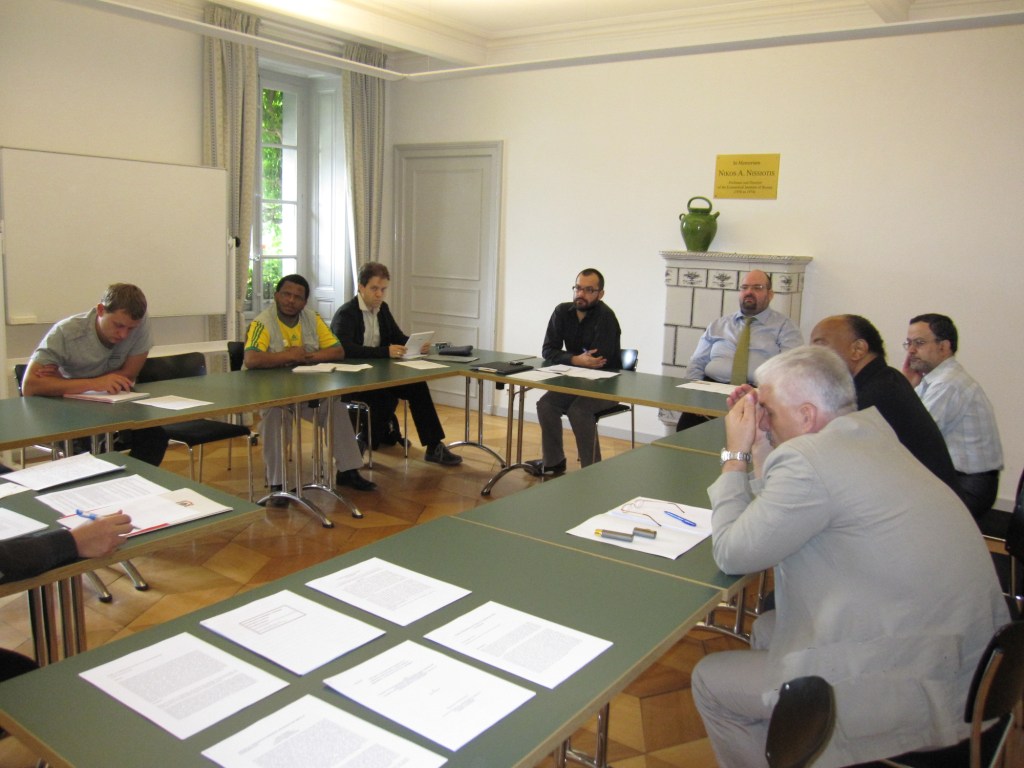
06 May 2010
CFP: Anti-Democracy Agenda Symposium 2010
Please circulate widely!
CALL FOR PAPERS
Anti-Democracy Agenda Symposium 2010
Organized by: Sussex Centre for the Individual and Society (SCIS)
Location: Gottfried-Semper Villa Garbald, part of the Collegium Helveticum of the Swiss Federal Institute of Technology (ETH) Zurich and the University of Zurich, at Castasegna, in the Swiss Alps
Date: 8-10 November 2010
The "Anti-Democracy Agenda" (www.anti-democracy-agenda.blogspot.com) has been run by the Sussex Centre for the Individual and Society since January 2010. The blog is the premier resource on the net for the study of anti-democratic thought and practice across the boundaries of various traditions and academic disciplines.
The Anti-Democracy Agenda Symposium 2010 will be the first event we organize in conjunction with the blog. It will build up though on a highly successful event on anti-democratic thought SCIS organized earlier, at the Annual Conference Workshops in Political Theory in Manchester, England, in September 2007, drawing participants from the world over. That workshop led to the publication of an edited volume, "Anti-Democratic Thought" (Imprint Academic), in December 2008.
The Anti-Democracy Agenda Symposium 2010 is set to be equally international and interdisciplinary in scope. We invite affiliated academics, independent scholars, and doctoral students and candidates from a wide range of disciplines, such as Philosophy, Political Theory, Political Science, International Relations, Development Studies, Security Studies, Law, Economics, Sociology, Anthropology, Psychology, Literature, History, Classics, Theology, Religious Studies, Education, and so on. Papers may not only cover any and all aspects of criticisms of democracy and anti-democratic thought and practice, from perspectives including anarchism, libertarianism, conservatism, communism, Islamism, the extreme right, and others, but also related concepts such as authoritarianism, dictatorship, military rule, monarchy, chieftaincy, mixed constitution, the backlash against democracy promotion, terrorism, post-democracy, voter apathy, voter ignorance, etc. Have a look at the blog to see what might be of interest and falls within our remit. Papers may be theoretical and/or empirical in nature. Work in progress is welcome too.
We expect that 10-15 participants will be attending the workshop-style Anti-Democracy Agenda Symposium 2010. Over the course of two and a half days, each presenter will have 60 minutes to present his or her paper and discuss it with all others.
As with all SCIS events, no fees will be charged from participants, and no funding is available to cover participants' travel and accommodation expenses. We will be glad to issue letters of invitation on request to assist participants in securing funding from their usual sources. The charges payable directly to the Villa Garbald (approx. $510 half-board/$570 full-board per person) cover accommodation for three nights and food and drink (except alcohol and minibar) throughout your stay. Participants will be arriving on Sunday, taking in the magnificent scenery of the Swiss Alps on a spectacular 5-hour train journey from Zurich airport (via St. Moritz) to a remote Italian-speaking Swiss valley (Val Bregaglia), home to Europe's largest chestnut forest, and leave on Wednesday after lunch, on the same way (cost of a return ticket approx. $115). Alternatively, you can get there in 3-4 hours by train from Milano airport, passing Lake Como. During the symposium there will be ample time to explore the surroundings. Please feel free to contact us with any questions. Detailed travel instructions will be provided to confirmed participants. Don't miss this unique opportunity.
The Italian-style Villa Garbald was built by German star architect Gottfried Semper (of Semper Opera in Dresden and Vienna Burgtheater fame) during his exile in Switzerland. A pro-democracy activist in aristocratic mid-19th century Germany, his experiences with direct-democratic government in Switzerland turned him in later life increasingly against democracy.
Please send your proposal to: e.kofmel@sussexcentre.org
Deadline: 31 July 2010
Later submissions may still be accepted, but early submission is strongly advised and proposals may be accepted as they come in.
Cordially,
Erich Kofmel
Managing Director / Research Professor of Political Theory
Sussex Centre for the Individual and Society (SCIS)
www.sussexcentre.org
E-mail: e.kofmel@sussexcentre.org
Postal address:
Sussex Centre for the Individual and Society
1200 Geneva
Switzerland
SCIS is an international association under Swiss law.
Founded 2006 at the University of Sussex.
CALL FOR PAPERS
Anti-Democracy Agenda Symposium 2010
Organized by: Sussex Centre for the Individual and Society (SCIS)
Location: Gottfried-Semper Villa Garbald, part of the Collegium Helveticum of the Swiss Federal Institute of Technology (ETH) Zurich and the University of Zurich, at Castasegna, in the Swiss Alps
Date: 8-10 November 2010
The "Anti-Democracy Agenda" (www.anti-democracy-agenda.blogspot.com) has been run by the Sussex Centre for the Individual and Society since January 2010. The blog is the premier resource on the net for the study of anti-democratic thought and practice across the boundaries of various traditions and academic disciplines.
The Anti-Democracy Agenda Symposium 2010 will be the first event we organize in conjunction with the blog. It will build up though on a highly successful event on anti-democratic thought SCIS organized earlier, at the Annual Conference Workshops in Political Theory in Manchester, England, in September 2007, drawing participants from the world over. That workshop led to the publication of an edited volume, "Anti-Democratic Thought" (Imprint Academic), in December 2008.
The Anti-Democracy Agenda Symposium 2010 is set to be equally international and interdisciplinary in scope. We invite affiliated academics, independent scholars, and doctoral students and candidates from a wide range of disciplines, such as Philosophy, Political Theory, Political Science, International Relations, Development Studies, Security Studies, Law, Economics, Sociology, Anthropology, Psychology, Literature, History, Classics, Theology, Religious Studies, Education, and so on. Papers may not only cover any and all aspects of criticisms of democracy and anti-democratic thought and practice, from perspectives including anarchism, libertarianism, conservatism, communism, Islamism, the extreme right, and others, but also related concepts such as authoritarianism, dictatorship, military rule, monarchy, chieftaincy, mixed constitution, the backlash against democracy promotion, terrorism, post-democracy, voter apathy, voter ignorance, etc. Have a look at the blog to see what might be of interest and falls within our remit. Papers may be theoretical and/or empirical in nature. Work in progress is welcome too.
We expect that 10-15 participants will be attending the workshop-style Anti-Democracy Agenda Symposium 2010. Over the course of two and a half days, each presenter will have 60 minutes to present his or her paper and discuss it with all others.
As with all SCIS events, no fees will be charged from participants, and no funding is available to cover participants' travel and accommodation expenses. We will be glad to issue letters of invitation on request to assist participants in securing funding from their usual sources. The charges payable directly to the Villa Garbald (approx. $510 half-board/$570 full-board per person) cover accommodation for three nights and food and drink (except alcohol and minibar) throughout your stay. Participants will be arriving on Sunday, taking in the magnificent scenery of the Swiss Alps on a spectacular 5-hour train journey from Zurich airport (via St. Moritz) to a remote Italian-speaking Swiss valley (Val Bregaglia), home to Europe's largest chestnut forest, and leave on Wednesday after lunch, on the same way (cost of a return ticket approx. $115). Alternatively, you can get there in 3-4 hours by train from Milano airport, passing Lake Como. During the symposium there will be ample time to explore the surroundings. Please feel free to contact us with any questions. Detailed travel instructions will be provided to confirmed participants. Don't miss this unique opportunity.
The Italian-style Villa Garbald was built by German star architect Gottfried Semper (of Semper Opera in Dresden and Vienna Burgtheater fame) during his exile in Switzerland. A pro-democracy activist in aristocratic mid-19th century Germany, his experiences with direct-democratic government in Switzerland turned him in later life increasingly against democracy.
Please send your proposal to: e.kofmel@sussexcentre.org
Deadline: 31 July 2010
Later submissions may still be accepted, but early submission is strongly advised and proposals may be accepted as they come in.
Cordially,
Erich Kofmel
Managing Director / Research Professor of Political Theory
Sussex Centre for the Individual and Society (SCIS)
www.sussexcentre.org
E-mail: e.kofmel@sussexcentre.org
Postal address:
Sussex Centre for the Individual and Society
1200 Geneva
Switzerland
SCIS is an international association under Swiss law.
Founded 2006 at the University of Sussex.
04 May 2010
CFP: Political Theology Agenda Symposium 2010
Please circulate widely!
CALL FOR PAPERS
Political Theology Agenda Symposium 2010
Organized by: Sussex Centre for the Individual and Society (SCIS)
Location: Ecumenical Institute of the World Council of Churches (WCC) and the University of Geneva, Château de Bossey, near Geneva, Switzerland
Date: 18-19 August 2010
The "Political Theology Agenda" (www.political-theology-agenda.blogspot.com) has been run by the Sussex Centre for the Individual and Society since January 2009. The blog is the premier resource on the net for the comparative study of political theology and political theologies across the boundaries of various traditions and academic disciplines.
The Political Theology Agenda Symposium 2010 will be the first event we organize in conjunction with the blog. It will build up though on two highly successful events on comparative political theology SCIS organized earlier. Namely, in September 2007, a section and symposium at the General Conference of the European Consortium for Political Research in Pisa, Italy, and, in July 2008, a stand-alone symposium at Sciences Po/the Institute for Political Studies (IEP) in Paris, France. Both events drew participants from the world over.
The Political Theology Agenda Symposium 2010 is set to be equally international and interdisciplinary in scope. We invite affiliated academics, independent scholars, and doctoral students and candidates from a wide range of disciplines, such as Theology, Religious Studies, Philosophy, Political Theory, Political Science, International Relations, Law, Literature, History, Jewish Studies, Education, Cultural Studies, Geography, and so on. Papers may not only cover any and all aspects of political theology, but also related concepts, such as liberation theology, public theology, black theology, the Christian Right, radical Orthodoxy, religious anarchism, minjung theology, Dalit theology, radical Islam, religious Zionism, political religion, civil religion, etc. Have a look at the blog to see what might be of interest and falls within our remit. Papers may be theoretical and/or empirical in nature. Although not a condition, we particularly encourage a comparative perspective. Work in progress is welcome too.
We expect that 15-20 participants will be attending the workshop-style Political Theology Agenda Symposium 2010. Over the course of two full days, each presenter will have 45-60 minutes (depending on the number of participants) to present his or her paper and discuss it with all others.
As with all SCIS events, no fees will be charged from participants, and no funding is available to cover participants' travel and accommodation expenses. We will be glad to issue letters of invitation on request to assist participants in securing funding from their usual sources. The 18th-century Château de Bossey, set in an outstanding natural environment overlooking Lake Geneva and the French Alps, offers comfortable accommodation at reasonable prices. Alternatively, participants may decide to stay in Geneva and commute to the symposium. Further information will be provided to confirmed participants. The symposium starts early on Wednesday and ends Thursday late in the afternoon.
Please send your proposal to: e.kofmel@sussexcentre.org
Extended deadline: 15 July 2010
Later submissions may still be accepted, but early submission is strongly advised and proposals may be accepted as they come in.
Cordially,
Erich Kofmel
Managing Director / Research Professor of Political Theory
Sussex Centre for the Individual and Society (SCIS)
www.sussexcentre.org
E-mail: e.kofmel@sussexcentre.org
Postal address:
Sussex Centre for the Individual and Society
1200 Geneva
Switzerland
SCIS is an international association under Swiss law.
Founded 2006 at the University of Sussex.
CALL FOR PAPERS
Political Theology Agenda Symposium 2010
Organized by: Sussex Centre for the Individual and Society (SCIS)
Location: Ecumenical Institute of the World Council of Churches (WCC) and the University of Geneva, Château de Bossey, near Geneva, Switzerland
Date: 18-19 August 2010
The "Political Theology Agenda" (www.political-theology-agenda.blogspot.com) has been run by the Sussex Centre for the Individual and Society since January 2009. The blog is the premier resource on the net for the comparative study of political theology and political theologies across the boundaries of various traditions and academic disciplines.
The Political Theology Agenda Symposium 2010 will be the first event we organize in conjunction with the blog. It will build up though on two highly successful events on comparative political theology SCIS organized earlier. Namely, in September 2007, a section and symposium at the General Conference of the European Consortium for Political Research in Pisa, Italy, and, in July 2008, a stand-alone symposium at Sciences Po/the Institute for Political Studies (IEP) in Paris, France. Both events drew participants from the world over.
The Political Theology Agenda Symposium 2010 is set to be equally international and interdisciplinary in scope. We invite affiliated academics, independent scholars, and doctoral students and candidates from a wide range of disciplines, such as Theology, Religious Studies, Philosophy, Political Theory, Political Science, International Relations, Law, Literature, History, Jewish Studies, Education, Cultural Studies, Geography, and so on. Papers may not only cover any and all aspects of political theology, but also related concepts, such as liberation theology, public theology, black theology, the Christian Right, radical Orthodoxy, religious anarchism, minjung theology, Dalit theology, radical Islam, religious Zionism, political religion, civil religion, etc. Have a look at the blog to see what might be of interest and falls within our remit. Papers may be theoretical and/or empirical in nature. Although not a condition, we particularly encourage a comparative perspective. Work in progress is welcome too.
We expect that 15-20 participants will be attending the workshop-style Political Theology Agenda Symposium 2010. Over the course of two full days, each presenter will have 45-60 minutes (depending on the number of participants) to present his or her paper and discuss it with all others.
As with all SCIS events, no fees will be charged from participants, and no funding is available to cover participants' travel and accommodation expenses. We will be glad to issue letters of invitation on request to assist participants in securing funding from their usual sources. The 18th-century Château de Bossey, set in an outstanding natural environment overlooking Lake Geneva and the French Alps, offers comfortable accommodation at reasonable prices. Alternatively, participants may decide to stay in Geneva and commute to the symposium. Further information will be provided to confirmed participants. The symposium starts early on Wednesday and ends Thursday late in the afternoon.
Please send your proposal to: e.kofmel@sussexcentre.org
Extended deadline: 15 July 2010
Later submissions may still be accepted, but early submission is strongly advised and proposals may be accepted as they come in.
Cordially,
Erich Kofmel
Managing Director / Research Professor of Political Theory
Sussex Centre for the Individual and Society (SCIS)
www.sussexcentre.org
E-mail: e.kofmel@sussexcentre.org
Postal address:
Sussex Centre for the Individual and Society
1200 Geneva
Switzerland
SCIS is an international association under Swiss law.
Founded 2006 at the University of Sussex.
09 April 2010
Book: Sovereignty at the Edge: Macau and the Question of Chineseness
Just published: Cathryn H. Clayton, "Sovereignty at the Edge: Macau and the Question of Chineseness" (Harvard University Press, March 2010):
www.hup.harvard.edu/catalog/CLASOV.html
Publisher's description: "How have conceptions and practices of sovereignty shaped how Chineseness is imagined? This ethnography addresses this question through the example of Macau, a southern Chinese city that was a Portuguese colony from the 1550s until 1999. As the Portuguese administration prepared to transfer Macau to Chinese control, it mounted a campaign to convince the city's residents, 95 percent of whom identified as Chinese, that they possessed a 'unique cultural identity' that made them different from other Chinese, and that resulted from the existence of a Portuguese state on Chinese soil. This attempt sparked reflections on the meaning of Portuguese governance that challenged not only conventional definitions of sovereignty but also conventional notions of Chineseness as a subjectivity common to all Chinese people around the world. Various stories about sovereignty and Chineseness and their interrelationship were told in Macau in the 1990s. This book is about those stories and how they informed the lives of Macau residents in ways that allowed different relationships among sovereignty, subjectivity, and culture to become thinkable, while also providing a sense of why, at times, it may not be desirable to think them."
Excerpt: "By most standards, Macau is tiny. As of 1998, it covered a land area of just under 24 square kilometers (about nine square miles), but most of its population lived on the 3.5-square-mile peninsula, whose length and breadth it was possible to cover in the space of an afternoon walk. With a total population of approximately 450,000, Macau had the highest population density in the world. [...] In the eyes of Beijing and the world, it seemed, Macau was little more than an afterthought to its larger, more prosperous, and betterknown neighbor Hong Kong, which had preceded Macau in 'returning' to Chinese rule on July 1, 1997."
Review: "Cathryn H. Clayton [...] presents Macau as an alternative to the modern state, which she blames for the 20th century's instability and violence. [...] She suggests Macau's overlapping sovereignty limited power, creating a system where 'no state, indeed no single institution, could assert authority over all aspects of public (or, for that matter, private) life.' She believes this allowed freedoms to flourish. Finally, Ms. Clayton asserts that Macau's confusion and contradiction really represent peaceful coexistence. In that, she sees 'sparks of utopian potential.'" (Jillian Melchior, "Wall Street Journal")
Cathryn H. Clayton is Assistant Professor of Asian Studies at the University of Hawaii.
www.hup.harvard.edu/catalog/CLASOV.html
Publisher's description: "How have conceptions and practices of sovereignty shaped how Chineseness is imagined? This ethnography addresses this question through the example of Macau, a southern Chinese city that was a Portuguese colony from the 1550s until 1999. As the Portuguese administration prepared to transfer Macau to Chinese control, it mounted a campaign to convince the city's residents, 95 percent of whom identified as Chinese, that they possessed a 'unique cultural identity' that made them different from other Chinese, and that resulted from the existence of a Portuguese state on Chinese soil. This attempt sparked reflections on the meaning of Portuguese governance that challenged not only conventional definitions of sovereignty but also conventional notions of Chineseness as a subjectivity common to all Chinese people around the world. Various stories about sovereignty and Chineseness and their interrelationship were told in Macau in the 1990s. This book is about those stories and how they informed the lives of Macau residents in ways that allowed different relationships among sovereignty, subjectivity, and culture to become thinkable, while also providing a sense of why, at times, it may not be desirable to think them."
Excerpt: "By most standards, Macau is tiny. As of 1998, it covered a land area of just under 24 square kilometers (about nine square miles), but most of its population lived on the 3.5-square-mile peninsula, whose length and breadth it was possible to cover in the space of an afternoon walk. With a total population of approximately 450,000, Macau had the highest population density in the world. [...] In the eyes of Beijing and the world, it seemed, Macau was little more than an afterthought to its larger, more prosperous, and betterknown neighbor Hong Kong, which had preceded Macau in 'returning' to Chinese rule on July 1, 1997."
Review: "Cathryn H. Clayton [...] presents Macau as an alternative to the modern state, which she blames for the 20th century's instability and violence. [...] She suggests Macau's overlapping sovereignty limited power, creating a system where 'no state, indeed no single institution, could assert authority over all aspects of public (or, for that matter, private) life.' She believes this allowed freedoms to flourish. Finally, Ms. Clayton asserts that Macau's confusion and contradiction really represent peaceful coexistence. In that, she sees 'sparks of utopian potential.'" (Jillian Melchior, "Wall Street Journal")
Cathryn H. Clayton is Assistant Professor of Asian Studies at the University of Hawaii.
26 March 2010
Fat liberation theology
 Liberation theology is branching out. The newest addition to this burgeoning field, after black liberation theology, feminist liberation theology, and gay liberation theology, appears to be fat liberation theology.
This is in line with a broader cultural movement, particularly in the United States, campaigning for the liberation and societal recognition of fat people. Similar to the homosexuals who adopted the pejorative "queer" others had labelled them with, the movement of overweight and obese men and women wears with pride the stigma "fat".
That this "fat acceptance" or "fat liberation" movement is increasingly becoming mainstream could be seen at the recent Academy Awards. Not only was the, as they say, "morbidly obese" Gabourey Sidibe nominated as Best Actress for her role in the small independent film "Precious: Based on the Novel 'Push' by Sapphire", but her only slightly less heavy co-star Mo'Nique actually won the Oscar for Best Supporting Actress in the same film.
In theology, this ties in with a book called "The Fat Jesus: Christianity and Body Image" by Lisa Isherwood (Seabury, 2008):
www.churchpublishing.org/products/index.cfm?fuseaction=productDetail&productID=3339
Publisher's description: "We are living in a food and body image obsessed culture. We are encouraged to over-consume by the marketing and media that surround us and then berated by those same forces for doing so. At the same time, we are bombarded with images of unnaturally thin celebrities who go to enormous lengths to retain an unrealistic body image, either by extremes of dieting or through plastic surgery or both. The spiritual realm is not immune from these pressures, as can be seen in the flourishing of biblically and faith based weight loss programs that encourage women to lose weight physically and gain spiritually.
"Isherwood examines this environment in light of Christian tradition, which has often had a difficult relationship with sexuality and embodiment and which has promoted ideals of restraint and asceticism. She argues that part of the reason for our current obsession and bizarre treatment of issues around weight, size and looks is that secular society has unknowingly absorbed many of its negative attitudes towards the body from its Christian heritage. Isherwood argues powerfully that there are resources within Christianity that can free us from this thinking, and lead us towards a more holistic, incarnational view of what it is to be human. The Fat Jesus provides a fascinating study of the complex ways that food, women and religion interconnect, and proposes a theology of embrace and expansion emphasizing the fullness of our incarnation."
Lisa Isherwood is Professor of Feminist Liberation Theologies at the University of Winchester and Vice President of the European Society of Women in Theological Research.
A blog by a Washington State pastoral psychotherapist explicitly promotes fat liberation theology:
http://kataphatic.wordpress.com/
Also interesting: "The Fat Studies Reader", edited by Esther Rothblum and Sondra Solovay, with a foreword by Marilyn Wann (New York University Press, 2009):
www.nyupress.org/books/The_Fat_Studies_Reader-products_id-11104.html
Reviews: "In the US, where two-thirds of the population are overweight or obese, [...] The Fat Studies Reader argues the problem is not obesity per se but the way it is presented in culture. Sociologists point to a 'societal fat phobia' which engenders prejudice against the obese – and argue that this prejudice is tolerated by those who would never dream of making racist or sexist remarks." ("The Independent")
"With a winning audacity, The Fat Studies Reader announces its intention to serve as the foundation of a new academic field. Its editors present convincing voices from law, medicine, social sciences and the humanities, making it difficult to dismiss their case that the time has come for fat studies." ("Ms. Magazine"; here and above italics originally bold)
"Fat studies is an arena where the personal, political and scientific converge, and with this book, readers can mount an informed challenge to the medical construction of obesity and size, the diet industry, insurance companies, public policy and popular culture .... It may be too soon for the movement to offer utopian alternatives, but these essays offer a rich supply of tools for the activist and scholar willing to start the revolution." ("Publishers Weekly")
Esther Rothblum is Professor of Women's Studies at San Diego State University.
Sondra Solovay is Adjunct Professor of Law at John F. Kennedy University and at San Francisco Law School.
19 March 2010
Film: L'Chayim, Comrade Stalin!
The other Jewish homeland: "L'Chayim, Comrade Stalin!" is a 2002 US documentary film by Yale Strom portraying the Jewish Autonomous Region (Oblast) that formed part of the former Soviet Union and is still in existence in today's Russia.
Synopsis: "In April 1928, twenty years before the founding of Israel, Joseph Stalin created the world's first Jewish homeland in the Soviet Union, in a barren stretch of land on Siberia's Far Eastern border. Although conceived as a solution to the 'Jewish problem,' The Jewish Autonomous Region (or J.A.R.), became a center for Yiddish culture and tradition, and was the first place in the world where Yiddish culture thrived. The J.A.R. attracted Jewish settlers from across the Soviet Union and even as far away as the United States, Argentina, and Palestine. By 1948 the Jewish population had peaked at 45,000 (roughly one-quarter of the region's total demographics). The J.A.R. was home to Yiddish schools, theaters, publications and synagogues. Filmed on location in Birobidzhan, capital of the Jewish Autonomous Region, L'CHAYIM, COMRADE STALIN! features interviews with pioneer settlers and current residents, plus footage never before seen outside Russia (as well as the rare propaganda film Seekers of Happiness). This beautifully directed and startling work offers a fascinating glimpse into the most intriguing chapter in 20th century Jewish and Russian histories." (They may be overdoing the hype there ...)
Reviews: "It's rare that historical documentaries aspire to, much less attain, any kind of narrative vigor – the stories are generally too familiar. But 'L'Chayim, Comrade Stalin!' is a bold exception, replete with surprises, twists and thought-provoking anecdotes." ("Boxoffice Magazine")
"Energetic and informative, albeit more than a little haphazard, Yale Strom's new documentary explores [...] a Russian social experiment that sounds as fantastical as any science-fiction script. [...] Stalin got the notion of disposing of Russia's problematic Jews by encouraging them to move to Birobidzhan and become a Yiddish-speaking agrarian proletariat. The Belgium-sized area he selected [...] was closer to Korea than to Moscow. It soon became known to other Russians as 'a very small Jewish town at the end of the world.'" ("Los Angeles Times")
"Like Strom's earlier docs, L'Chayim Comrade Stalin is best appreciated as an exercise in creative ethnography." ("Village Voice")
May not be the best film imaginable on the subject, but it appears to be the only one that actually exists.
Synopsis: "In April 1928, twenty years before the founding of Israel, Joseph Stalin created the world's first Jewish homeland in the Soviet Union, in a barren stretch of land on Siberia's Far Eastern border. Although conceived as a solution to the 'Jewish problem,' The Jewish Autonomous Region (or J.A.R.), became a center for Yiddish culture and tradition, and was the first place in the world where Yiddish culture thrived. The J.A.R. attracted Jewish settlers from across the Soviet Union and even as far away as the United States, Argentina, and Palestine. By 1948 the Jewish population had peaked at 45,000 (roughly one-quarter of the region's total demographics). The J.A.R. was home to Yiddish schools, theaters, publications and synagogues. Filmed on location in Birobidzhan, capital of the Jewish Autonomous Region, L'CHAYIM, COMRADE STALIN! features interviews with pioneer settlers and current residents, plus footage never before seen outside Russia (as well as the rare propaganda film Seekers of Happiness). This beautifully directed and startling work offers a fascinating glimpse into the most intriguing chapter in 20th century Jewish and Russian histories." (They may be overdoing the hype there ...)
Reviews: "It's rare that historical documentaries aspire to, much less attain, any kind of narrative vigor – the stories are generally too familiar. But 'L'Chayim, Comrade Stalin!' is a bold exception, replete with surprises, twists and thought-provoking anecdotes." ("Boxoffice Magazine")
"Energetic and informative, albeit more than a little haphazard, Yale Strom's new documentary explores [...] a Russian social experiment that sounds as fantastical as any science-fiction script. [...] Stalin got the notion of disposing of Russia's problematic Jews by encouraging them to move to Birobidzhan and become a Yiddish-speaking agrarian proletariat. The Belgium-sized area he selected [...] was closer to Korea than to Moscow. It soon became known to other Russians as 'a very small Jewish town at the end of the world.'" ("Los Angeles Times")
"Like Strom's earlier docs, L'Chayim Comrade Stalin is best appreciated as an exercise in creative ethnography." ("Village Voice")
May not be the best film imaginable on the subject, but it appears to be the only one that actually exists.
26 February 2010
Press release: Erich Kofmel promoted to research professorship
Press release: Erich Kofmel promoted to research professorship
26 February 2010
In accordance with Swiss legislation and the laws of the Republic and Canton of Geneva, Erich Kofmel has been promoted to the position of Research Professor of Political Theory at the Sussex Centre for the Individual and Society (SCIS), with effect from 1 March 2010. Professor Kofmel will remain Managing Director of SCIS, the research centre's Board of Directors announced today.
Founded in 2006 at the University of Sussex, England, SCIS has been an international association under Swiss law, based in Geneva, since 2009.
SCIS is not an accredited higher education institution in Switzerland and does not regularly undertake teaching and the professorship awarded to Erich Kofmel, while a signifier of academic excellence, is a research professorship not a university professorship. As an inter- and transdisciplinary research centre, SCIS is formally independent of university structures.
Professor Kofmel (35) is the world's leading expert on anti-democratic thought and practice. He studied for a doctoral degree in social and political thought at the University of Sussex and Sciences Po Paris and holds Master's degrees in Public and Development Management and Roman Catholic Theology as well as a Postgraduate Certificate in Comparative and Cross-Cultural Research Methods. Prior to taking up an academic career, he worked in project and general management in the private, public, and non-governmental sectors in Europe and Africa. A native of Switzerland, he lived for prolonged periods in Senegal, South Africa, England, and France.
Professor Kofmel is the editor of two contributed volumes, Anti-Liberalism and Political Theology and Anti-Democratic Thought (Imprint Academic, 2008), and the author of two academic blogs, the Anti-Democracy Agenda (www.anti-democracy-agenda.blogspot.com) and the Political Theology Agenda (www.political-theology-agenda.blogspot.com). An edited volume on alternatives to democracy in development policy and a monograph, Me Against Mediocrity, are in preparation.
He is available for consultancy mandates particularly in the fields of anti-democratic thought and practice, political theologies, and the interaction of the individual and society.
SCIS continues to invite applications from suitably qualified candidates worldwide to join the centre as Research Associates or Senior Research Associates or to do internships. We are eager to work with people (in person or through electronic communication channels) who will produce original research at the cutting edge of the study of "the individual and society" in any discipline or area of study.
Website: www.sussexcentre.org
Contact: e.kofmel@sussexcentre.org
Sussex Centre for the Individual and Society
1200 Geneva
Switzerland
26 February 2010
In accordance with Swiss legislation and the laws of the Republic and Canton of Geneva, Erich Kofmel has been promoted to the position of Research Professor of Political Theory at the Sussex Centre for the Individual and Society (SCIS), with effect from 1 March 2010. Professor Kofmel will remain Managing Director of SCIS, the research centre's Board of Directors announced today.
Founded in 2006 at the University of Sussex, England, SCIS has been an international association under Swiss law, based in Geneva, since 2009.
SCIS is not an accredited higher education institution in Switzerland and does not regularly undertake teaching and the professorship awarded to Erich Kofmel, while a signifier of academic excellence, is a research professorship not a university professorship. As an inter- and transdisciplinary research centre, SCIS is formally independent of university structures.
Professor Kofmel (35) is the world's leading expert on anti-democratic thought and practice. He studied for a doctoral degree in social and political thought at the University of Sussex and Sciences Po Paris and holds Master's degrees in Public and Development Management and Roman Catholic Theology as well as a Postgraduate Certificate in Comparative and Cross-Cultural Research Methods. Prior to taking up an academic career, he worked in project and general management in the private, public, and non-governmental sectors in Europe and Africa. A native of Switzerland, he lived for prolonged periods in Senegal, South Africa, England, and France.
Professor Kofmel is the editor of two contributed volumes, Anti-Liberalism and Political Theology and Anti-Democratic Thought (Imprint Academic, 2008), and the author of two academic blogs, the Anti-Democracy Agenda (www.anti-democracy-agenda.blogspot.com) and the Political Theology Agenda (www.political-theology-agenda.blogspot.com). An edited volume on alternatives to democracy in development policy and a monograph, Me Against Mediocrity, are in preparation.
He is available for consultancy mandates particularly in the fields of anti-democratic thought and practice, political theologies, and the interaction of the individual and society.
SCIS continues to invite applications from suitably qualified candidates worldwide to join the centre as Research Associates or Senior Research Associates or to do internships. We are eager to work with people (in person or through electronic communication channels) who will produce original research at the cutting edge of the study of "the individual and society" in any discipline or area of study.
Website: www.sussexcentre.org
Contact: e.kofmel@sussexcentre.org
Sussex Centre for the Individual and Society
1200 Geneva
Switzerland
15 February 2010
Book: The Art of Not Being Governed: An Anarchist History of Upland Southeast Asia
In August 2009, Yale University Press published James C. Scott's monograph "The Art of Not Being Governed: An Anarchist History of Upland Southeast Asia":
http://yalepress.yale.edu/yupbooks/book.asp?isbn=9780300152289
Publisher's description: "For two thousand years the disparate groups that now reside in Zomia (a mountainous region the size of Europe that consists of portions of seven Asian countries) have fled the projects of the organized state societies that surround them – slavery, conscription, taxes, corvée labor, epidemics, and warfare. This book, essentially an 'anarchist history,' is the first-ever examination of the huge literature on state-making whose author evaluates why people would deliberately and reactively remain stateless. Among the strategies employed by the people of Zomia to remain stateless are physical dispersion in rugged terrain; agricultural practices that enhance mobility; pliable ethnic identities; devotion to prophetic, millenarian leaders; and maintenance of a largely oral culture that allows them to reinvent their histories and genealogies as they move between and around states.
"In accessible language, James Scott, recognized worldwide as an eminent authority in Southeast Asian, peasant, and agrarian studies, tells the story of the peoples of Zomia and their unlikely odyssey in search of self-determination. He redefines our views on Asian politics, history, demographics, and even our fundamental ideas about what constitutes civilization, and challenges us with a radically different approach to history that presents events from the perspective of stateless peoples and redefines state-making as a form of 'internal colonialism.' This new perspective requires a radical reevaluation of the civilizational narratives of the lowland states. Scott's work on Zomia represents a new way to think of area studies that will be applicable to other runaway, fugitive, and marooned communities, be they Gypsies, Cossacks, tribes fleeing slave raiders, Marsh Arabs, or San-Bushmen."
Reviews: "Few scholars possess a keener capacity to recognize the agency of peoples without history and in entirely unexpected places, practices and forms. Indeed, it leads him ever closer to the anarchist ideal that it is possible for humans not only to escape the state, but the very state form itself." (Prasenjit Duara, National University of Singapore)
"A brilliant study rich with humanity and cultural insights, this book will change the way readers think about human history – and about themselves. It is one of the most fascinating and provocative works in social history and political theory I, for one, have ever read." (Robert W. Hefner, Boston University)
"Underscores key, but often overlooked, variables that tell us a great deal about why states rise and expand as well as decline and collapse. There are no books that currently cover these themes in this depth and breadth, with such conceptual clarity, originality, and imagination. Clearly argued and engaging, this is a path-breaking and paradigm-shifting book." (Michael Adas, Rutgers University)
"Finally, a true history of what pressures indigenous peoples face from these bizarre new inventions called nation states. Jim Scott has written a compassionate and complete framework that explains the ways in which states try to crowd out, envelop and regiment non-state peoples. He could take out every reference to Southeast Asia and replace it with the Arctic and it would fit the Inuit experience too. We need real applicable history that works, that fits. Truth like this, it's too darn rare." (Derek Rasmussen, former community activist in the Inuit territory of Nunavut, advisor to Nunavut Tunngavik Inc.)
"Zomia, he says, offers a sort of counter-history of the evolution of human civilization. . . . What Zomia presents, Scott argues ... is nothing less than a refutation of the traditional narrative of steady civilizational progress, in which human life has improved as societies have grown larger and more comples [sic]. Instead, for many people through history, Scott argues, civilized life has been a burden and a menace." (Drake Bennett, "Boston Globe")
"For those who live in states, savages are those who do not. Yet since the Enlightenment, there have always been Western intellectuals who want to find a critical role for the savage to play. The general idea has been to harness the otherness of indigenous or stateless people as a means of interrogating ... the modern state. In the past twenty years or so, this project has dropped off drastically .... Scott has found a creative way to revive the tradition of critical thinking about the savage – and to highlight the social goals of equality and autonomy embodied in the Zomian social order that states routinely fall short of realizing." (Joel Robbins, "Bookforum")
I decided to put up this book announcement here, rather than on the "Anti-Democracy Agenda", because some of the peoples Scott studies employ forms of autonomous/anarchist self-rule that he labels as "democratic". That label is certainly problematic in the context, since it normally is linked to statehood or a (sub)state-like polity. More importantly, though, even those peoples studied that employ more authoritarian forms of self-rule cannot necessarily be assumed to do so in conscious opposition to democracy as a form of political organization – which may never have entered their thinking.
James C. Scott is Sterling Professor of Political Science, Professor of Anthropology, and Co-Director of the Agrarian Studies Program at Yale. He is a Fellow of the American Academy of Arts and Sciences.
http://yalepress.yale.edu/yupbooks/book.asp?isbn=9780300152289
Publisher's description: "For two thousand years the disparate groups that now reside in Zomia (a mountainous region the size of Europe that consists of portions of seven Asian countries) have fled the projects of the organized state societies that surround them – slavery, conscription, taxes, corvée labor, epidemics, and warfare. This book, essentially an 'anarchist history,' is the first-ever examination of the huge literature on state-making whose author evaluates why people would deliberately and reactively remain stateless. Among the strategies employed by the people of Zomia to remain stateless are physical dispersion in rugged terrain; agricultural practices that enhance mobility; pliable ethnic identities; devotion to prophetic, millenarian leaders; and maintenance of a largely oral culture that allows them to reinvent their histories and genealogies as they move between and around states.
"In accessible language, James Scott, recognized worldwide as an eminent authority in Southeast Asian, peasant, and agrarian studies, tells the story of the peoples of Zomia and their unlikely odyssey in search of self-determination. He redefines our views on Asian politics, history, demographics, and even our fundamental ideas about what constitutes civilization, and challenges us with a radically different approach to history that presents events from the perspective of stateless peoples and redefines state-making as a form of 'internal colonialism.' This new perspective requires a radical reevaluation of the civilizational narratives of the lowland states. Scott's work on Zomia represents a new way to think of area studies that will be applicable to other runaway, fugitive, and marooned communities, be they Gypsies, Cossacks, tribes fleeing slave raiders, Marsh Arabs, or San-Bushmen."
Reviews: "Few scholars possess a keener capacity to recognize the agency of peoples without history and in entirely unexpected places, practices and forms. Indeed, it leads him ever closer to the anarchist ideal that it is possible for humans not only to escape the state, but the very state form itself." (Prasenjit Duara, National University of Singapore)
"A brilliant study rich with humanity and cultural insights, this book will change the way readers think about human history – and about themselves. It is one of the most fascinating and provocative works in social history and political theory I, for one, have ever read." (Robert W. Hefner, Boston University)
"Underscores key, but often overlooked, variables that tell us a great deal about why states rise and expand as well as decline and collapse. There are no books that currently cover these themes in this depth and breadth, with such conceptual clarity, originality, and imagination. Clearly argued and engaging, this is a path-breaking and paradigm-shifting book." (Michael Adas, Rutgers University)
"Finally, a true history of what pressures indigenous peoples face from these bizarre new inventions called nation states. Jim Scott has written a compassionate and complete framework that explains the ways in which states try to crowd out, envelop and regiment non-state peoples. He could take out every reference to Southeast Asia and replace it with the Arctic and it would fit the Inuit experience too. We need real applicable history that works, that fits. Truth like this, it's too darn rare." (Derek Rasmussen, former community activist in the Inuit territory of Nunavut, advisor to Nunavut Tunngavik Inc.)
"Zomia, he says, offers a sort of counter-history of the evolution of human civilization. . . . What Zomia presents, Scott argues ... is nothing less than a refutation of the traditional narrative of steady civilizational progress, in which human life has improved as societies have grown larger and more comples [sic]. Instead, for many people through history, Scott argues, civilized life has been a burden and a menace." (Drake Bennett, "Boston Globe")
"For those who live in states, savages are those who do not. Yet since the Enlightenment, there have always been Western intellectuals who want to find a critical role for the savage to play. The general idea has been to harness the otherness of indigenous or stateless people as a means of interrogating ... the modern state. In the past twenty years or so, this project has dropped off drastically .... Scott has found a creative way to revive the tradition of critical thinking about the savage – and to highlight the social goals of equality and autonomy embodied in the Zomian social order that states routinely fall short of realizing." (Joel Robbins, "Bookforum")
I decided to put up this book announcement here, rather than on the "Anti-Democracy Agenda", because some of the peoples Scott studies employ forms of autonomous/anarchist self-rule that he labels as "democratic". That label is certainly problematic in the context, since it normally is linked to statehood or a (sub)state-like polity. More importantly, though, even those peoples studied that employ more authoritarian forms of self-rule cannot necessarily be assumed to do so in conscious opposition to democracy as a form of political organization – which may never have entered their thinking.
James C. Scott is Sterling Professor of Political Science, Professor of Anthropology, and Co-Director of the Agrarian Studies Program at Yale. He is a Fellow of the American Academy of Arts and Sciences.
Subscribe to:
Posts (Atom)
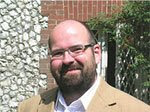
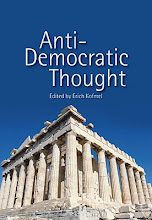

 Posts
Posts

