Showing posts with label China. Show all posts

13 November 2010

Report on the Anti-Democracy Agenda Symposium 2010: Setting the example for the debate of the future

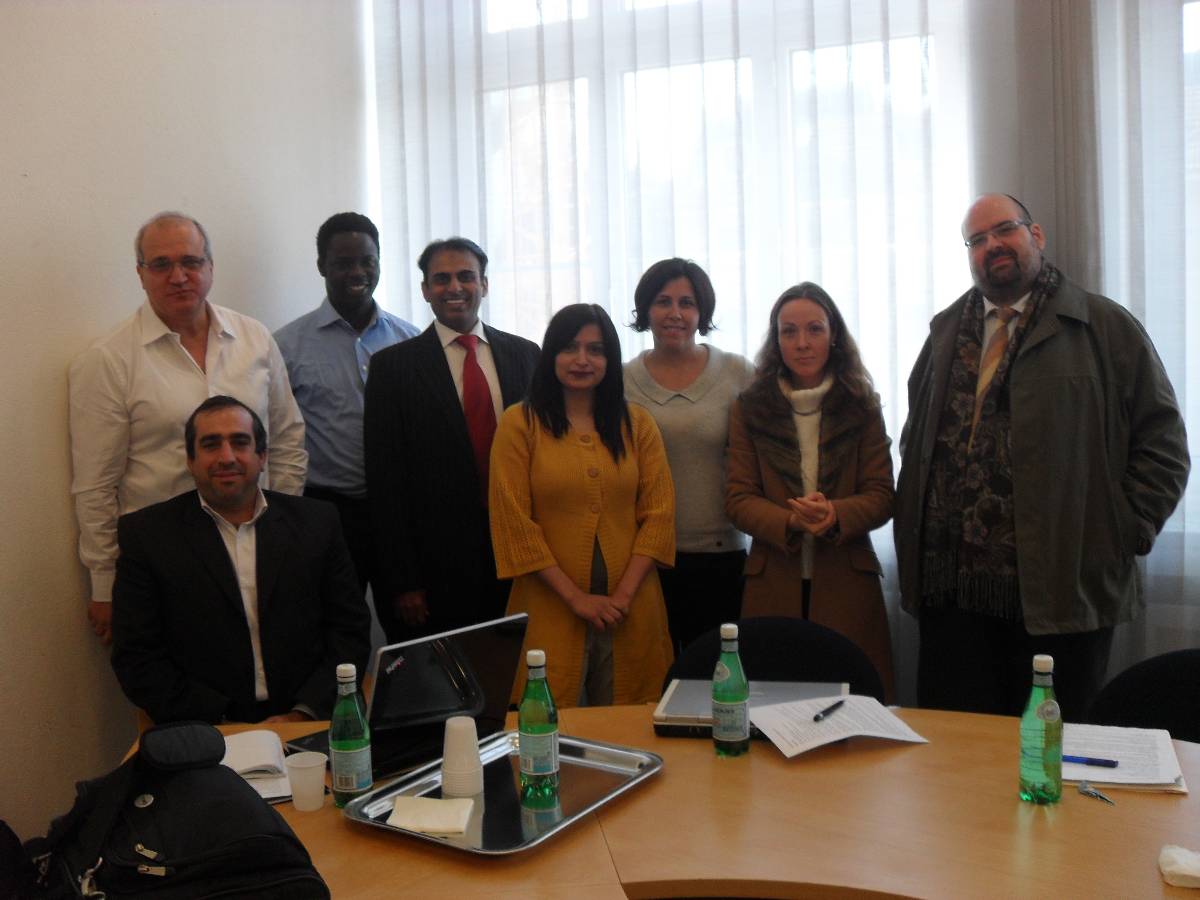
The first event held by the Geneva-based Sussex Centre for the Individual and Society (SCIS) in conjunction with its "Anti-Democracy Agenda" blog, the Anti-Democracy Agenda Symposium 2010, took place to great acclaim on 8 and 9 November 2010 at the Swiss Federal Institute of Technology (ETH) Zurich.

Keynotes to the symposium were contributed by Professor Doh Chull Shin, a native of Korea, director of the Korea Democracy Barometer, and core partner in the Asian Barometer Survey (an ongoing research project monitoring democratization in Asian countries), who is based in the Department of Political Science at the University of Missouri, a leading public research university in the United States, and Professor Kuldip Singh, Head of the Department of Political Science at Guru Nanak Dev University in Amritsar, India.

The Anti-Democracy Agenda Symposium 2010 attracted twelve papers submitted by participants from institutions such as the National University of Singapore, the University of the Philippines, the Technical University of Lisbon (Portugal), Ankara University (Turkey), the University of the Punjab, Quaid-i-Azam University (both Pakistan), the University of Central Oklahoma (USA), and the Islamic Azad University (Iran). Other countries and territories of origin or residence represented include Palestine, Hong Kong, New Zealand, the UK, Switzerland, Nigeria, Korea, and India.

Participants – from doctoral candidates to full professors – came from the disciplines of Political Science, Philosophy, Political Theory, Islamic Studies, Defence and Strategic Studies, Law, and Media Studies, giving theoretical as well as empirical presentations under the titles "Is Confucianism Anti-democratic?", "Islamic Philosophy and Criticizing Democracy", "Against Liberal Democracy", "Anti-Democracy Is Created By Means of Media", "Twenty-First Century Anti-Democracy: Theory and Practice in the World", "A Critique of Western Discourses of Sovereignty and Democracy from Chinese Lenses", "Reflecting on Anti-Democracy Forces in Arab Politics", "'Democracy' in Kazakhstan: Political System Managed from Above", "Pakistan’s Road to Democracy: Islam, Military and Silent Majority", "Democracy: A Form of Government or an Instinct?", "The Role of Ethics in Shaping Democracy: An Examination of Unethical Actions among House of Assembly Members in Nigeria", and "Pekan Anti Otoritarian: Some Observations on Anarchist Gathering at Indonesia".

After a workshop on "Anti-Democratic Thought" in Manchester in 2007, this was the second symposium on anti-democracy organized by the Sussex Centre for the Individual and Society and, once more, it opened up new frontiers for the study of anti-democratic thought and practice. Bringing together scholars from both sides of the debate, advocates of democracy as well as critics and opponents, it set the example for the proper academic conduct of a discussion that does not take place anywhere else, yet. Focusing on twenty-first century anti-democracy, rather than historical expressions and criticisms, it shone the way toward the most important debate of the near future. Asia will play as central a role in that debate as participants from Asia did in our symposium.

The Anti-Democracy Agenda blog and the Sussex Centre for the Individual and Society will continue to be at the forefront of these developments.
09 April 2010

Book: Sovereignty at the Edge: Macau and the Question of Chineseness

Just published: Cathryn H. Clayton, "Sovereignty at the Edge: Macau and the Question of Chineseness" (Harvard University Press, March 2010):

www.hup.harvard.edu/catalog/CLASOV.html

Publisher's description: "How have conceptions and practices of sovereignty shaped how Chineseness is imagined? This ethnography addresses this question through the example of Macau, a southern Chinese city that was a Portuguese colony from the 1550s until 1999. As the Portuguese administration prepared to transfer Macau to Chinese control, it mounted a campaign to convince the city's residents, 95 percent of whom identified as Chinese, that they possessed a 'unique cultural identity' that made them different from other Chinese, and that resulted from the existence of a Portuguese state on Chinese soil. This attempt sparked reflections on the meaning of Portuguese governance that challenged not only conventional definitions of sovereignty but also conventional notions of Chineseness as a subjectivity common to all Chinese people around the world. Various stories about sovereignty and Chineseness and their interrelationship were told in Macau in the 1990s. This book is about those stories and how they informed the lives of Macau residents in ways that allowed different relationships among sovereignty, subjectivity, and culture to become thinkable, while also providing a sense of why, at times, it may not be desirable to think them."

Excerpt: "By most standards, Macau is tiny. As of 1998, it covered a land area of just under 24 square kilometers (about nine square miles), but most of its population lived on the 3.5-square-mile peninsula, whose length and breadth it was possible to cover in the space of an afternoon walk. With a total population of approximately 450,000, Macau had the highest population density in the world. [...] In the eyes of Beijing and the world, it seemed, Macau was little more than an afterthought to its larger, more prosperous, and betterknown neighbor Hong Kong, which had preceded Macau in 'returning' to Chinese rule on July 1, 1997."

Review: "Cathryn H. Clayton [...] presents Macau as an alternative to the modern state, which she blames for the 20th century's instability and violence. [...] She suggests Macau's overlapping sovereignty limited power, creating a system where 'no state, indeed no single institution, could assert authority over all aspects of public (or, for that matter, private) life.' She believes this allowed freedoms to flourish. Finally, Ms. Clayton asserts that Macau's confusion and contradiction really represent peaceful coexistence. In that, she sees 'sparks of utopian potential.'" (Jillian Melchior, "Wall Street Journal")

Cathryn H. Clayton is Assistant Professor of Asian Studies at the University of Hawaii.

11 December 2009

Book: Hong Kong's informal rooftop communities

A book from China's capitalist and democratic outpost, Hong Kong:

Stefan Canham (photographs) and Rufina Wu (architectural drawings) collaborated on "Portraits from above: Hong Kong's informal rooftop communities" (Peperoni Books, 2009).

http://peperoni-books.de/portraits_from_above0.html

Publisher's description: "Self-built, informal settlements on the roofs of high-rise buildings are an integral part of Hong Kong's urban landscape. The rise of rooftop communities is closely linked to the migration history from Chinese Mainland to Hong Kong. With each of China's tumultuous political movements in the 20th century, like the Great Leap Forward and the Cultural Revolution, there was a corresponding wave of Mainland Chinese migrating to Hong Kong."

From the preface: "The roof is a maze of corridors, narrow passageways between huts built of sheet metal, wood, brick and plastics. There are steps and ladders leading up to a second level of huts. [...] Later, we look down at the building from a higher one across the street. The roof is huge, like a village. There must be thirty or forty households on it. [...] Rooftop structures range from basic shelters for the disadvantaged to intricate multi-storey constructions equipped with the amenities of modern life.

"Text records of the residents' stories, measured drawings of each distinct rooftop structure, and high-resolution images of the domestic interiors of more than twenty households offer an unprecedented insight into the everyday life on Hong Kong's rooftops."

The book is bilingual, German and English.