Showing posts with label film. Show all posts

26 March 2010

Fat liberation theology

Liberation theology is branching out. The newest addition to this burgeoning field, after black liberation theology, feminist liberation theology, and gay liberation theology, appears to be fat liberation theology.

This is in line with a broader cultural movement, particularly in the United States, campaigning for the liberation and societal recognition of fat people. Similar to the homosexuals who adopted the pejorative "queer" others had labelled them with, the movement of overweight and obese men and women wears with pride the stigma "fat".

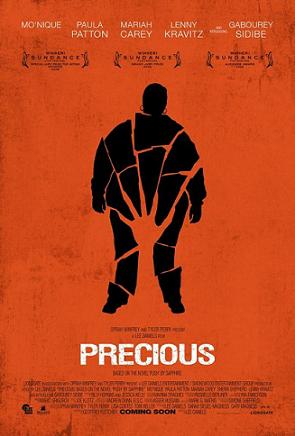
That this "fat acceptance" or "fat liberation" movement is increasingly becoming mainstream could be seen at the recent Academy Awards. Not only was the, as they say, "morbidly obese" Gabourey Sidibe nominated as Best Actress for her role in the small independent film "Precious: Based on the Novel 'Push' by Sapphire", but her only slightly less heavy co-star Mo'Nique actually won the Oscar for Best Supporting Actress in the same film.

In theology, this ties in with a book called "The Fat Jesus: Christianity and Body Image" by Lisa Isherwood (Seabury, 2008):

www.churchpublishing.org/products/index.cfm?fuseaction=productDetail&productID=3339

Publisher's description: "We are living in a food and body image obsessed culture. We are encouraged to over-consume by the marketing and media that surround us and then berated by those same forces for doing so. At the same time, we are bombarded with images of unnaturally thin celebrities who go to enormous lengths to retain an unrealistic body image, either by extremes of dieting or through plastic surgery or both. The spiritual realm is not immune from these pressures, as can be seen in the flourishing of biblically and faith based weight loss programs that encourage women to lose weight physically and gain spiritually.

"Isherwood examines this environment in light of Christian tradition, which has often had a difficult relationship with sexuality and embodiment and which has promoted ideals of restraint and asceticism. She argues that part of the reason for our current obsession and bizarre treatment of issues around weight, size and looks is that secular society has unknowingly absorbed many of its negative attitudes towards the body from its Christian heritage. Isherwood argues powerfully that there are resources within Christianity that can free us from this thinking, and lead us towards a more holistic, incarnational view of what it is to be human. The Fat Jesus provides a fascinating study of the complex ways that food, women and religion interconnect, and proposes a theology of embrace and expansion emphasizing the fullness of our incarnation."

Lisa Isherwood is Professor of Feminist Liberation Theologies at the University of Winchester and Vice President of the European Society of Women in Theological Research.

A blog by a Washington State pastoral psychotherapist explicitly promotes fat liberation theology:

http://kataphatic.wordpress.com/

Also interesting: "The Fat Studies Reader", edited by Esther Rothblum and Sondra Solovay, with a foreword by Marilyn Wann (New York University Press, 2009):

www.nyupress.org/books/The_Fat_Studies_Reader-products_id-11104.html

Reviews: "In the US, where two-thirds of the population are overweight or obese, [...] The Fat Studies Reader argues the problem is not obesity per se but the way it is presented in culture. Sociologists point to a 'societal fat phobia' which engenders prejudice against the obese – and argue that this prejudice is tolerated by those who would never dream of making racist or sexist remarks." ("The Independent")

"With a winning audacity, The Fat Studies Reader announces its intention to serve as the foundation of a new academic field. Its editors present convincing voices from law, medicine, social sciences and the humanities, making it difficult to dismiss their case that the time has come for fat studies." ("Ms. Magazine"; here and above italics originally bold)

"Fat studies is an arena where the personal, political and scientific converge, and with this book, readers can mount an informed challenge to the medical construction of obesity and size, the diet industry, insurance companies, public policy and popular culture .... It may be too soon for the movement to offer utopian alternatives, but these essays offer a rich supply of tools for the activist and scholar willing to start the revolution." ("Publishers Weekly")

Esther Rothblum is Professor of Women's Studies at San Diego State University.

Sondra Solovay is Adjunct Professor of Law at John F. Kennedy University and at San Francisco Law School.

19 March 2010

Film: L'Chayim, Comrade Stalin!

The other Jewish homeland: "L'Chayim, Comrade Stalin!" is a 2002 US documentary film by Yale Strom portraying the Jewish Autonomous Region (Oblast) that formed part of the former Soviet Union and is still in existence in today's Russia.

Synopsis: "In April 1928, twenty years before the founding of Israel, Joseph Stalin created the world's first Jewish homeland in the Soviet Union, in a barren stretch of land on Siberia's Far Eastern border. Although conceived as a solution to the 'Jewish problem,' The Jewish Autonomous Region (or J.A.R.), became a center for Yiddish culture and tradition, and was the first place in the world where Yiddish culture thrived. The J.A.R. attracted Jewish settlers from across the Soviet Union and even as far away as the United States, Argentina, and Palestine. By 1948 the Jewish population had peaked at 45,000 (roughly one-quarter of the region's total demographics). The J.A.R. was home to Yiddish schools, theaters, publications and synagogues. Filmed on location in Birobidzhan, capital of the Jewish Autonomous Region, L'CHAYIM, COMRADE STALIN! features interviews with pioneer settlers and current residents, plus footage never before seen outside Russia (as well as the rare propaganda film Seekers of Happiness). This beautifully directed and startling work offers a fascinating glimpse into the most intriguing chapter in 20th century Jewish and Russian histories." (They may be overdoing the hype there ...)

Reviews: "It's rare that historical documentaries aspire to, much less attain, any kind of narrative vigor – the stories are generally too familiar. But 'L'Chayim, Comrade Stalin!' is a bold exception, replete with surprises, twists and thought-provoking anecdotes." ("Boxoffice Magazine")

"Energetic and informative, albeit more than a little haphazard, Yale Strom's new documentary explores [...] a Russian social experiment that sounds as fantastical as any science-fiction script. [...] Stalin got the notion of disposing of Russia's problematic Jews by encouraging them to move to Birobidzhan and become a Yiddish-speaking agrarian proletariat. The Belgium-sized area he selected [...] was closer to Korea than to Moscow. It soon became known to other Russians as 'a very small Jewish town at the end of the world.'" ("Los Angeles Times")

"Like Strom's earlier docs, L'Chayim Comrade Stalin is best appreciated as an exercise in creative ethnography." ("Village Voice")

May not be the best film imaginable on the subject, but it appears to be the only one that actually exists.

17 November 2009

24 September 2009

Film: The Man from Earth

Another film tip: "The Man from Earth" is the title of a 2007 film that is classified as "science fiction", but really has nothing to do with (future) science at all. Rather, it asks philosophical and theological questions about being, life and death, religion and knowledge.

The most futuristic aspect about this film is its mode of release. While France just outlawed online file sharing (and other European countries seem set to follow its example), the producers of this film publicly thanked their viewers for sharing the film through peer-to-peer networks, by which means, according to them, it gained wide recognition.

Like so many English-language films, "The Man from Earth" is available for streaming, for example, on Chinese video sharing websites, such as Tudou and Youku, that, unlike Youtube, do not enforce (western notions of) copyright or cut up films in ten-minute bits. On the downside, the display quality is often low:

www.tudou.com/programs/view/E_A04JCECSE/

The film's official website describes it thus: "An impromptu goodbye party for Professor John Oldman becomes a mysterious and intense interrogation after the retiring scholar reveals to his colleagues he is an immortal who has walked the earth for 14,000 years.

"Acclaimed science fiction writer Jerome Bixby [of Star Trek and Twilight Zone fame] originally conceived this story back in the 1960's. It would come to be his last great work, finally completing the screenplay on his deathbed in April of 1998."

Leaving friends and occupations every ten years to hide the fact that he does not age and moving on to a new identity, the man presently known as John Oldman has lived through all epochs of recorded history and seen eras of human development come and go. He finds it impossible, though, to prove his story to an audience of scientists requiring hard evidence and religious faithful fearing the loss of their most deeply held beliefs. Has he gone mad, they wonder?

The film won numerous accolades, including "Best Feature" (first place) and "Best Screenplay" (grand prize) at the Rhode Island International Film Festival, "Best Film" and "Audience Choice Award" at the Montevideo Fantastic Film Festival, and "Best Director" at the International Fantastic Film Festival in Porto Alegre.

Those who like science fiction movies may also want to check out two more recent releases, the semi-serious "Frequently Asked Questions About Time Travel" and the Johannesburg, South Africa-based "District 9" (both in cinemas 2009 – and, of course, on file sharing websites).

04 June 2009

Film: The Last Enemy

Anyone willing to acquire a better understanding of the kind of society the United Kingdom is swiftly transforming itself into, can do no better than watch the five-part TV drama "The Last Enemy", produced by the BBC in 2008 and now freely available in full-length videos on YouTube:

www.youtube.com/show/thelastenemy?feature=spotlight

Different from your usual science-fiction movie, the streets of Britain in this mini series look eerily familiar and it's only the small technological changes (spread of ID cards, iris scanning, RFID chips in basically everything, access controls, database integration, and so on) that have turned it into a totalitarian society of total surveillance – or, as the film calls it, T.I.A., Total Information Awareness.

This piece is set in the very near future and the science in it is not fictitious at all. It is all here. Tomorrow, it turns out, is after all just that – tomorrow. A few hours away. Everything shown in this picture already exists, there's nothing futuristic about it. It is just a question of scale and purpose. Even the heavily armed police troops in their protective gear that seem to pop up around every corner can be found now on the streets of London and many other cities.

It is hard to get one's head around it, but only if we understand that the transition from the Weimar Republic to Nazi Germany was gradual and Germany looked by and large the same in 1930 and 1935 will we understand that the totalitarian surveillance state does not require futuristic architecture, but is at home in the picturesque and old-fashioned stone-built sceneries of the long-lost Victorian Empire as well as present-day council estates.

The synopsis of the film taken from the website of the US Public Broadcasting Service (PBS): "[After just four years abroad, mathematician] Stephen Ezard [...] returns to London to mourn the loss of his brother, Michael, and enters a society now obsessed with surveillance. Searching to make sense of Michael's death, Stephen uncovers secrets about his brother's life – including a wife he never knew Michael had. Taking a government job to trace leads through a powerful new database [T.I.A.], Stephen exposes troubling revelations and soon finds himself stalked by a rogue agent [...]. But when Stephen stumbles into an international conspiracy, he realizes that the omnipresent and menacing eye of the government has turned on him".

Total Information Awareness is being introduced in this picture with the promise: "With T.I.A., there will be nowhere to hide". No one has the right to disappear or not wanting to be found.

And, as implausible as the name may sound, T.I.A. is actually based on a US-government programme of exactly that name, introduced following 9/11, but since defunded by congress. Parts of T.I.A. continue to be pursued under the responsibility of various government agencies.

15 May 2009

Terrorist porn: "The Raspberry Reich"

Besides religious terrorism, political terrorism and "intellectual terrorists", Canadian director Bruce LaBruce in 2004 introduced, with his film "The Raspberry Reich", the category of terrorist porn (or alternatively, if you will, social and political thought porn).

www.theraspberryreich.com/rasp.html

Superficially styled a critique of "radical chic", "The Raspberry Reich" is the smutty cousin of this year’s Academy-Award-nominated "Baader Meinhof Complex". It claims to show how today’s mainstream has adopted (or adapts to) signifiers and postures of radical movements of the past, such as the German Red Army Faction (RAF) of the 1970s-90s or the iconic image of Che Guevara. However, the film can’t help but glamourize terrorism itself in its use of machine guns and pistols as sexual props, boundless sexual (and theoretical) energy, and hardcore straight and male-on-male action.

The leader of the Raspberry terrorists (or "activists", as they prefer to call themselves), one Gudrun, "a strict devotee of Wilhelm Reich [The Sexual Revolution] and Herbert Marcuse [One-Dimensional Man], believes that heterosexual monogamy is a bourgeois construct that must be smashed in order to achieve true revolution. To that end, she forces her straight male followers [including her own boyfriend] to have sex with each other to prove their mettle as authentic revolutionaries". After all, as she says: "The revolution is my boyfriend".

It is explained that "Marcuse believed that the workers and the prosperous, technologically advanced countries now have their needs satisfied beyond sufficiency to superfluity by the power elite, but much of what they receive is the satisfaction of false needs, while their true needs remain undiscoverable even by themselves. [...] The notion Marcuse calls surplus repression has to be fought by liberating ourselves from the constraints of dominant sexual practice. It's true that there will be no revolution without sexual revolution, but it's also true that there will be no sexual revolution without homosexual revolution".

The film opens with a black-and-white sequence of a Muslim reciting the Qur'an and throughout it sports the director's opposition to capitalism, war, and oppression. Be aware that the UK DVD edition (see cover image) appears to have been censored and some scenes (and body parts) of an explicit nature are masked with images of and quotes by Tony Blair and George W. Bush that move up and down, forth and back in unison with actors’ sexual thrusting. Depending on one’s personal taste (and political leanings), this may be perceived as adding to or detracting from the pleasure of watching.

To further their cause, the terrorists seek to extort a ransom from the wealthy banker father of a teenage boy they abducted, only to find that his father disowned the boy when the latter "came out" to him as gay. Of course, the film suffers from a neglect of the fact that homosexuality by now has also reached the mainstream and signifiers and postures of homosexuality are adopted (and have been adapted to) by the masses.

"The Raspberry Reich" premiered at the Sundance Film Festival and won the Special Jury Award and the award for Best Gratuitous Use of Sex at the 2004 Melbourne Underground Film Festival.