Showing posts with label Asia. Show all posts

13 November 2010

Report on the Anti-Democracy Agenda Symposium 2010: Setting the example for the debate of the future

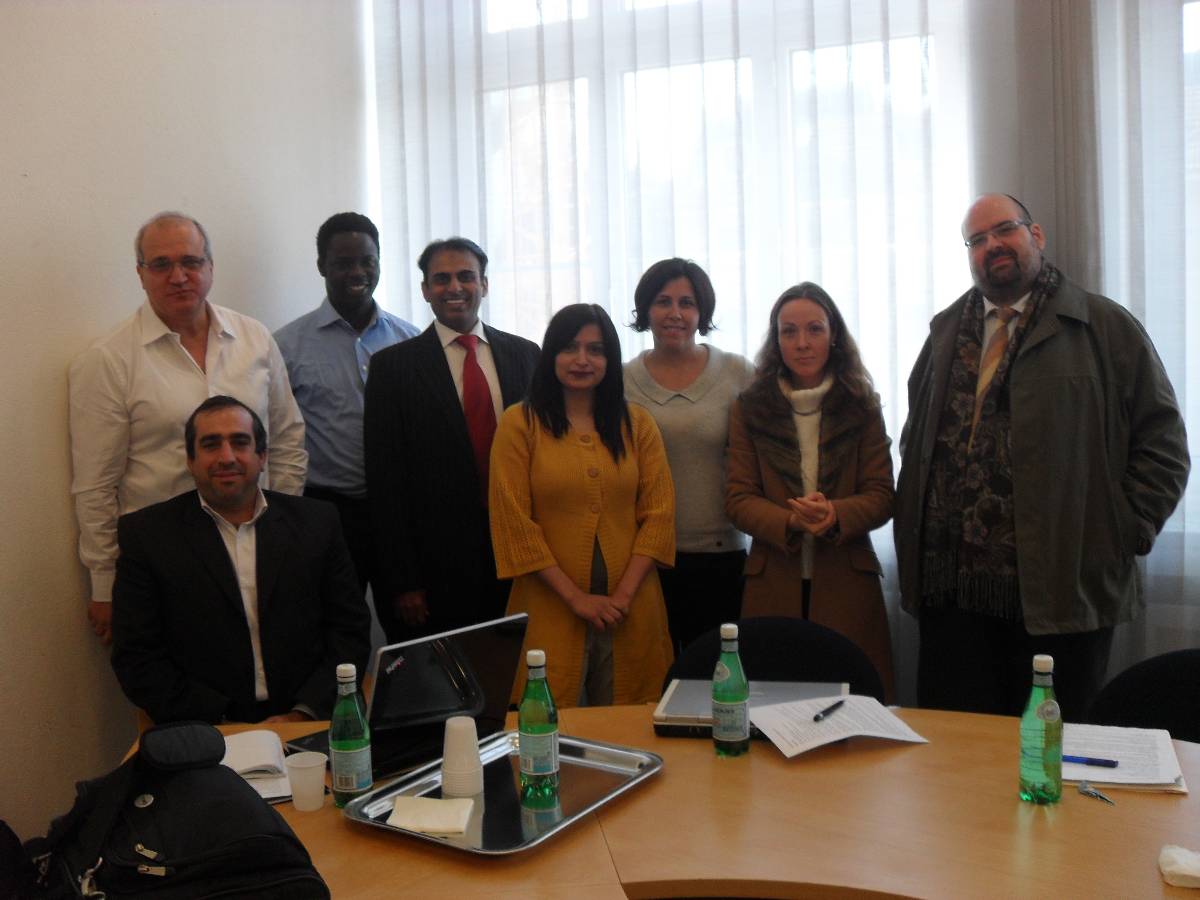
The first event held by the Geneva-based Sussex Centre for the Individual and Society (SCIS) in conjunction with its "Anti-Democracy Agenda" blog, the Anti-Democracy Agenda Symposium 2010, took place to great acclaim on 8 and 9 November 2010 at the Swiss Federal Institute of Technology (ETH) Zurich.

Keynotes to the symposium were contributed by Professor Doh Chull Shin, a native of Korea, director of the Korea Democracy Barometer, and core partner in the Asian Barometer Survey (an ongoing research project monitoring democratization in Asian countries), who is based in the Department of Political Science at the University of Missouri, a leading public research university in the United States, and Professor Kuldip Singh, Head of the Department of Political Science at Guru Nanak Dev University in Amritsar, India.

The Anti-Democracy Agenda Symposium 2010 attracted twelve papers submitted by participants from institutions such as the National University of Singapore, the University of the Philippines, the Technical University of Lisbon (Portugal), Ankara University (Turkey), the University of the Punjab, Quaid-i-Azam University (both Pakistan), the University of Central Oklahoma (USA), and the Islamic Azad University (Iran). Other countries and territories of origin or residence represented include Palestine, Hong Kong, New Zealand, the UK, Switzerland, Nigeria, Korea, and India.

Participants – from doctoral candidates to full professors – came from the disciplines of Political Science, Philosophy, Political Theory, Islamic Studies, Defence and Strategic Studies, Law, and Media Studies, giving theoretical as well as empirical presentations under the titles "Is Confucianism Anti-democratic?", "Islamic Philosophy and Criticizing Democracy", "Against Liberal Democracy", "Anti-Democracy Is Created By Means of Media", "Twenty-First Century Anti-Democracy: Theory and Practice in the World", "A Critique of Western Discourses of Sovereignty and Democracy from Chinese Lenses", "Reflecting on Anti-Democracy Forces in Arab Politics", "'Democracy' in Kazakhstan: Political System Managed from Above", "Pakistan’s Road to Democracy: Islam, Military and Silent Majority", "Democracy: A Form of Government or an Instinct?", "The Role of Ethics in Shaping Democracy: An Examination of Unethical Actions among House of Assembly Members in Nigeria", and "Pekan Anti Otoritarian: Some Observations on Anarchist Gathering at Indonesia".

After a workshop on "Anti-Democratic Thought" in Manchester in 2007, this was the second symposium on anti-democracy organized by the Sussex Centre for the Individual and Society and, once more, it opened up new frontiers for the study of anti-democratic thought and practice. Bringing together scholars from both sides of the debate, advocates of democracy as well as critics and opponents, it set the example for the proper academic conduct of a discussion that does not take place anywhere else, yet. Focusing on twenty-first century anti-democracy, rather than historical expressions and criticisms, it shone the way toward the most important debate of the near future. Asia will play as central a role in that debate as participants from Asia did in our symposium.

The Anti-Democracy Agenda blog and the Sussex Centre for the Individual and Society will continue to be at the forefront of these developments.
20 August 2010

Report on the Political Theology Agenda Symposium 2010: Political theology goes East and South

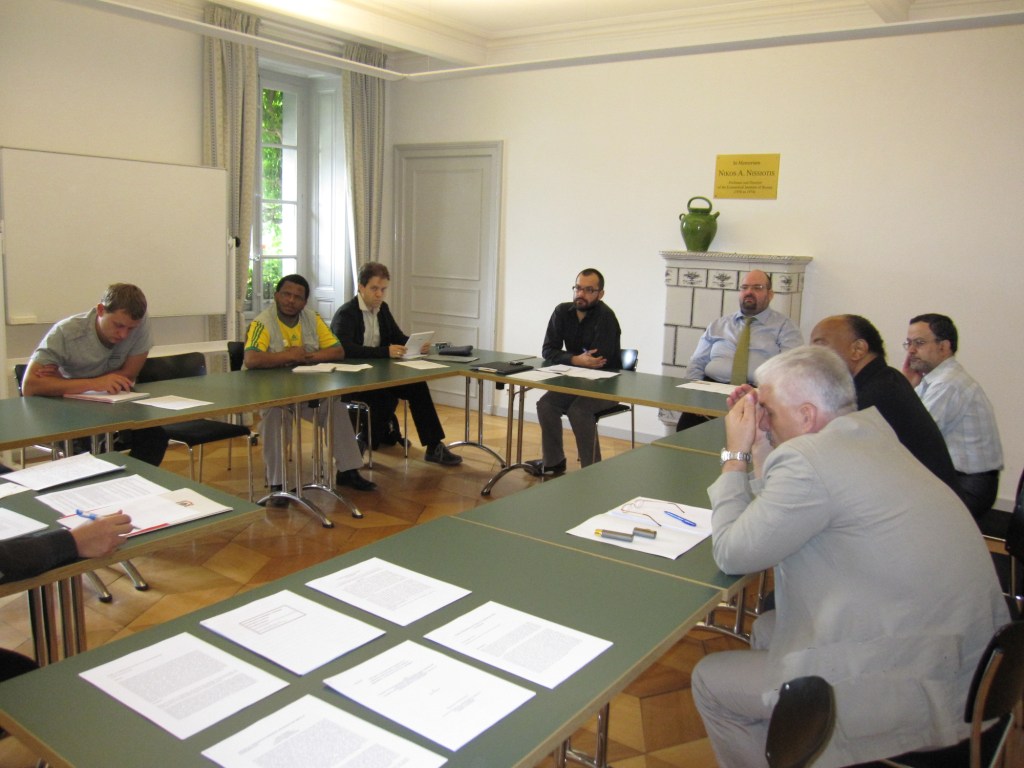
The first event held by the Geneva-based Sussex Centre for the Individual and Society (SCIS) in conjunction with its "Political Theology Agenda" blog, the Political Theology Agenda Symposium 2010, was a full success.

It took place on 18 and 19 August 2010 at the Ecumenical Institute of the World Council of Churches (WCC), Château de Bossey, near Geneva, Switzerland. Bossey doubles as an institute of the University of Geneva since all degrees awarded there (Masters and PhD degrees in Ecumenical Studies) are granted by the University of Geneva.

Keynote speakers were Professor Aliakbar Alikhani, Head of the Institute for Social and Cultural Studies at the Ministry of Science, Research and Technology in Tehran, Iran, and Professor Galip Veliu from the Department of Philosophy at the State University of Tetovo in the Former Yugoslav Republic of Macedonia.

The Political Theology Agenda Symposium 2010 attracted seventeen papers submitted by participants from institutions such as University College London, the University of Birmingham (both UK), the University of Helsinki (Finland), the University of Quebec at Montreal (Canada), the University of Tehran (Iran), the University of the Punjab (Pakistan), the University of South Africa, the University of Zimbabwe, the National University of Malaysia, Universitas Nasional at Jakarta (Indonesia), and San Beda College in Manila (the Philippines). Other countries represented include Macedonia, Romania, Lithuania, Switzerland, and Nigeria.

Speakers – from doctoral candidates to full professors – came from the disciplines of Political Science, Philosophy, Political Theory, Theology, Church History, and Islamic Studies, giving theoretical as well as empirical presentations on subjects including secularization and religious pluralism, political theology, black theology, liberation theology, and radical Islam.

After Pisa, Italy, in 2007 and Paris, France, in 2008, this was the third symposium on political theology organized by the Sussex Centre for the Individual and Society and, once more, it opened up new frontiers for political theology. It was by far the most international event we ever organized (and quite possibly the most international event on political theology to take place anywhere as yet) with five participants from Iran alone and scores of submissions (not all accepted) from the Middle East and East Asia as well as Africa. Taken together with a high number of submissions from (South-)Eastern Europe, there is a significant trend to be observed: after gaining momentum in the Anglophone countries over the past few years, the study of political theology now goes East and South, spreading to Asia and Africa.

The Political Theology Agenda blog and the Sussex Centre for the Individual and Society will continue to be at the forefront of these developments.
(On the downside, all prospective American and Israeli participants withdrew, one by one, from the symposium once they knew that there would be Iranians present. Way to encourage dialogue.)

15 February 2010

Book: The Art of Not Being Governed: An Anarchist History of Upland Southeast Asia

In August 2009, Yale University Press published James C. Scott's monograph "The Art of Not Being Governed: An Anarchist History of Upland Southeast Asia":

http://yalepress.yale.edu/yupbooks/book.asp?isbn=9780300152289

Publisher's description: "For two thousand years the disparate groups that now reside in Zomia (a mountainous region the size of Europe that consists of portions of seven Asian countries) have fled the projects of the organized state societies that surround them – slavery, conscription, taxes, corvée labor, epidemics, and warfare. This book, essentially an 'anarchist history,' is the first-ever examination of the huge literature on state-making whose author evaluates why people would deliberately and reactively remain stateless. Among the strategies employed by the people of Zomia to remain stateless are physical dispersion in rugged terrain; agricultural practices that enhance mobility; pliable ethnic identities; devotion to prophetic, millenarian leaders; and maintenance of a largely oral culture that allows them to reinvent their histories and genealogies as they move between and around states.

"In accessible language, James Scott, recognized worldwide as an eminent authority in Southeast Asian, peasant, and agrarian studies, tells the story of the peoples of Zomia and their unlikely odyssey in search of self-determination. He redefines our views on Asian politics, history, demographics, and even our fundamental ideas about what constitutes civilization, and challenges us with a radically different approach to history that presents events from the perspective of stateless peoples and redefines state-making as a form of 'internal colonialism.' This new perspective requires a radical reevaluation of the civilizational narratives of the lowland states. Scott's work on Zomia represents a new way to think of area studies that will be applicable to other runaway, fugitive, and marooned communities, be they Gypsies, Cossacks, tribes fleeing slave raiders, Marsh Arabs, or San-Bushmen."

Reviews: "Few scholars possess a keener capacity to recognize the agency of peoples without history and in entirely unexpected places, practices and forms. Indeed, it leads him ever closer to the anarchist ideal that it is possible for humans not only to escape the state, but the very state form itself." (Prasenjit Duara, National University of Singapore)

"A brilliant study rich with humanity and cultural insights, this book will change the way readers think about human history – and about themselves. It is one of the most fascinating and provocative works in social history and political theory I, for one, have ever read." (Robert W. Hefner, Boston University)

"Underscores key, but often overlooked, variables that tell us a great deal about why states rise and expand as well as decline and collapse. There are no books that currently cover these themes in this depth and breadth, with such conceptual clarity, originality, and imagination. Clearly argued and engaging, this is a path-breaking and paradigm-shifting book." (Michael Adas, Rutgers University)

"Finally, a true history of what pressures indigenous peoples face from these bizarre new inventions called nation states. Jim Scott has written a compassionate and complete framework that explains the ways in which states try to crowd out, envelop and regiment non-state peoples. He could take out every reference to Southeast Asia and replace it with the Arctic and it would fit the Inuit experience too. We need real applicable history that works, that fits. Truth like this, it's too darn rare." (Derek Rasmussen, former community activist in the Inuit territory of Nunavut, advisor to Nunavut Tunngavik Inc.)

"Zomia, he says, offers a sort of counter-history of the evolution of human civilization. . . . What Zomia presents, Scott argues ... is nothing less than a refutation of the traditional narrative of steady civilizational progress, in which human life has improved as societies have grown larger and more comples [sic]. Instead, for many people through history, Scott argues, civilized life has been a burden and a menace." (Drake Bennett, "Boston Globe")

"For those who live in states, savages are those who do not. Yet since the Enlightenment, there have always been Western intellectuals who want to find a critical role for the savage to play. The general idea has been to harness the otherness of indigenous or stateless people as a means of interrogating ... the modern state. In the past twenty years or so, this project has dropped off drastically .... Scott has found a creative way to revive the tradition of critical thinking about the savage – and to highlight the social goals of equality and autonomy embodied in the Zomian social order that states routinely fall short of realizing." (Joel Robbins, "Bookforum")

I decided to put up this book announcement here, rather than on the "Anti-Democracy Agenda", because some of the peoples Scott studies employ forms of autonomous/anarchist self-rule that he labels as "democratic". That label is certainly problematic in the context, since it normally is linked to statehood or a (sub)state-like polity. More importantly, though, even those peoples studied that employ more authoritarian forms of self-rule cannot necessarily be assumed to do so in conscious opposition to democracy as a form of political organization – which may never have entered their thinking.

James C. Scott is Sterling Professor of Political Science, Professor of Anthropology, and Co-Director of the Agrarian Studies Program at Yale. He is a Fellow of the American Academy of Arts and Sciences.